
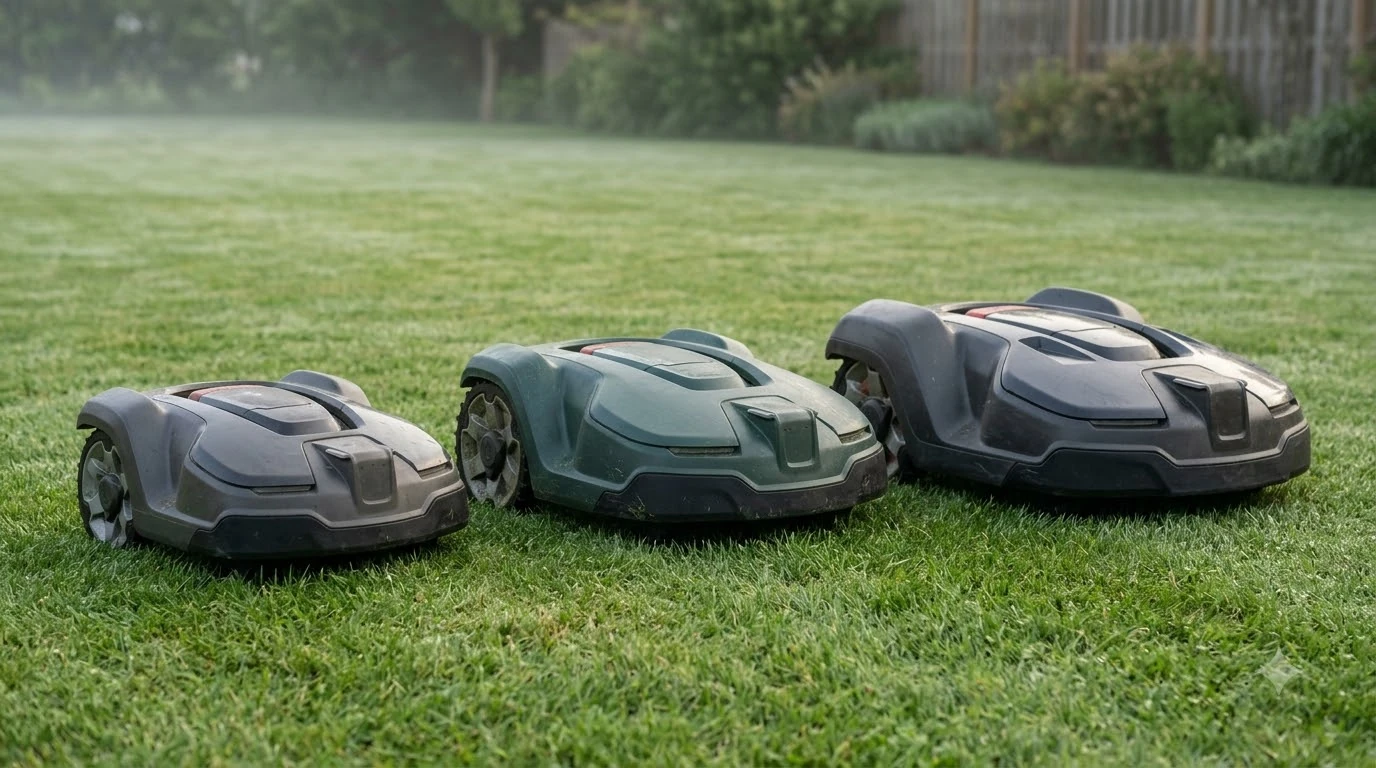

Can a robot mower work around a brick walkway? Yes, when the bricks sit level with the lawn and the boundary wire keeps the mower on the grass side. Robomow describes flat paved areas as unproblematic, while raised, sunken or loose bricks create the real risks. How far the wire runs from the bricks depends on how high the walkway sits above the grass.
The short answer
- Level bricks: the easiest setup, with the walkway at the same height as the lawn edge.
- Wire distance: about 10 to 15 cm from a path that is level with the grass, according to Anker’s installation guidance.
- Raised or sunken bricks: these can trap the mower, so backfill or fix the edge before the first run.
- Loose stones: keep bricks and joints secure, because loose stone can damage the blades.
Can a robot mower work around a brick walkway that sits level?
A brick walkway set level with the lawn is the easiest case for a robot mower. Robomow’s guide to crossing paths describes paved areas with a flat surface as unproblematic, and it prefers solid stone slabs when the mower has to pass over hard ground. Those rules apply to the mowing area beside the walkway as well. If you also need the crossing case, our guide on whether a robot mower can cross a sidewalk covers it, and our note on how a robot mower handles a patio covers a wider paved area.
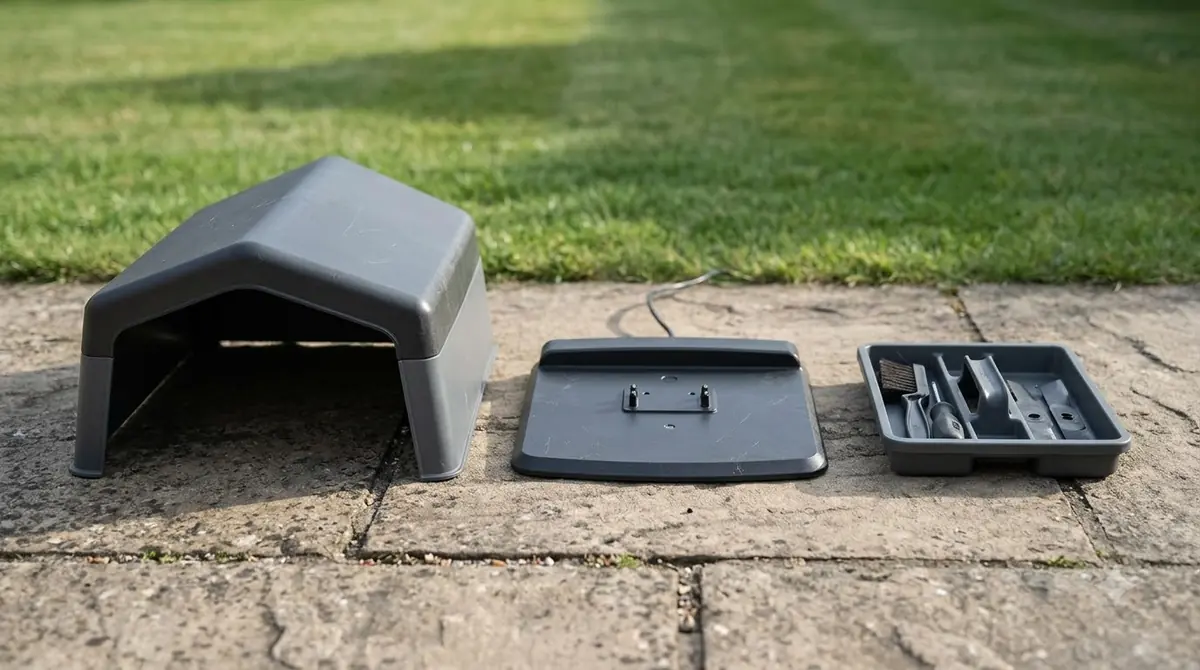
The key rule is height matching. Robomow says the difference in height between the lawn edge and the pavement should be identical. When the bricks sit at lawn height, the wheels roll from grass to brick without a step, and the mower keeps its footing along the edge.
How far the boundary wire should sit
Wire distance depends on how high the obstacle sits above the grass. Husqvarna’s New Zealand wire guide gives three bands, and Anker’s UK guidance gives a figure for a level path. Together they cover most walkway setups:
| Surface next to the wire | Distance from the wire | Source |
|---|---|---|
| Path or patio level with the lawn | 10 to 15 cm | Anker UK |
| Obstacle lower than 1 cm, such as a pathway | 10 cm | Husqvarna NZ |
| Obstacle 1 to 3.5 cm high, such as a flowerbed | 30 cm | Husqvarna NZ |
| Obstacle higher than 3.5 cm, such as a wall | 35 cm | Husqvarna NZ |
So can a robot mower work around a brick walkway with the wire this close? Yes, if the edge is level. Husqvarna’s wire installation guide gives 10 cm for a low pathway, and Anker gives 10 to 15 cm for a path level with the lawn. Our reading is to start near 15 cm from a brick edge, then tighten the wire in the test run if the mower leaves too much grass. Robomow adds that wire can run in the joints or under the cobblestones of a paved route. Husqvarna’s page does not state a burial depth, so check the depth in your model’s manual.
Robomow’s boundary wire guide adds two installation points. It suggests leaving the wire above ground for two to three weeks in test mode before burying it, and fastening it with stakes at regular intervals. Our reading is to run the mower in test mode during that window, so you can see the wire path near the bricks before it is fixed in place. Our guide to laying boundary wire around obstacles walks through the same routing steps for beds and posts.
Can a robot mower work around a brick walkway with raised or sunken bricks?
Raised brick edges can trap a mower, and Robomow advises backfilling with soil so the robot can climb onto the stones. Eufy’s stuck causes guide lists uneven pavers, steel edging, raised borders and drops among the common causes of a robot mower getting stuck.
- Raised bricks: a lip above lawn height can stop the wheels.
- Steel or plastic edging: a raised metal edge can catch the wheel or the chassis.
- Sunken bricks: a drop at the edge gives the mower a step it cannot always climb.
- Soft soil: Eufy says wheels may sink near edges and frequently used paths after summer rain.
If the bricks stand above the grass, backfill the lawn side with soil so the transition becomes a gentle ramp. Our reading is to fix a raised or sunken edge before the first run, because the mower gets stuck at the step, not on the brick.
Loose bricks and gravel joints
Loose stones in a walkway can damage blades, because Robomow warns that a loose stone can get caught in a running mower. Gravel between bricks is the riskiest case, since stones shift under the wheels and into the cutting path. A robot mower can work around a brick walkway with gravel joints only after the joints are filled and compacted. Our look at a lawn with gravel edges shows what else can trip the mower at a hard edge.
Heads up
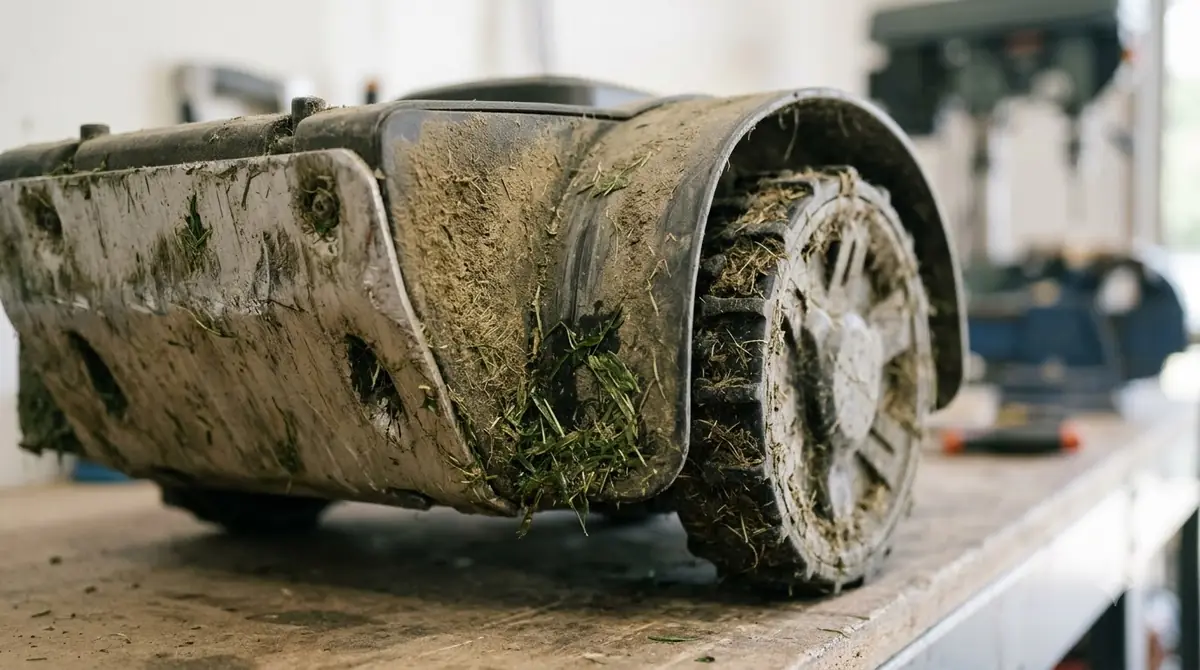
Robomow says there is a high risk of a loose stone getting caught in the running mower and damaging the blades. Reset any loose brick and fill open joints before the mower runs beside the walkway.
Bricks that are set firmly and stay level are the safe case. A brick that rocks under foot is a brick the wheels will also move. Our reading is to walk the walkway once before setup and mark any brick that moves.
Passage width and what the mower should not enter
Robomow says a passage for a robot mower should be at least one meter wide. A walkway that runs between a fence and a bed can leave a gap narrower than that, and a narrow gap can let wire signals from both sides interfere. Robomow’s boundary wire guide also refers to narrow passages wider than 70 cm, so a gap near that width is one to test before you buy. Our piece on how robot mowers deal with narrow paths explains what changes in a tight gap.
To keep the mower out of a walkway, Robomow suggests a tunnel circuit or small loops on each side of the entrance. That narrows the route so the mower skips the path rather than rolling onto it. Our reading is to check the gap width first, then decide whether the walkway should be fenced off by wire or left open.
Edge trimming beside the walkway
Expect an uncut strip along the walkway edge, because the wire keeps the blades a set distance away. The width of that strip depends on the wire distance you choose, so the closer the wire sits, the narrower the strip.
Can a robot mower work around a brick walkway and still leave a tidy edge? Mostly, but a small trim job remains. Our reading is to plan a string trimmer pass along the brick edge a few times each season, or to accept a narrow strip of longer grass. This article does not give a figure for the strip width, because the sources read here do not state one.
Eufy notes that boundary wire takes time to install around driveways, beds, paths and trees, and that a break in the wire stops the mower. Our reading is to inspect the wire near the walkway after each season, since a damaged section there leaves the mower free to roll onto the bricks.
What to check before you install
Before you decide if a robot mower can work around a brick walkway at your house, compare the walkway height with the lawn, mark the wire route, and run a supervised test. Each step below is a check you can do yourself without tools beyond a tape measure.
- Measure the height. Compare the brick surface with the lawn edge. Robomow says the two should match.
- Check for loose bricks. Reset loose bricks and fill open joints before the first run.
- Set the wire distance. Use about 10 to 15 cm from a level walkway, and 30 to 35 cm from raised beds or walls.
- Test in both directions. Our reading is to watch the mower on the bricks and beside them for at least one full run.
Frequently asked questions
Can a robot mower drive over brick pavers?
Flat, solid pavers at lawn height are generally fine for a robot mower, according to Robomow. Raised, sunken or loose bricks are the main risk, because they can stop the wheels or damage the blades. Check the height and joints before you run the mower across them.
Can a robot mower work around a brick walkway with boundary wire?
Yes, with boundary wire on the lawn side, placed in the joints or under the bricks, according to Robomow. Without wire, the mower may roll onto the path. Keep the wire about 10 to 15 cm from a path level with the lawn.
How far should boundary wire sit from a brick path?
Anker recommends 10 to 15 cm where a path or patio is level with the lawn. Husqvarna gives 10 cm for a pathway lower than 1 cm. Start near 15 cm, then adjust in the test run if the mower leaves too much grass.
Will a robot mower damage bricks?
The sources read for this article focus on the mower’s blades, not on brick damage. Robomow warns that a loose stone can get caught in the running mower and damage the blades. Keep loose bricks reset and joints filled, and the risk to the walkway stays low.
Sources
- Can a robotic lawnmower cross paths? (Robomow): flat paved areas, matching heights, backfill ramp, loose stone risk, 1 m passage, wire in joints.
- Automower wire installation (Husqvarna NZ): 10 cm from low pathway, 30 cm from flowerbeds, 35 cm from walls.
- Robot lawn mower boundary wire installation (Anker UK): 10 to 15 cm from a level path, 30 to 35 cm from raised beds and walls.
- Robot lawn mower stuck causes and fixes (Eufy): uneven pavers, steel edging, raised borders, drops, soft soil after rain.
- Laying the lawn boundary wire (Robomow): test mode before burying, stake spacing, narrow passages wider than 70 cm.
- Robot lawn mower navigation types (Eufy): wire takes time around driveways, beds and paths; a break stops the mower.
 Up next7 min readBy YardCan a Robot Mower Work Around a Hot Tub?Updated Nov 12, 2026
 7 min readBy YardCan a Robot Mower Work Around a Wooden Deck?Updated Nov 12, 2026
 9 min readBy YardCan a Robot Mower Work Around a Basketball Hoop?Updated Nov 12, 2026
 8 min readBy YardCan a Robot Mower Work Around a Rain Garden?Updated Nov 12, 2026
 9 min readBy YardCan a Robot Mower Mow Around a Wildflower Patch? Setup Rules That WorkUpdated Nov 12, 2026
 10 min readBy YardCan a Robot Mower Work Around a Bird Bath? Wire Setup GuideUpdated Nov 12, 2026