
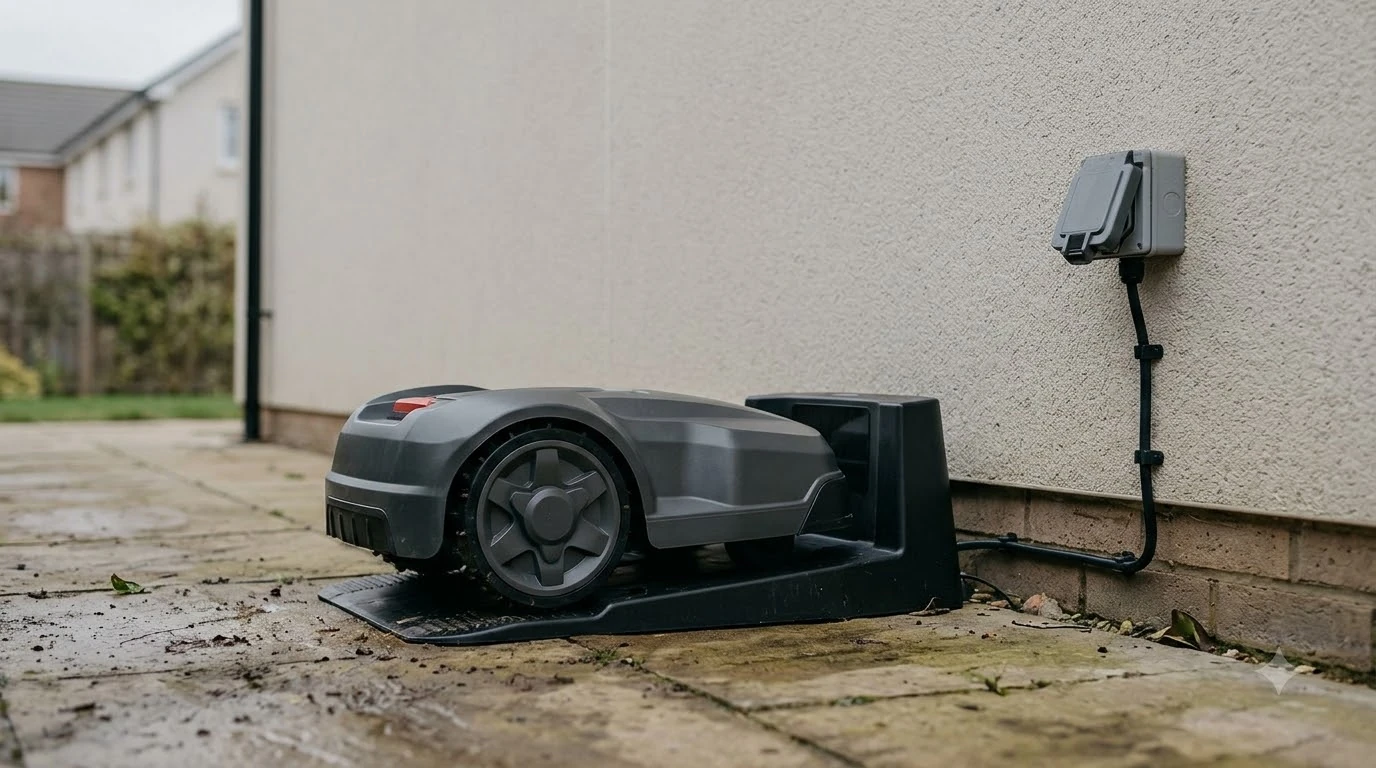

A robot mower RTK reference station tripod can work when you need height and a clear sky, but it is one option among several. Some vendors name a tripod as an alternative to a pole, while others use a pole with a ground stake or a wall or roof mount. The right choice depends on sky view, stability, and the cable route, so check those before you buy any stand.
The short answer
- Height: Yarbo’s guidance puts the base station at least 2 m (about 6.5 ft) off the ground, and says a pole or tripod can gain that height.
- Sky view: Yarbo cites a clear sky view of at least 120 degrees, so the stand must not block the view from the station.
- Stability: a stand that sways, leans, or moves will change the position the station reports, so anchor it firmly.
- Check the vendor: confirm that your station’s model and warranty allow a tripod before buying one.
What a robot mower RTK reference station tripod does
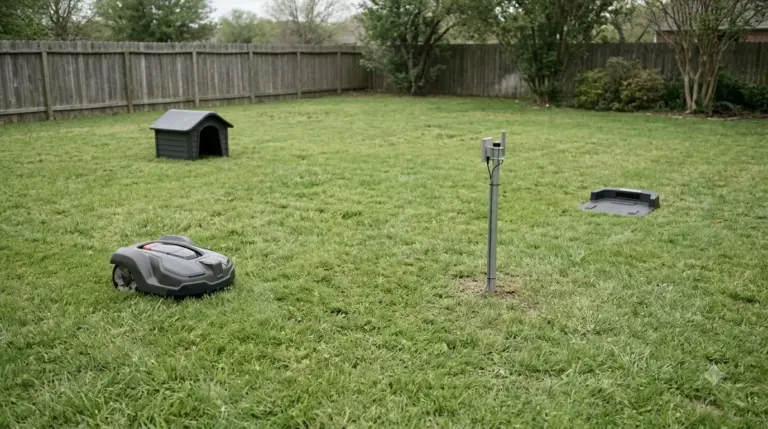
An RTK reference station receives satellite signals from a fixed spot and sends correction data to the mower. The antenna has to sit high enough to see the sky and stay put. A tripod is one way to lift the station above fences, sheds, and garden furniture without digging a post into the lawn. Readers who want a broader overview can read our RTK antenna overview for robot mowers first and then continue with this page. A neighbouring subject worth a look for the same yard is our RTK explainer for robot mowers.
Yarbo’s guidance on RTK signal in the yard says the base station should sit at least 2 m (about 6.5 ft) off the ground. It also suggests a pole mount or a tripod as ways to gain that height. Keep in mind that this is a vendor recommendation, and the exact stand depends on your site.

Sky view and clearance before the tripod
Height is only part of the job. The station needs an open view of the sky, and Yarbo’s guidance cites at least 120 degrees of clear sky in all directions, with the method for that figure not explained. It also says to keep the station above sheds and garden furniture, and to avoid glass, water features, and metal sheds nearby. Those surfaces can reflect or block signals. When you are ready for the next step, read our RTK base station placement guide for more detail.
Mammotion’s installation support article makes related placement points. It warns against putting the station at the corner of an L-shaped building, on a narrow path between structures, or under a tree. For yards that are O-shaped or U-shaped, it suggests a wall or roof mount rather than a free-standing stand. A tripod does not solve a bad spot, so pick the location first and then decide how to hold the station.
Stability: why a stand must not sway
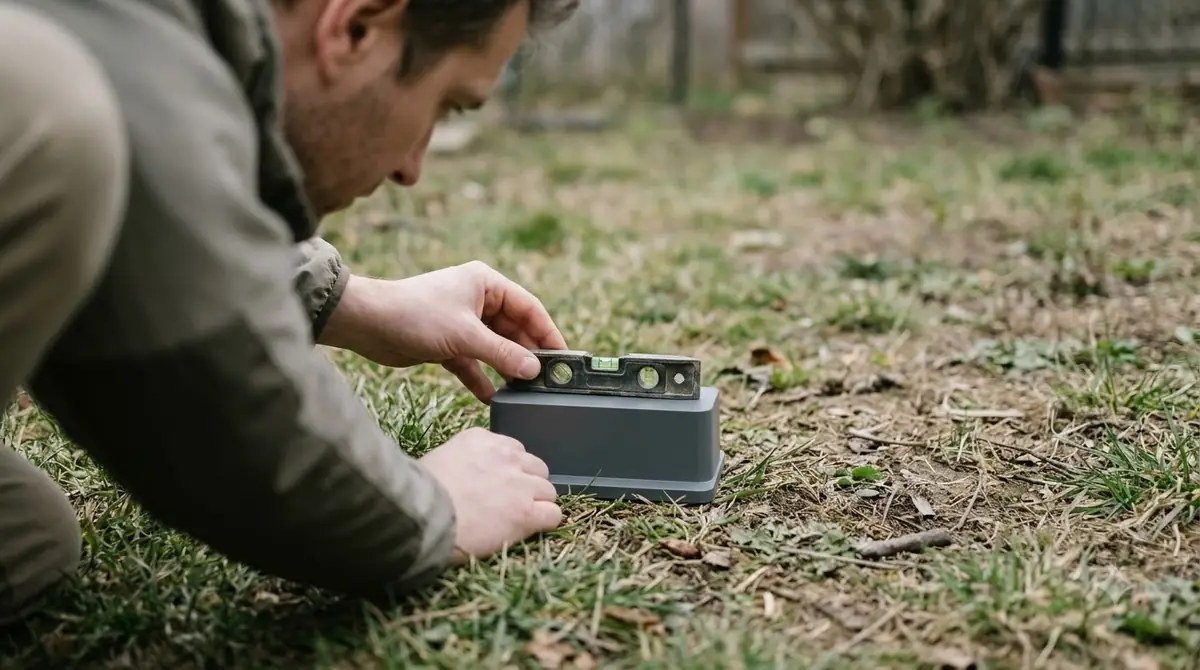
A station that moves changes its position. The marine GNSS guidance from Raymarine makes this point clearly: a mast that moves makes the antenna swing and can cause significant position errors. The same principle applies to a robot mower reference station. A tripod on soft soil, a lawn with slope, or a windy site may shift, so check that the legs sit firmly and cannot rock. If this point matters for your setup, read our weatherproof housing for an RTK base for more detail on it.
Our reading is that a tripod works best on firm, level ground with the legs spread wide and secured. Where that is not possible, a pole with a ground stake or a wall mount is likely a steadier choice. Test the setup after installing it by checking the signal status in the app over several days, not only once.
Cable routing and power
The station cable has to reach the charging area or the power point without tension or sharp bends. On a tripod, the cable often hangs from one leg and can catch in the wind or get snagged by a mower. Mammotion’s support guidance describes routing the station cable inside the pole and securing it with a cord tie, which keeps it tidy and out of the way. For a closely related angle, see our outdoor RTK base station power cable as well. Cable routing and power apply to any fixed reference setup, so weatherproof power for an RTK reference station is a natural follow-up to the tripod advice.
Use a cable tie on each leg and leave a short loop of slack near the station so the cable does not pull the stand over. Keep the power connection off the ground and sheltered from rain.
Heads up
Do not place the station near a metal fence, a metal shed, or a wet patch of the yard without checking the sky view first. Those surfaces can disturb the signal even when the stand itself is stable.
Tripod or pole: how to choose
A tripod suits a small or open yard where you need height but cannot set a permanent post. It is easy to move if the station is not fixed to the ground, and it suits a temporary setup while you test the signal. A pole with a ground stake suits a permanent installation where the station needs to stay put for years. See our RTK antenna mounting hardware guide for further detail on a connected question.
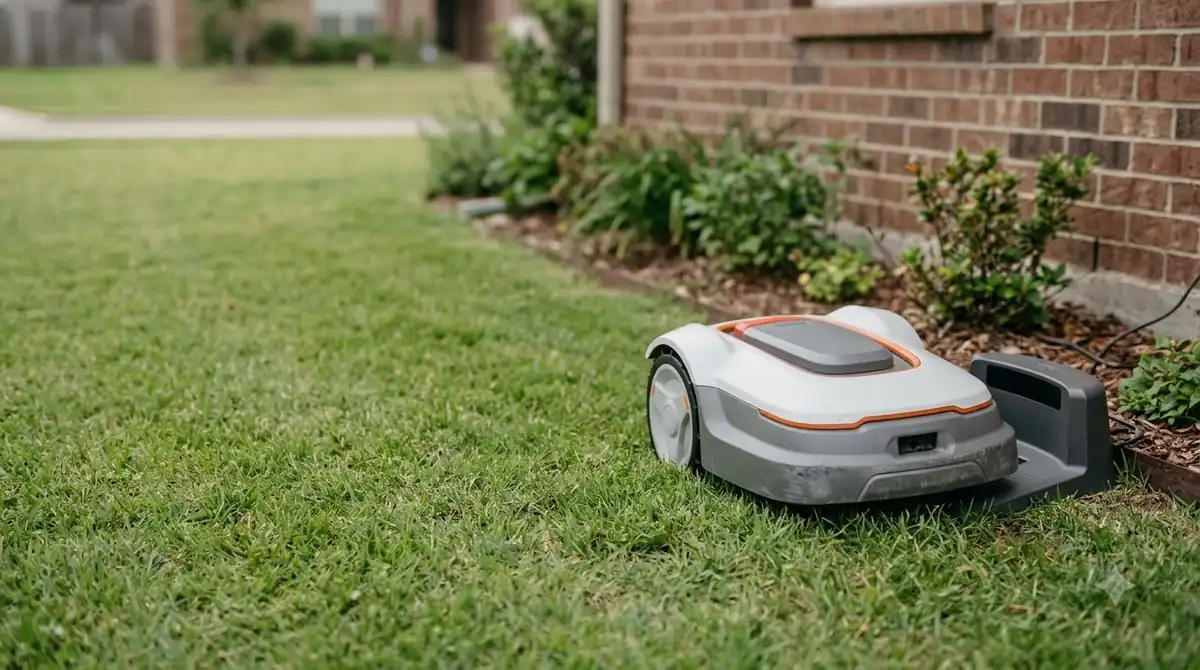
A wall or roof mount suits a lawn with buildings around it, or an O-shaped or U-shaped yard, as Mammotion’s guidance suggests. Each option has trade-offs in cost, stability, and access for service, so compare them against your yard rather than choosing by price alone.
Related reads: Related to this guide, you may also want to read our roof mounting options for an RTK antenna for a connected topic.
Frequently asked questions
Is a tripod a good way to mount a reference station?
It can be, if the site is open and firm. Yarbo’s guidance names a tripod as one way to gain height, but the sky view and stability still have to meet the requirements.
How high should the station be?
Yarbo’s guidance says at least 2 m (about 6.5 ft) off the ground. Check the figure in your model’s manual, since vendors differ.
Can a tripod move in the wind?
It can, especially on soft or sloped ground. A moving station changes its reported position, so secure the legs and test the signal over several days.
Should I use a wall or roof mount instead?
Consider it if buildings or trees block the open ground, or if the yard is O-shaped or U-shaped. Mammotion’s guidance points to a wall or roof for those layouts.
Sources
- Can Yarbo get a good RTK signal in my yard (Yarbo): base station height of at least 2 m, pole or tripod options, sky view of 120 degrees, clearance from sheds and reflective surfaces.
- How to install the RTK reference station (Mammotion support): vertical mounting on a pole with a trident ground stake, cable routing inside the pole, and placement warnings.
- GNSS antenna location requirements (Raymarine): a moving mast makes the antenna swing and causes position errors.
 Up next7 min readGearBest Outdoor Power Strip for RTK Base Station: 5 ChecksUpdated Nov 16, 2026
 8 min readGearChoosing the Best Outdoor PoE Injector for Roof-Mounted RTK StationsUpdated Nov 19, 2026
 8 min readGearRTK Network Service for Robot Mower Without Base StationUpdated Nov 19, 2026
 8 min readGearBest Weatherproof Enclosure for RTK Base Station: 6 Checks Before You BuyUpdated Nov 13, 2026
 10 min readGearRTK Base Station Power Cable Outdoor: What to Check FirstUpdated Nov 19, 2026
 8 min readGearWhere to Mount an RTK Base Station for a Robot MowerUpdated Nov 19, 2026