
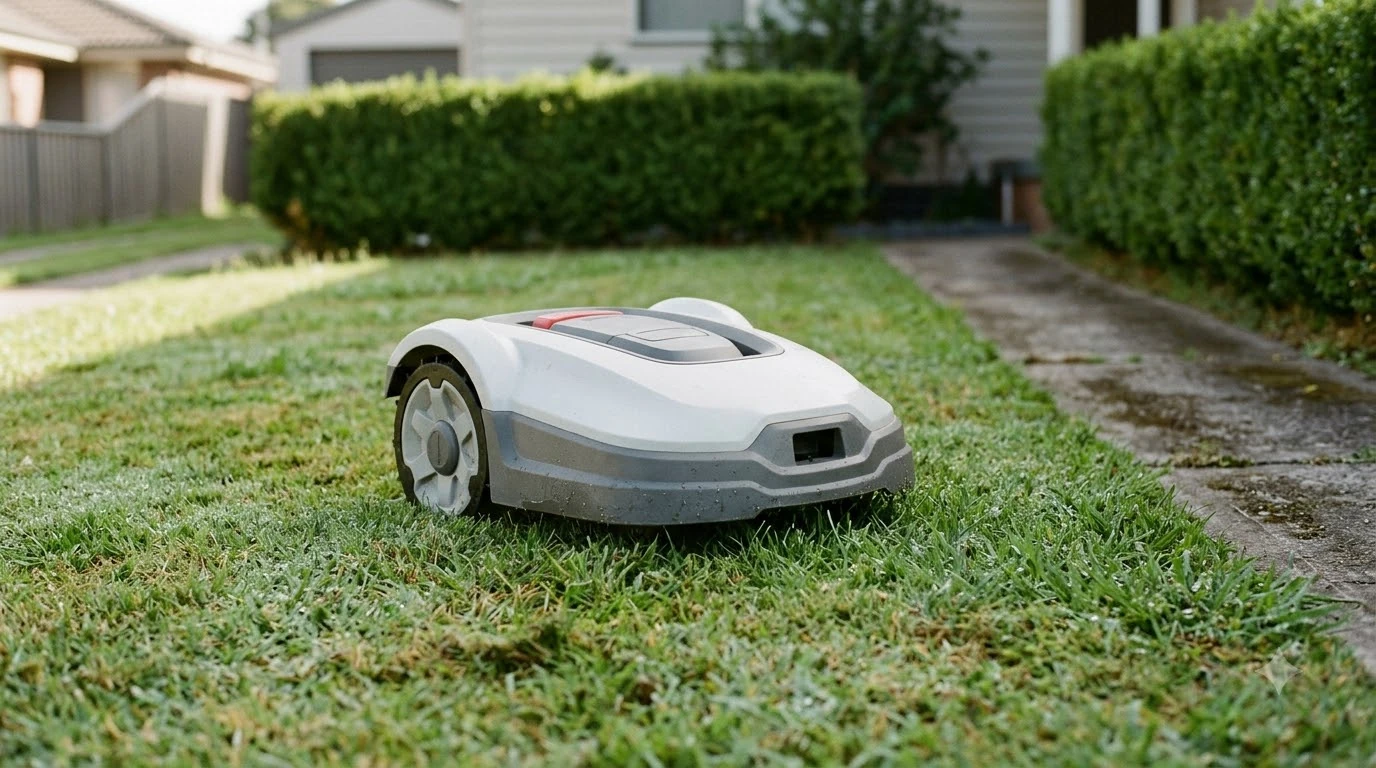

Are robot lawn mowers worth it 2026? For most US homeowners with a flat to moderately sloped lawn of about 1/8 to 1 acre that is mowed weekly, yes, mainly if they now pay a lawn service. The answer depends on three numbers: the purchase price, what you would otherwise spend on mowing, and the time you get back. Price ranges below are as of 2026 and vary by model and retailer, so check current prices before you buy.
The short answer
- Upfront: mid-range wire-free models run roughly $800 to $2,500, with large GPS models above that.
- Running costs: about $1 to $3 a month in electricity, plus blades and a battery replacement every few years.
- Payback: it depends on what you pay now. Against a lawn service, many 2026 guides estimate payback in one to four seasons.
- Time: sources put manual mowing at 30 to 60 minutes a week and robot upkeep at a few minutes.
- Not a fit: very small or very steep lawns, and dense wooded lots where satellite positioning can drop.
Upfront cost: what you pay before the first mow
The price is the first hurdle. LawnRobotHQ’s 2026 guide puts mid-range machines at $800 to $1,500 and says capable models for small lawns start around $400. MowerBot Lab’s September 2026 update gives mid-range wire-free models at roughly $1,200 to $2,500, and lists a Segway Navimow i105N at $799 MSRP. Large GPS-guided models cost more than $2,500. For a step-by-step view of how to choose a model, read the robot mower buying guide before comparing prices.
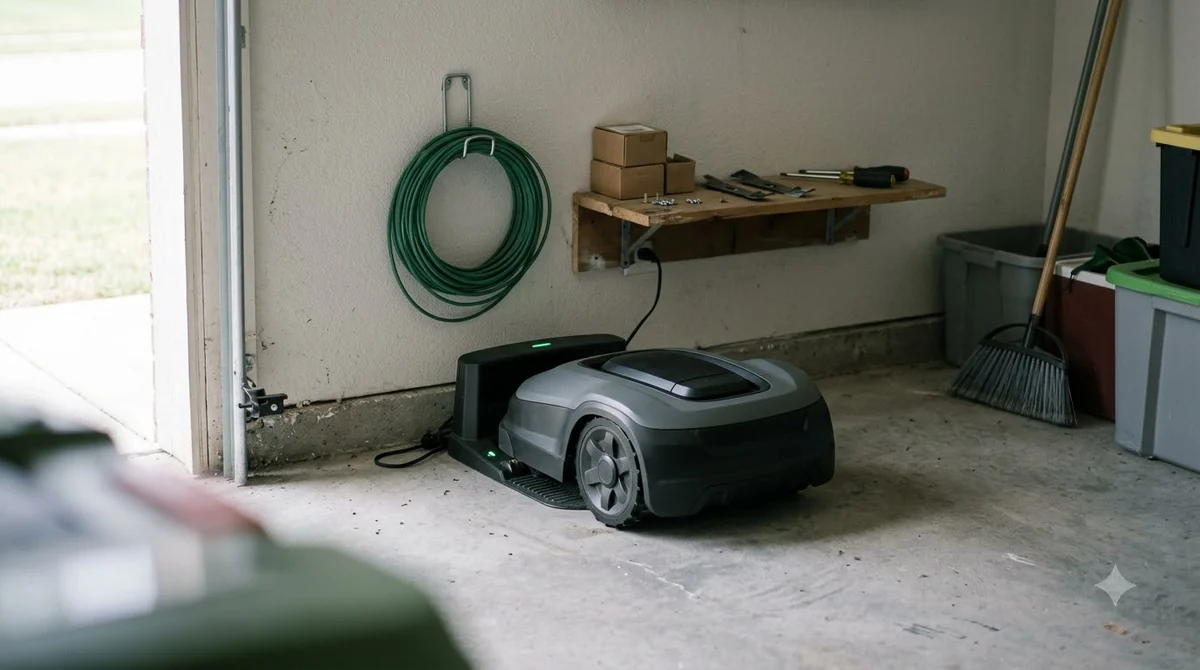
Add the costs that often sit outside the headline price. A wired model needs a boundary-wire kit, which is sometimes not included, and installation can take hours or require a professional. Some buyers also add a garage or shelter. Compare the total, not just the sticker price.
Running and upkeep costs, year by year
Running costs are small. Electricity is a few dollars a month in season. MowerBot Lab estimates $10 to $25 a year, based on 0.5 to 1 kWh per session and a US average of about 17 cents per kWh. Replacement blades run about $15 to $30 a year, and the battery, which costs about $80 to $200, usually needs replacing every two to four years. Expect a service life of roughly 8 to 10 years. The costs over time are itemised in the full cost of owning a mower, including batteries and blades.
Put together, the annual running cost is usually well under $100 once you spread the battery cost across its life. That is the number to compare with a lawn service bill, not the purchase price alone.
The time you get back, and what still needs doing
Manual mowing takes about 30 to 60 minutes a week, once you include setup, cutting, trimming and cleanup. A robot needs a few minutes of checking and cleaning. MowerBot Lab estimates a saving of 1 to 2 hours a week, or 30 to 60 hours over a season of about 30 weeks. Doubts about day-to-day performance are addressed in whether robot mowers really work on typical lawns. Some owners still keep a push mower, as keeping a regular mower alongside a robot explains for edges and corners.
The robot does not do everything. You still need to clear debris, check blades, look after the charging station, and trim edges along walls and beds where the mower cannot reach. Plan for that trimming if you want a fully tidy finish.
Our worked example: robot versus lawn service
To make the comparison concrete, we used a mid-range robot at $1,500 with about $60 a year in running costs, which covers blades, electricity and a share of the battery. The lawn service figures are the per-visit range from the 2026 guides. These are our calculations, not a measured result. The worked example is extended in robot mower payback time for different lawn sizes. A shorter answer on the savings is in savings from a robot mower over time with the main assumptions listed.
| Service pattern | Service cost per year | Approximate payback |
|---|---|---|
| Every two weeks at $40 a visit (15 visits) | $600 | About 2.8 seasons |
| Every week at $40 a visit (30 visits) | $1,200 | About 1.3 seasons |
| Every week at $60 a visit (30 visits) | $1,800 | About 0.9 seasons |
The table shows why the answer changes so much with how often you pay for service. A biweekly service makes payback slow, while a weekly service at higher prices pays back in about one season. If you mow yourself, the saving is mostly time, not money, since a basic electric push mower costs far less than a robot.
Heads up
These paybacks ignore interest, the time to set up the mower, and a battery replacement falling in the payback window. A two-season payback is a reasonable planning figure, not a guarantee.
Lawn size, slope and layout: where a robot fits
MowerBot Lab gives a sweet spot of roughly 1/8 to 1 acre that is flat to moderately sloped, and says a yard under about 1,500 square feet is not clearly worth it. Standard models handle slopes of roughly 20 to 35 percent, and some GPS models go higher. LawnRobotHQ says robots are a poor fit for slopes steeper than the mower’s rating, and for tiny, simple lawns that a push mower clears quickly. Smaller lots change the answer, which robot mowers for small yards explains with examples of layouts that work.
Layout matters as much as size. Beds, trees, narrow gaps and overhanging branches cause more trouble than the lawn area itself. Measure the gaps you need the mower to pass, and check the slope rating against the steepest section, not the average grade. Dense tree cover can also weaken GPS positioning on some models.
Who should buy one: are robot lawn mowers worth it 2026 for your yard?
A robot is most likely to pay off if you pay a lawn service now, if your lawn is in the sweet spot above, and if you value time more than the lowest price. It is less likely to pay off if you already enjoy mowing, if your yard is very small or steep, or if you cannot keep the charging station and edges in order. Older owners may weigh different factors, covered in whether a robot mower suits seniors in terms of effort and safety.
Our reading is that the best test is simple. Write down what you pay for mowing per season, how many hours you spend mowing, and the price of a model that fits your lawn. If the service bill is high and the lawn fits the sweet spot, the robot usually makes sense within a few seasons.
- Measure the lawn. Note the real mowing area after you subtract beds, patios and the dock area.
- Check the slope. Compare the steepest section with the model’s rating.
- Add up your current cost. Include the service bill or your own time and fuel.
- Budget the full cost. Add the boundary kit, installation, blades and a battery replacement.
Frequently asked questions
Are robot lawn mowers worth it for a small yard?
Often not. MowerBot Lab says yards under about 1,500 square feet are not clearly worth it, and a basic push mower can be quicker on a very small lawn.
How much does a robot lawn mower cost to run?
Electricity is about $1 to $3 a month in season, according to 2026 guides. Add roughly $15 to $30 a year for blades and a battery replacement every few years.
How long does it take a robot mower to pay for itself?
It depends on what you pay now. Against a weekly service at $40 a visit, our calculation gives about 1.3 seasons for a $1,500 robot. Against a biweekly service, it takes closer to three seasons.
Is a robot mower worth it for a steep lawn?
Check the rated slope first. Standard models handle roughly 20 to 35 percent, and a steep bank beyond the rating is a poor fit even if the average grade looks manageable.
Sources
- MowerBot Lab, Are Robot Lawn Mowers Worth It in 2026? (independent guide, updated September 7, 2026): upfront price ranges, $10 to $25 a year electricity at about 17 cents per kWh, $30 a year blades and electricity, 1 to 2 hours saved a week, 2 to 4 season payback, and the 1/8 to 1 acre sweet spot.
- LawnRobotHQ, Are Robot Lawn Mowers Worth It? (2026) (independent guide, dated June 5, 2026): mid-range price, $1 to $3 a month electricity, $15 to $30 a year blades, battery cost and lifespan, and the 30 to 60 minutes of manual mowing a week.
 Up next8 min readLearnIs a LiDAR Robot Mower Worth the Extra Cost?Updated Nov 12, 2026
 8 min readLearnAre Robot Mowers Worth It for Large Yards?Updated Nov 11, 2026
 10 min readLearnAre Robot Mowers Worth It for Seniors? 5 Simple ChecksUpdated Nov 11, 2026
 8 min readLearnAre Robot Mowers Worth It for Small Yards?Updated Nov 10, 2026
 9 min readLearnRobot Mower Payback Period vs Lawn Service in 4 StepsUpdated Nov 11, 2026
 7 min readLearnWhy Does My Robot Mower Start Mowing at the Wrong Time?Updated Nov 13, 2026