
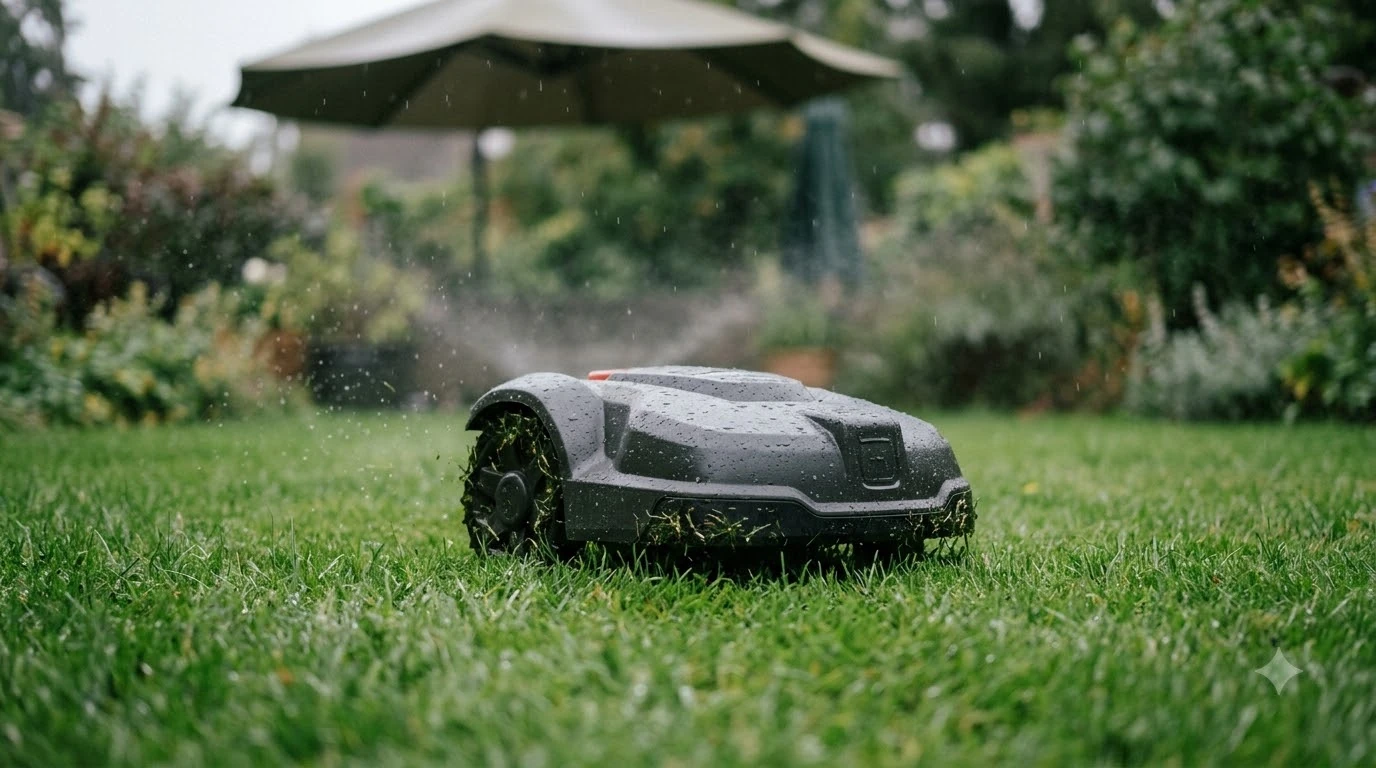

Should a robot mower run after rain? Usually not until at least 24 hours have passed. Husqvarna advises waiting at least 24 hours, and longer after heavy rain or on overcast days. Strong sun can dry a lawn within a few hours, so the right answer depends on how wet the grass still is, not only on the calendar.
The short answer
- Default wait: at least 24 hours after rain, per Husqvarna’s guidance.
- Heavy rain or cloudy weather: wait longer than a day.
- Sunny, breezy day: the lawn can dry in a few hours, but check it first.
- Test before you mow: damp or clumpy grass is still too wet, and visible footprints mean wait longer.
- Rain sensor: the mower’s own delay setting still matters, because the sensor may not reflect how wet the lawn is.
Why wet grass is a problem for a robot mower
Wet grass is a problem for the lawn, the blades, and the mower at the same time. Water makes the blades heavy, so they bend instead of standing up to be cut cleanly. Mammotion notes that wet blades bend and stick together more readily than dry ones, and that moist clippings build up around the cutting area. Rain affects idle mowers as well as running ones, and leaving a mower out in the rain is covered in a related guide. Wet turf is the main reason for lost grip, and wheel slip after rain lists the usual fixes. Drive type changes how a mower copes with moisture, and traction on wet grass is compared for 2WD and AWD designs.
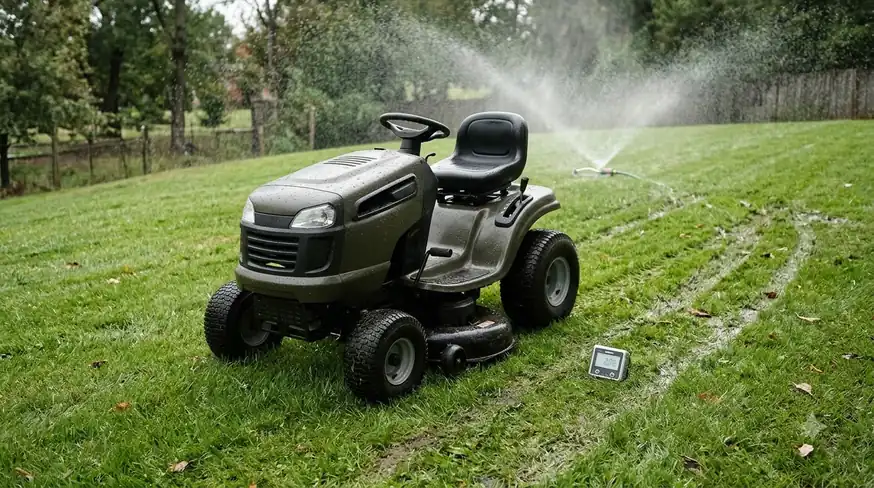
The damage to the lawn comes from tearing. Husqvarna explains that a wet blade tears the grass rather than cutting it, which leaves a patchy finish and opens entry points for disease. The pages it lists include red thread, dollar spot, and rust, and damp conditions favor fungus. Wet clippings can also stick to the mower and spread spores across the yard.
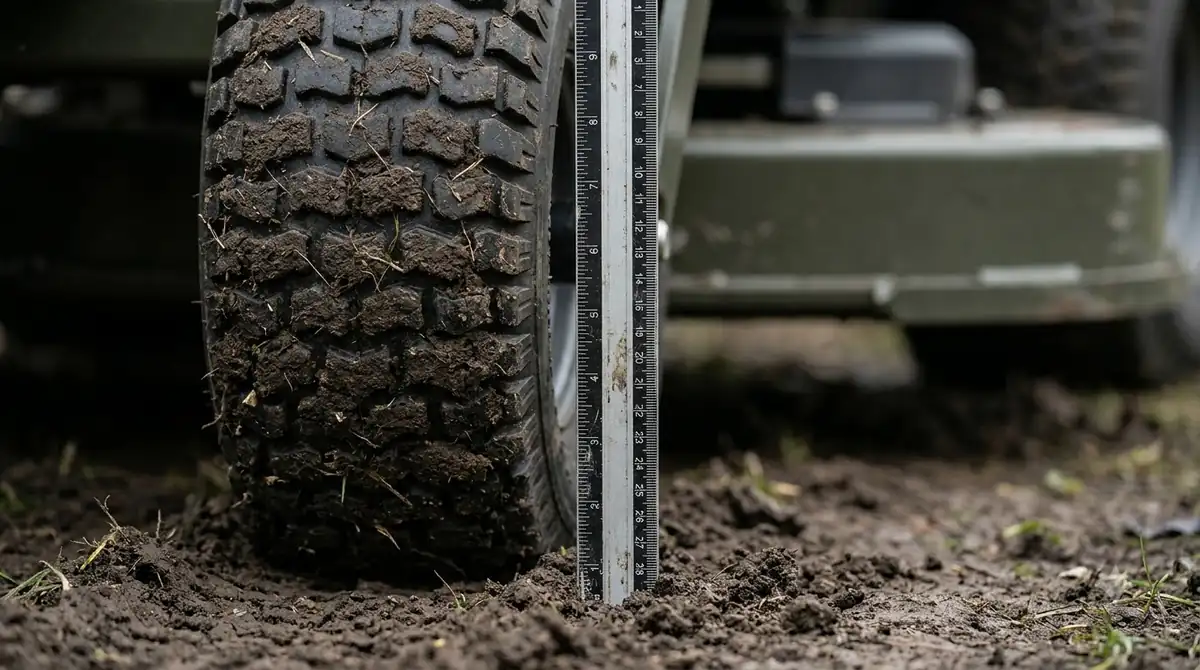
Soil is the second concern. Saturated ground gives less traction, so wheels can slip and leave marks. Mammotion lists wheel slip, wheel marks, and difficulty holding a planned path as symptoms of soft ground. Repeated passes over soaked soil can compact it, which is harder to fix than a messy cut.
Should a robot mower run after rain? How long to wait
There is no single number of hours that fits every yard, so whether a robot mower should run after rain depends on how wet the grass still is. Husqvarna’s baseline is at least 24 hours, with a longer wait after heavy rain or on overcast days. Strong sun can dry the surface in a few hours, which is why the same storm can leave one lawn ready by the next afternoon and another still soggy the next day. Wind dries the lawn but can move debris, so mowing in windy conditions is a useful companion read.
Mammotion takes the same view: a fixed “wait two hours” rule is less reliable than checking the lawn. Heavy rainfall needs more drying time than a light shower. If the grass is still wet a day later, do not assume it has dried.
| Condition | What it looks like | Suggested action |
|---|---|---|
| Light morning dew | Wet tips, dry underneath | Usually fine for a robot mower, per Mammotion |
| Lightly damp lawn | Grass springs back, no footprints | Run only if the bounce test passes |
| Saturated lawn after storm | Clumps, visible footprints | Wait at least 24 hours, longer if cloudy |
| Standing water | Puddles, soft soil | Hold the mower until the water drains |
These categories are a practical summary of the guidance above, not a lab measurement. The bounce and footprint tests are the most reliable check you can make before the mower leaves the dock.
How the rain sensor and delay settings fit in
Many robot mowers have a rain sensor that returns the machine to its charging base when it detects moisture. Worx describes its Landroid rain sensor as returning the mower to the base until conditions improve, with a default delay of 180 minutes that starts once the sensor is no longer wet. The delay can be changed in the app, and turning the robot off and back on resumes it early.
The sensor is useful, but it is not a full answer. It can trigger without rain in very humid conditions, and it stops the mower only while it is active. A lawn that is still saturated after the 180-minute delay can still be too wet to cut well. For that reason, a longer manual wait is the safer habit after a storm.
Heads up
Many robot mowers are rated to run in the rain, and Husqvarna notes they are light enough to limit soil compaction. Being rated for rain is not the same as being built for a waterlogged lawn. Check the owner’s manual for the wet-weather setting your model uses.
When it is fine to run the mower sooner
Running sooner makes sense when the rain was light and the lawn is only damp. Husqvarna notes that robot mowers cut small amounts at a time, which reduces tearing and clumping. That is a real advantage over a single heavy cut on a wet lawn, but it does not remove the risk from saturated grass. Heavy rain often arrives with storms, and thunderstorm handling explains what a mower does when one rolls in. Wet and frozen ground are common in early spring, and spring start timing offers more detail for that season.
If the grass is long after a rainy week, a higher cutting height can help. Husqvarna advises setting the height higher than usual on wet grass, because cutting it too short on a wet lawn causes tearing and clumping. Raise the blade for the first run, then lower it back once the lawn dries.
What to check before you let it run
Walk the lawn before you set the schedule. Look for standing water, low spots that hold puddles, and areas where the soil is soft. Do the bounce test on a few spots, and do the footprint test on the soft ground near the edges. If either test fails, delay the run. If the rain came with a storm, lightning protection steps explain how to reconnect the mower safely.
Then look at the schedule itself. If your mower runs on a timer, make sure the next scheduled run falls after the drying window you chose. A rain delay set in the app protects you only if it is long enough for your yard.
Frequently asked questions
Should a robot mower run after rain the same day?
Husqvarna advises waiting at least 24 hours after rain, and longer after heavy rain or on overcast days. Strong sun can dry the lawn in a few hours, so check the grass before the mower runs.
Does the rain sensor decide when the mower runs again?
The sensor returns the mower to its base when it detects moisture, and Worx uses a default 180-minute delay that starts once the sensor dries. That delay does not measure how wet the lawn is, so a manual check still matters after a storm.
Can a robot mower cut wet grass in the morning dew?
Light morning dew is generally less of a problem than saturated grass, according to Mammotion. If the grass is only wet at the tips and the bounce test passes, the mower can usually run.
Will running the mower on wet grass damage the lawn?
It can. Wet grass tears instead of cutting cleanly, which leaves a patchy finish and can open the lawn to disease. Saturated soil can also be compacted or marked by wheels, so waiting for the lawn to dry is the safer choice.
Sources
- Husqvarna, “Can you mow wet grass” (manufacturer): 24-hour wait, bounce and footprint tests, clumping and disease risk.
- Worx Landroid wiki, Rain Delay and Sensor (manufacturer): sensor behavior, 180-minute default delay, resume by power cycle.
- Mammotion, “Can robot lawn mowers cut wet grass” (manufacturer): wet blades, soft ground, dew versus saturated grass.
 Up next9 min readLearnShould a Robot Mower Run After Aeration?Updated Nov 12, 2026
 6 min readLearnHow Often Should a Robot Mower Run?Updated Nov 14, 2026
 8 min readLearnCan Robot Lawn Mowers Mow in the Rain? Light vs Heavy RainUpdated Nov 11, 2026
 8 min readLearnHow to Adjust Cutting Height After Overseeding With a Robot MowerUpdated Nov 19, 2026
 9 min readLearnHow to dry out a robot mower after heavy dew safelyUpdated Nov 19, 2026
 7 min readLearnHow to Remap a Robot Mower After LandscapingUpdated Nov 14, 2026