


A robot mower making loud noise is most often out of balance, usually from a blade problem, debris under the deck, or grass that is too tall for the cutting height. Husqvarna’s support guidance for a buzzing Automower points to three causes: two blades on one screw, dull or mismatched blades, and tall or dense grass. Start with those checks before assuming a worn motor or bearing.
The short answer
- Check the blades first: each screw should hold one blade, and all blades should be replaced together, not one at a time.
- Clear the deck: grass, twigs, and stones trapped around the blade disc cause rattling and vibration.
- Adjust the height: tall or dense grass strains the motor, so raise the cut and lower it gradually.
- Find the source: spin the blade disc and each wheel by hand to see whether the noise comes from the cutting area or a wheel.
- Call the dealer if the noise continues after these steps.
Robot mower making loud noise: blade problems come first
When a robot mower making loud noise is reported by neighbors or heard from the house, the cause is usually something that can be checked in minutes. The blades are the first place to look because they spin fastest and carry the most weight. Husqvarna’s buzzing-sound guidance names two blade-related causes. The first is “two blades on one screw,” which creates imbalance and vibration. Check that each screw holds only one blade and remove any extra. Dull or worn blades are the first suspect, and blade change interval for noise problems gives the usual timing. For general tips beyond fault finding, ways to reduce mower noise collects practical options.
The second is dull, chipped, or mismatched blades. Worn or broken blades cause vibration and uneven cutting. The guidance is direct: “Replace all three blades at the same time.” Use new screws each time, and do not mix blade types. Husqvarna’s care tips also say not to sharpen blades for reuse, because this can damage the mower.
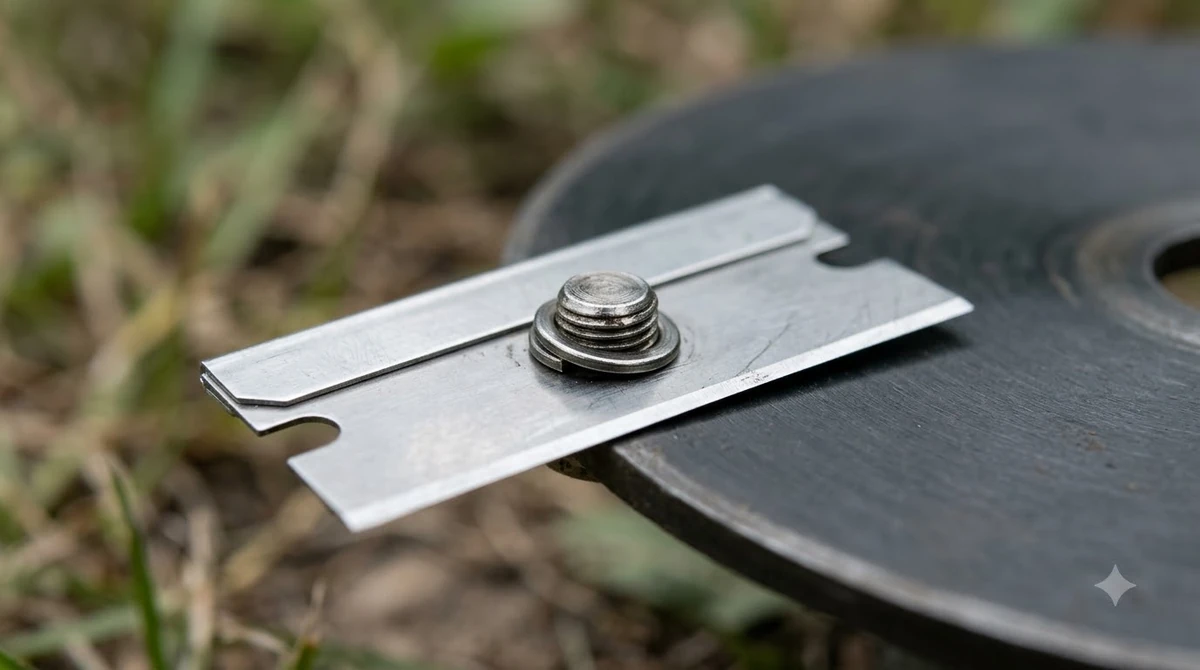
Debris under the deck and around the blade disc
Grass, twigs, and small stones can build up under the cutting deck and around the blade disc. Once that material gets packed in, the disc no longer spins freely and the mower sounds rough. Repair guides for robot mowers generally advise turning the mower over, after switching it off and removing the battery where the manual allows, and clearing built-up material by hand.
Clean the skid plate and wheels as well. Husqvarna’s care tips recommend brushing the wheels, body, and skid plate with a dry brush for stubborn debris, and say to avoid hoses, pressure washers, and solvents. Work with gloves on, because blades are sharp even when the mower is off.
Heads up
Disconnect power or remove the battery before working near the blades, and wear gloves. Never clean the mower with the power still on.
Tall or dense grass can make the mower sound strained
Sometimes a robot mower making loud noise is simply working too hard, rather than failing. A loud mower is sometimes working too hard. Husqvarna lists tall or dense grass as a cause, because it strains the motor and blades. The fix is to raise the cutting height first, then lower it gradually over time, and to mow regularly so each pass removes only a small amount of grass. Mowing more often keeps grass shorter, as mowing frequency in dense grass explains.
This is also the first thing to check after a long gap between mowing sessions. A lawn that has grown during a week away can overload the mower on its first run, and the noise may fade once the grass is back in range.
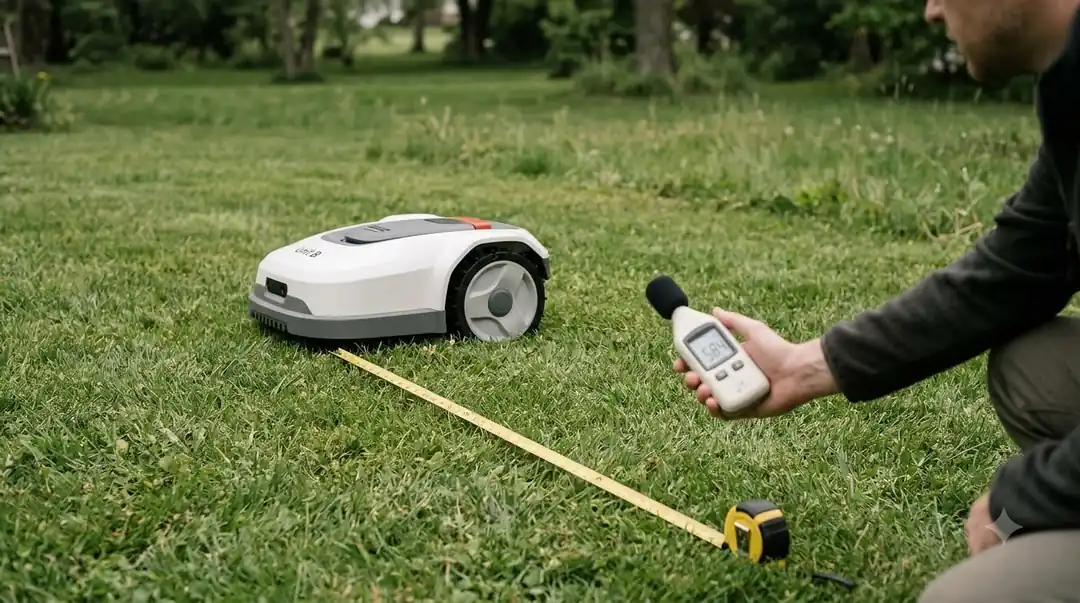
Wheel and drive noise: how to tell where the sound comes from
If the blade checks come back clean, locate the sound. Turn the mower off, then spin the blade disc by hand and listen for scraping or catching. Next, spin each wheel by hand. Run the mower briefly and listen again to see whether the noise follows the cutting area or one particular wheel. Luba owners can check Luba replacement wheels when the drive noise comes from the tires.
A grinding or rattling noise from a wheel can point to worn bearings or debris in the drive area. Third-party repair guides commonly describe a bearing noise that gets louder over time, and warn that running with failing bearings can damage the motor. Our reading is that bearing work is a job for the dealer unless the manual shows a simple access and replacement procedure, since parts and torque specifications differ between brands.
When a robot mower making loud noise needs a dealer
Stop the mower if the noise is loud, grinding, or accompanied by a burning smell, and do not run it to see whether the noise goes away. Husqvarna’s guidance is to contact a local dealer if the problem persists after the checks above. Keep a short note of when the noise started, what you changed, and whether the blades were replaced, since that history speeds up diagnosis. Regular care helps avoid noise, which routine upkeep to prevent noise describes. Neighbours and community boards often raise noise first, so see how rules for robot mowers in HOA communities treat it.
Regular professional service helps prevent these problems from building up. Husqvarna’s care tips suggest an authorised dealer service about every six months, which is a reasonable baseline for owners who do not want to troubleshoot every noise themselves.
Frequently asked questions
Why is my robot mower suddenly so loud?
The most common causes are an unbalanced blade set, debris under the deck, or grass that is too tall. Check the blades and clear the deck first.
Should I replace one blade or all of them?
Husqvarna’s guidance is to replace all three blades at the same time, using new screws, so the disc stays balanced.
How do I find out if the noise is from the blades or a wheel?
Spin the blade disc and each wheel by hand, then run the mower briefly and listen. The sound’s location usually points to the cause.
Is it safe to keep running a noisy mower?
It is safer to stop and inspect. Grinding can mean debris or failing bearings, and running the mower can make the damage worse.
Sources
- Husqvarna, why is my Automower making a buzzing sound (manufacturer): two blades on one screw, worn blades, tall grass, and dealer contact.
- Husqvarna, Automower care and maintenance tips (manufacturer): cleaning method, skid plate and wheel brushing, blade replacement, and service interval.
 Up next7 min readLearnRobot Lawn Mower Problems: Causes and FixesUpdated Nov 13, 2026
 6 min readLearnWhy Does My Robot Mower Spin in Circles? Causes and FixesUpdated Nov 14, 2026
 7 min readLearnRobot Mower Error No Loop Signal Meaning: Causes and FixesUpdated Nov 14, 2026
 6 min readLearnDo Robot Mowers Cause Lawn Tracks? Causes and FixesUpdated Nov 14, 2026
 9 min readLearnRobot mower wifi keeps disconnecting: causes and fixesUpdated Nov 12, 2026
 8 min readLearnWhat Do Robot Mower Error Codes Mean? Causes and First FixesUpdated Nov 12, 2026