
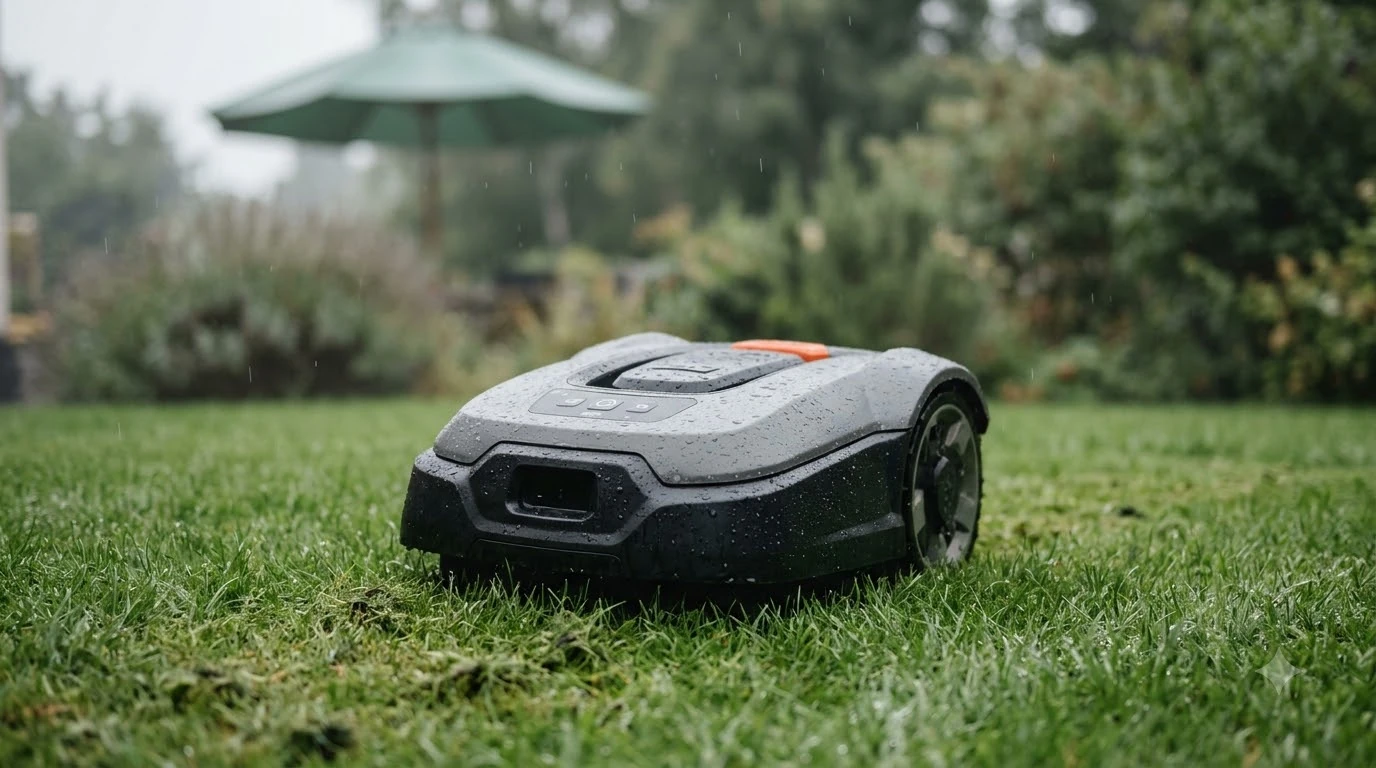

A LiDAR robot mower can work on a wooded lot because it finds its way with laser pulses and a 3D map of trees, fences and borders, not only with satellite signals. Satellite-based RTK navigation is the weak point under heavy canopy, so the lidar robot mower for wooded lot question comes down to how much the trees block the sky and how the mower reads its surroundings. This guide explains what the manufacturers and sources say, where the limits are, and what to check before you buy.
The short answer
- Why it helps: LiDAR does not need a clear view of satellites, so dense canopy hurts it less than RTK.
- Main limit: fog and heavy rain can scatter the laser beams, according to Ecovacs and Anker.
- Proof gap: no independent test data on LiDAR accuracy under tree canopy was found in this review.
- Before buying: check how open the lawn is, how easy the sensors are to clean, and the total cost tier.
Why RTK struggles under a tree canopy
RTK mowers depend on satellite signals, and a dense tree canopy interferes with those signals. Ecovacs states that RTK struggles under dense trees and buildings because obstructions interfere with satellite connectivity. The effect is not only about blocked signals. Trees can also weaken signals and reflect them, which creates multipath errors that make the position estimate less reliable.
A base station is part of the problem too. RTK needs its base in an open, unobstructed area, and Ecovacs notes that incorrect setup reduces positioning precision. On a wooded lot, finding a spot with a clear view of the sky can be hard, which is one reason to look at LiDAR instead. If you stay with RTK, read about placing the RTK antenna in a yard with trees first. For a lidar robot mower for wooded lot setup, that base placement question often decides the choice before any other feature is compared.
- Blocked signals: tree cover reduces the satellites the mower can see.
- Reflected signals: bounced signals can distort the position fix.
- Lost fix: Mowrator says a lost fix can lead the mower to pause or correct its route.
Heads up
A momentary RTK drop is different from a long stretch under dense cover. Yarbo says that when RTK drops, vision, IMU and odometry take over, but that describes short interruptions.
How LiDAR maps a wooded yard without satellites
A LiDAR mower (see how LiDAR navigation works) sends out thousands of tiny laser pulses and measures how long each pulse takes to bounce back. Anker describes this as building a digital 3D map of the area, which the mower then uses to plan where to mow. The map is updated as the mower works, so changes such as a fallen branch or a new garden bed can be picked up over time.
Because the sensor reads the physical shape of the yard, trees, fences, raised beds and borders become reference points. Anker says LiDAR can use these features and describes the technology as suited to gardens with trees, obstacles and shaded areas. Ecovacs lists LiDAR as unaffected by shade or structures. Those are vendor statements, so treat them as the claims they are and check them against your own lot.
| Factor | RTK | LiDAR |
|---|---|---|
| Under dense tree cover | Weakened by blocked and reflected satellite signals (Ecovacs, Mowrator) | Vendor sources say shade and structures do not affect it (Ecovacs) |
| Fog and heavy rain | Not covered by the sources read | Can scatter laser pulses (Ecovacs, Anker) |
| Setup | Base station in an open, unobstructed area; incorrect setup reduces precision (Ecovacs) | No satellite base station to place (our reading) |
| Typical cost | Generally more budget-friendly (Anker) | Generally more expensive (Anker, Ecovacs) |
The table shows the trade-off in one view, and the full RTK vs LiDAR vs vision comparison goes further. Anyone weighing a lidar robot mower for wooded lot use should also read the cost and cleaning rows, because those are the ones that change the total spend. LiDAR removes the base station and the satellite dependence, but it adds higher cost and its own weather and cleaning limits. For a lot where trees cover most of the yard, that trade-off usually favors LiDAR, but the exact result depends on how the canopy is laid out.
What happens when the mower loses its signal
Fallback behavior is one of the first things to ask about any lidar robot mower for wooded lot purchase. A vision-based fallback can keep a mower on course for a short time when GPS weakens under dense cover. Lymow states that its vision system can take over for up to 10 minutes in those conditions. That figure is a vendor claim with no independent test data, so it is best read as a design goal, not a guarantee. A separate guide covers a vision robot mower for poor satellite signal in more detail.
Vision systems also have a blind spot for small obstacles. Lymow notes that the obstacle system may not always trigger on smaller branches. On a wooded lot, that matters most where low branches, fallen twigs or roots sit in the mowing path, so check the lawn for these before the first run.
When a boundary wire is the satellite-free choice

A boundary wire needs no satellites and no LiDAR, which makes it a dependable option where the canopy is very heavy. Lymow gives a wired install time of 4 to 8 hours. That work is the main cost of the choice, and in our reading it grows with the length of the perimeter.
- Breakage: landscaping equipment, burrowing animals and frost heave can damage the wire.
- Slopes: Lymow describes wired systems as impractical on steep terrain.
- Repairs: a broken wire stops the mower until it is found and fixed.
Shade and tree roots still affect the grass
A robot mower can cut under trees, but the turf under trees is a separate question. Mississippi State University Extension notes that shaded turf may need extra water because tree roots compete for moisture. The same source says foot traffic stresses shaded turf, which matters on a lot where the mower runs the same paths every day.
Shaded grass generally does better with a higher cut (our reading, not a figure from the sources above), so check the mowing height for shade grass for your turf type. Shade is a scope boundary for the mower choice, and it applies to any lidar robot mower for wooded lot setup: LiDAR can navigate under trees, but it cannot make a shaded lawn grow like an open one.
LiDAR robot mower for wooded lot: what to check before you buy
A wooded lot has more variables than an open lawn, so a short checklist helps. These steps follow from the sources above and are our reading, not a test result.
- Measure the canopy. Walk the lot and note where the tree cover is dense and where the sky is open.
- Check the lawn openness. Anker notes that very open lawns give LiDAR fewer reference points, so a mix of trees and structures helps.
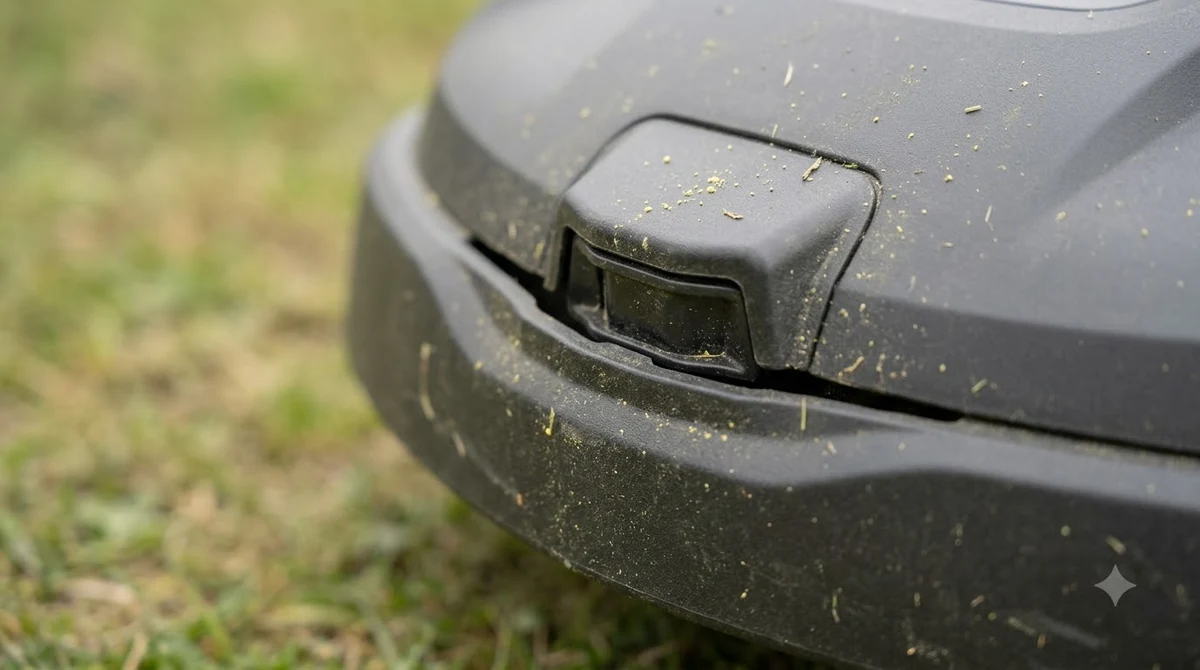
- Plan sensor cleaning. Anker says LiDAR sensors may need cleaning after rain, mud or dust, so pick a model with easy access to the sensor.
- Plan for weather. Fog and heavy rain can scatter laser beams and reduce LiDAR accuracy, so decide where the mower waits out bad weather.
- Ask for the canopy claim in writing. Vendor accuracy numbers are marketing claims, so ask how a lidar robot mower for wooded lot performs under tree cover and request independent test results or a demo under your own trees.
Frequently asked questions
Can a lidar robot mower for wooded lot work without an RTK base station?
Yes, LiDAR navigation does not need a base station or a clear view of satellites. Anker describes LiDAR as suited to gardens with trees and shaded areas, but no independent accuracy test under canopy was found, so check the claim against your own lot.
Does fog or heavy rain stop a LiDAR mower?
Fog and heavy rain can scatter the laser pulses and reduce how clearly the mower reads its surroundings. Ecovacs and Anker both flag this as a limit, so ask the maker how the model behaves in poor visibility.
Is a lidar robot mower for wooded lot worth the extra cost?
LiDAR is generally more expensive than RTK or basic vision models, according to Anker and Ecovacs. It is most worth considering when the canopy blocks satellites and a base station cannot be placed in an open spot.
Do I still need to cut shaded grass higher?
Shaded turf may benefit from a higher cut (our reading), and MSU Extension notes it may need extra water because of tree root competition. The mower type does not change the grass needs, so set the height for the turf, not for the navigation system.
Sources
- LiDAR vs RTK robot lawn mowers (Ecovacs): RTK interference under trees, LiDAR shade and fog limits, setup and cost.
- LiDAR robot lawn mower (Anker): how LiDAR maps the yard, weather and sensor cleaning, open-lawn limits, cost.
- RTK vs wire robot mower setup (Lymow): vision fallback claim, wire install time and breakage.
- RTK robot mower signal loss and trees (Mowrator): canopy effects on satellite signals and lost fix handling.
- Selecting and managing turfgrass for shade (Mississippi State University Extension): shaded turf water needs and root competition.
 Up next8 min readBy YardBest Robot Mower for a Mobile Home Lot: What to Check Before You BuyUpdated Nov 11, 2026
 8 min readBy YardCan a Robot Mower Work in a Fenced Backyard?Updated Nov 11, 2026
 8 min readBy YardCan a Robot Mower Work in a Yard With a Detached Garage?Updated Nov 11, 2026
 8 min readBy YardCan a Robot Mower Work in a Yard With Gravel Path Crossings?Updated Nov 11, 2026
 9 min readBy YardCan a Robot Mower Work in a Lawn on Both Sides of the House?Updated Nov 11, 2026
 9 min readBy YardCan a Robot Mower Work in a Yard With a Gate Between Zones?Updated Nov 11, 2026