
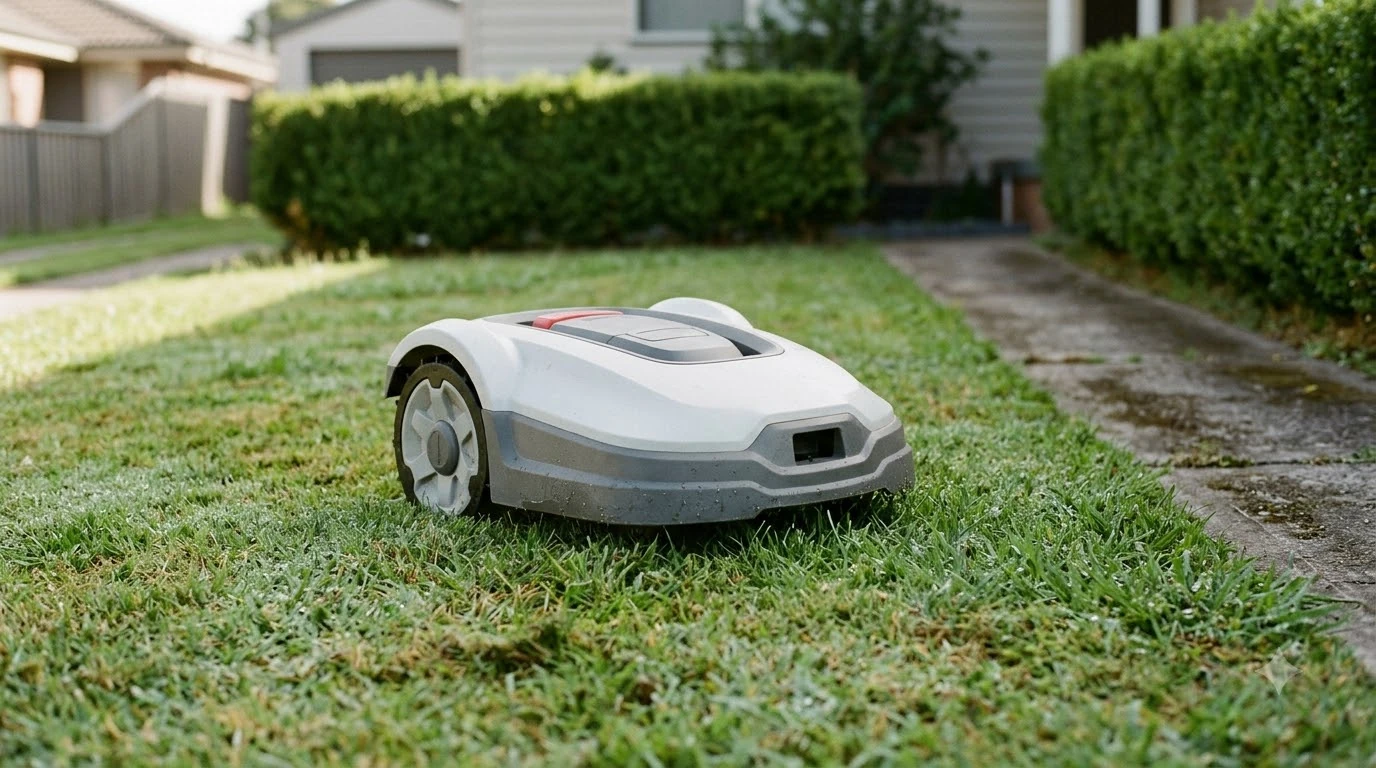

Will a robot mower get stuck on a newly sodded lawn? It can, mainly when the rolls have not rooted yet and the wheels push, lift or sink into soft soil. Extension guidance says sod should begin rooting within about 14 days, so the first few weeks are when a robot mower is most likely to cause trouble. Checking the rolls and the soil before the robot runs lowers the risk.
The short answer
- Main risk: rolls that have not rooted can lift, shift or tear as the mower turns.
- Soft soil: wet ground can form wheel ruts that pull sod out of place.
- Timing: sod should begin to root within about 14 days, according to Illinois Extension.
- Check first: do a tug test on the rolls and confirm the soil is not saturated.
- Cutting height: keep the blade high until the lawn is established, and do not remove more than one-third of the grass height in one pass.
Will a Robot Mower Get Stuck on a Newly Sodded Lawn? Why New Sod Is Fragile
New sod is fragile because its roots have not yet grabbed the soil underneath. Illinois Extension says sod ideally begins to root within 14 days, and that rooting speed varies with the season. Until the roots take hold, a roll can move when a wheel turns on it, which is the situation where a robot mower is most likely to stall or lift a section.
Season matters too. NC State Extension says warm-season sod does not produce roots unless the soil temperature exceeds 55 F for several weeks, so sod laid late in the warm season can take longer to root than the 14-day ideal. So will a robot mower get stuck on a newly sodded lawn laid late in the season? Our reading is that it is more likely, and the robot should wait longer in that case, not run on the usual schedule.
Watering matters during this window. Illinois Extension advises watering deeply at first, then keeping the soil moist but not saturated. It also notes that sod acts like mulch, so you may need to water less often than you expect. Overwatering can make the soil soft enough for wheel ruts, so the goal is damp soil, not wet soil.
Our reading is that the seams between rolls are the weakest spots. A seam that has not knit can lift under repeated turns, and a robot mower turns on the same few spots many times a day.
How wheel ruts and wet soil affect a robot mower
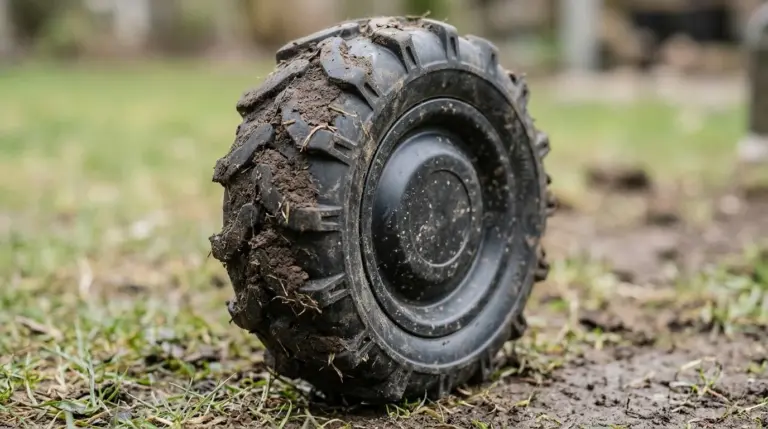
Wheel ruts form most easily when the soil is wet, because soft ground gives way under the wheels. Husqvarna’s wet-grass guidance says that mowing after heavy rain can create wheel ruts in soft, wet soil, and it recommends waiting at least 24 hours after rain before mowing. Strong sunlight may dry the lawn in a few hours, while heavy rain or overcast weather may need longer.
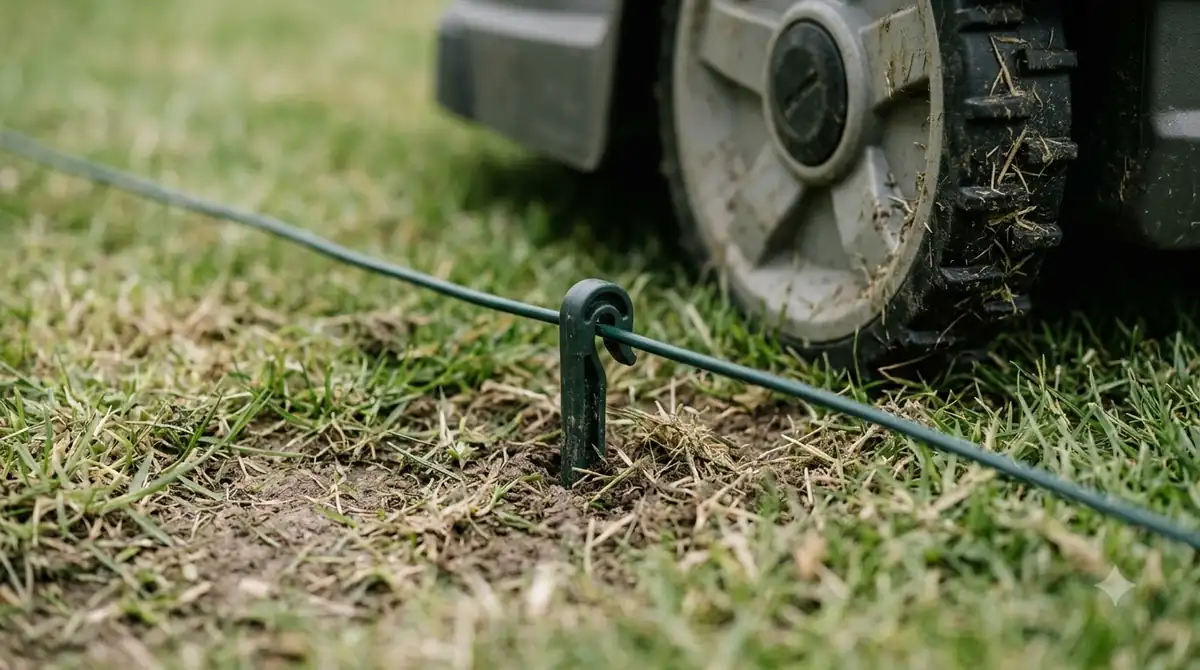
Husqvarna also notes that many robot mowers are certified to operate in the rain and are usually lightweight enough not to cause soil compaction. That is a useful distinction. The bigger risk on new sod is usually the combination of unrooted rolls and soft ground, not the weight of the machine alone. Colorado State University Extension adds that soils are more prone to compaction when they are wet.
A simple footprint test helps. Husqvarna says that if your footsteps leave visible marks in the soil, it is best to wait a bit longer before mowing. In short, a robot mower is likelier to get stuck on a newly sodded lawn after rain than on a dry day, so see our notes on whether robot lawn mowers can mow in the rain.
When the robot should start on new sod
The practical answer to “will a robot mower get stuck on a newly sodded lawn” is a passing tug test and grass that has reached the first-mow height, not a fixed calendar date. Illinois Extension says to tug on the rolls to see whether they have rooted, and to mow once the grass reaches 3 to 4 inches. It also advises removing no more than one-third of the grass height in a single mowing. NC State Extension recommends starting to mow a new lawn when the grass is about 50 percent taller than the height you want to keep.
| Check | What it tells you | Source |
|---|---|---|
| Tug test on the rolls | Resistance means the sod has started to root | Illinois Extension |
| Grass height of 3 to 4 inches | Ready for a first mow, with one-third removed at most | Illinois Extension |
| 50 percent taller than target height | Time to start mowing the new lawn | NC State Extension |
| Footprints stay visible | Soil too soft; wait longer | Husqvarna |
University of Arkansas Extension advises cutting sod with a sharp mower to avoid tearing and pulling the grass, and starting at a slightly higher mowing height than you ultimately want to prevent scalping. Our reading: a sharp blade and a high setting are the safer starting point for a new lawn, and the setting can come down gradually once the roots are established. Our guide to the best mowing height for a robot-mowed lawn covers the longer-term setting.
Signs the lawn is not ready for a robot mower
A lawn is not ready when seams lift, footprints stay visible, or the soil is still saturated after rain. These are the signs to act on before a robot mower runs unattended on a newly sodded lawn. Our checklist for how to prepare your yard for a robot mower covers the rest of the yard.
- Rolls lift or curl at the seams when you walk on them.
- The tug test still pulls a roll loose.
- Footprints or ruts remain in the soil after a recent rain.
- The grass is well under 3 inches tall and the blade is set low.
Heads up
The sources used here give rooting and first-mow guidance for lawn mowing in general. They do not give a robot-specific waiting period for new sod, so check your robot’s manual and keep the area out of its schedule until the lawn passes these checks.
What to do if the robot gets stuck on new sod
If a robot mower gets stuck on a newly sodded lawn, lift it off rather than letting the wheels spin on the same spot. The steps below are our reading of general lawn guidance, and your robot’s manual has its own recovery steps, which come first. For repeat trouble, see why a robot mower gets stuck in the same spot.
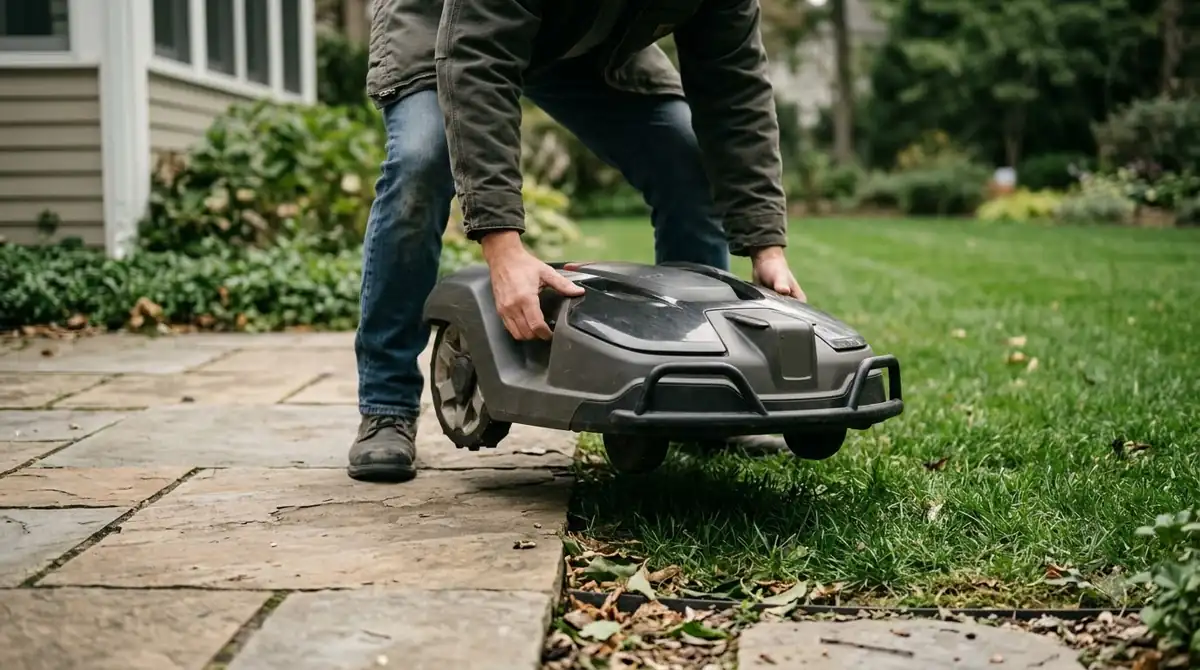
- Lift it off. Move the mower to firm ground before you restart it.
- Check the rolls. Press any lifted seam back into place and water it lightly.
- Look for ruts. Fill or level them, and let wet soil dry before the next run.
- Check the boundary and height. Confirm the boundary wire is still in place, as in our guide to installing a robot mower boundary wire, and that the cutting height suits a young lawn.
- Hold the schedule. Keep the robot off the new area until the tug test passes.
Frequently asked questions
How long before a robot mower can run on new sod?
Extension guidance says sod should begin rooting within about 14 days when it is watered properly, and the tug test is the practical check. Robot-specific waiting times differ by manufacturer, so check your manual before you schedule runs.
Can a robot mower damage new sod?
It can, when the rolls have not rooted or the soil is wet, because wheels can form ruts and pull sod out of place. Husqvarna notes that many robot mowers are light enough not to compact soil, but ruts still form in soft ground.
Should I raise the cutting height on a new lawn?
Yes. Illinois Extension advises a first mow once the grass reaches 3 to 4 inches, and it warns against removing more than one-third of the blade height in a single pass. Keeping the height high on a young lawn gives the roots more time to grip.
Does new sod need water while it roots?
Yes. Illinois Extension says to water deeply at first, then keep the soil moist but not saturated. Sod acts like mulch, so watering can be less frequent than you might expect, and standing water makes ruts more likely.
Sources
- Planting a New Lawn (University of Illinois Extension): sod rooting within 14 days, tug test, 3 to 4 inch first mow, one-third rule, watering.
- Can you mow wet grass? (Husqvarna): 24-hour wait after rain, wheel ruts in wet soil, footprint test, robot mower weight.
- Lawns (NC State Extension Gardener Handbook): start mowing when grass is about 50 percent taller than desired height.
- Soil compaction (Colorado State University Extension): soils are more prone to compaction when wet.
- Establishing a Lawn from Sod (University of Arkansas Extension): a sharp mower avoids tearing sod.
 Up next8 min readBy YardWill a Robot Mower Get Stuck on a Newly Seeded Lawn?Updated Nov 11, 2026
 7 min readBy YardWill a Robot Mower Get Stuck on a Lawn with Mole Hills?Updated Nov 11, 2026
 9 min readBy YardWill a Robot Mower Get Stuck on a Lawn With Holes and Dips?Updated Nov 11, 2026
 9 min readBy YardWill a Robot Mower Get Stuck on a Soggy Lawn?Updated Nov 11, 2026
 9 min readBy YardWill a Robot Mower Get Stuck on a Lawn with Mulch Beds?Updated Nov 11, 2026
 8 min readBy YardWill a Robot Mower Get Stuck on a Lawn With Gravel Edges?Updated Nov 11, 2026