
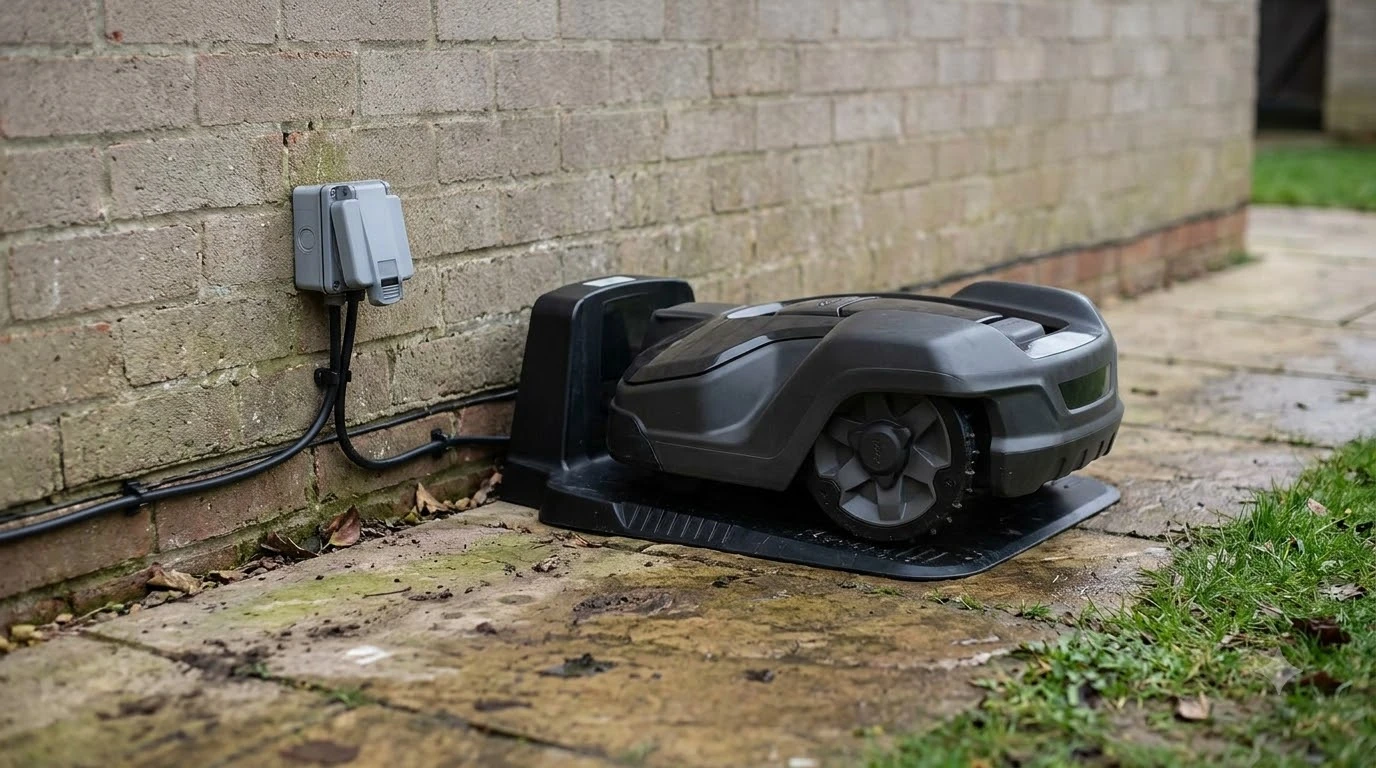

The best robot lawn mower for Virginia lawns depends on three things: lawn size, slope, and the grass you grow. Virginia yards range from small suburban plots to rural acreage, and the grass species differ by property. Match those inputs first, then compare models on boundary setup and weather handling.
The short answer
- Size: buy a rated lawn area above your real lawn area, because beds, trees and tight corners reduce usable space.
- Slope: compare the stated slope limit for the work area and for the boundary wire, and measure your steepest section.
- Grass: Virginia Tech Extension gives a 1.5 to 3.0 inch mowing range for common cool-season grasses in its Southwest Virginia publication, so the mower must cut in that range.
- Boundary and weather: confirm the boundary method and the rain guidance in the manual of the exact model before you buy.
Which grasses Virginia lawns usually grow
Cool-season grasses are the common base for many Virginia lawns, and they set the cutting height your robot mower has to reach. The Virginia Tech Extension turfgrass publication names tall fescue, Kentucky bluegrass, perennial ryegrass, creeping red fescue and Chewings fescue as cool-season options. That publication is written for surface-mined land in Southwest Virginia, so treat it as a regional reference rather than a statewide survey.
The same source gives a mowing range of 1.5 to 3.0 inches for Kentucky bluegrass, tall fescue, perennial ryegrass and the fine fescues, and a narrower 1.5 to 2.5 inch range for Kentucky bluegrass and tall fescue during establishment. It describes tall fescue as having good drought tolerance, but as susceptible to brown patch in wet, hot summers. Kentucky bluegrass is best suited to moderate-to-high sunlight, and on shady sites the publication suggests mixing it with perennial ryegrass or a fine fescue.
| Grass | Mowing height cited | Notes from the source |
|---|---|---|
| Tall fescue | 1.5 to 3.0 in (Virginia Tech range) | Good drought tolerance; brown patch risk in wet, hot summers |
| Kentucky bluegrass | 1.5 to 2.5 in (Virginia Tech establishment range) | Best in moderate-to-high sun; mix with ryegrass or fine fescue in shade |
| Perennial ryegrass | 1.5 to 3.0 in (Virginia Tech range) | Not recommended in pure stands outside heavily used fields |
Our reading: a mower with a wide, adjustable height range is more useful for a Virginia lawn than one that cuts well only at a single height. Check the lowest and highest setting in the manual before you compare any other feature, and see fescue cutting height for the tall fescue range.
Match the rated lawn area to your yard
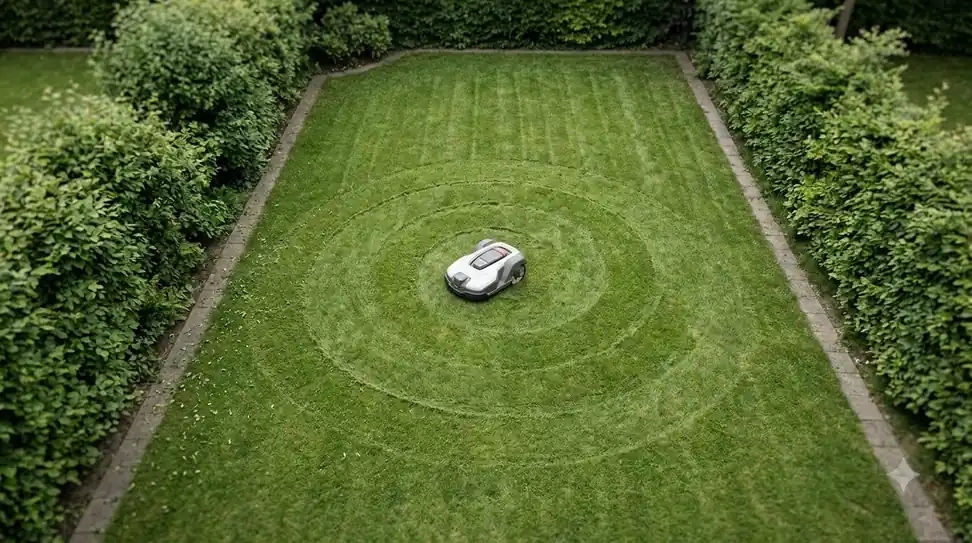
Each robot mower carries a rated lawn size, and for the best robot lawn mower for Virginia lawns that rating is a guide rather than a hard cap. Husqvarna’s US range page lists 410 iQ for 0.5 acre, 420 iQ for 1 acre, 440 iQ for 2 acres, 435 iQ AWD for 1.3 acres, 560 EPOS for 1.5 acres and 580 EPOS for 2 acres, each with a plus or minus 20 percent tolerance, as of November 2026. The Husqvarna robotic lawn mower range is the source for these figures.
| Husqvarna model (US listing) | Rated lawn size, plus or minus 20 percent |
|---|---|
| 410 iQ | 0.5 acre |
| 420 iQ | 1 acre |
| 440 iQ | 2 acres |
| 435 iQ AWD | 1.3 acres |
| 560 EPOS | 1.5 acres |
| 580 EPOS | 2 acres |
Our reading: a yard near the top of a model’s rated range, with several flower beds or a lot of trees, is a tighter fit than the total acreage suggests. Measure the mowable area without the beds and the house footprint, then compare that figure to the rating; robot mower coverage ratings explained shows how brands arrive at the number.
Measure the slope before you compare models
Stated slope limits are the first filter when choosing the best robot lawn mower for Virginia lawns with a hill or a bank. Husqvarna’s installation guidance for steep slopes gives a simple formula: rise divided by run, times 100, so 15 cm of rise over 100 cm of run is a 15 percent slope (our guide to robot mower slope ratings adds context). Its standard models are listed at 25 to 50 percent depending on the model, and its AWD model at up to 70 percent inside the work area and 50 percent at the boundary wire.
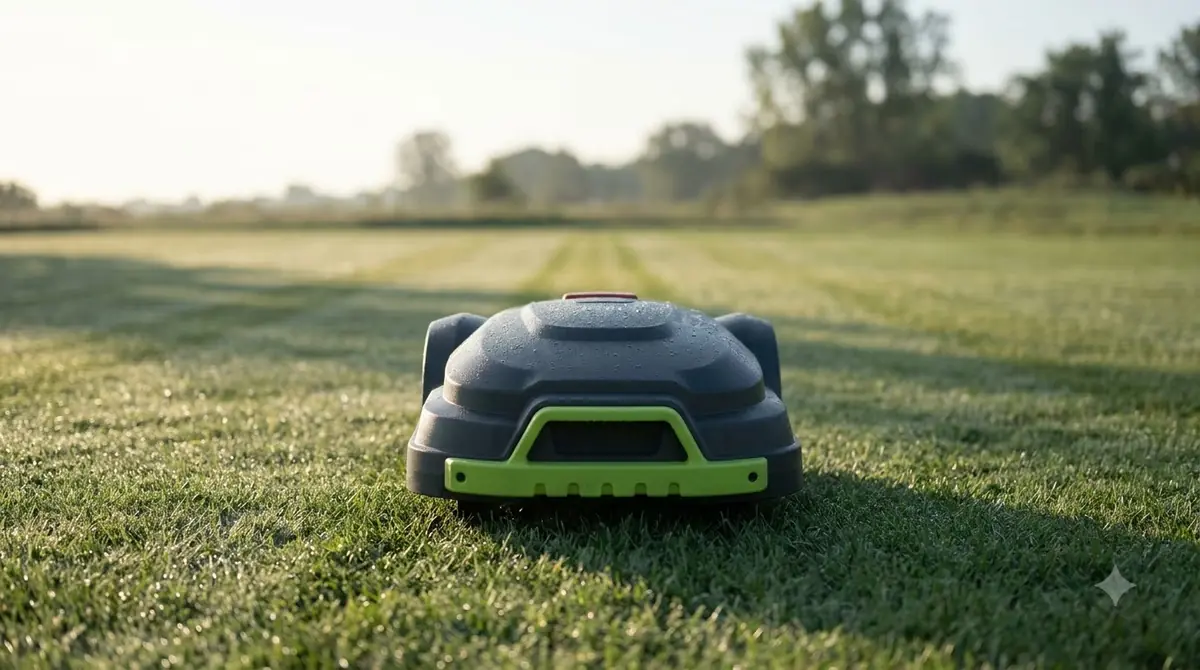
The same guidance says to lay the guide wire diagonally across a slope and to set mowing patterns straight up the slope where feasible. It also warns that obstacles on a slope raise the risk of slipping, especially when the grass is wet.
Heads up
The slope limit inside the lawn and the slope limit at the boundary wire are often different. A model rated for 70 percent inside the work area may still be limited to 50 percent at the edge, so check both numbers.
Choose a boundary method that fits the layout
Robot mowers use a boundary to find the edge of the lawn. Husqvarna’s US range page says the boundary can be physical wire, virtual wire or both, depending on the model, and its US listing shows the 435 iQ AWD with both virtual and physical wire, while the 560 EPOS shows virtual wire only. A physical wire needs a planned route around beds, trees and garden edges, while a model with a different boundary method may suit a yard that is hard to wire.
Our reading: sketch the lawn outline and the wire route before you choose the best robot lawn mower for Virginia lawns. The boundary method changes how much setup work your yard needs, and it is one of the easiest details to overlook when comparing specs. See wire-free versus boundary wire robot mowers for the trade-offs.
Plan for rain, wet grass and storms
Most robot mowers are rated for some weather, but wet grass and lightning are separate questions, and the manufacturer’s guidance answers both. Husqvarna says its robotic mowers are designed to cut grass “come rain or shine,” and its general lawn advice is to wait at least 24 hours after rain before mowing wet grass.
The University of Georgia Extension says robotic mowers can operate in a light rain, but its discussion does not address heavy rain. Husqvarna’s storm guidance advises closing the charging station cover and disconnecting power before lightning and heavy rain. Neither source gives a Virginia rainfall or temperature threshold, so the manual of the model you buy is the right place to confirm its limits. Our guide on whether robot mowers work in rain covers the manual side.
Heads up
Do not assume a rain rating means the mower handles every storm. Check the rain guard or rain sensor routine, and plan for the charging station to be protected during severe weather.
Best robot lawn mower for Virginia lawns: what to check
Use this list to judge the best robot lawn mower for Virginia lawns against your own yard before you spend money on a model.
- Rated lawn area: compare the rating with the mowable area, not the total property size, and allow margin for beds and corners.
- Slope limits: check both the work area and the boundary wire, and measure your steepest section with the rise-over-run formula.
- Height range: confirm the mower cuts within the 1.5 to 3.0 inch range that Virginia Tech Extension gives for common cool-season grass.
- Boundary method: confirm whether the model uses physical wire, virtual wire or both, and plan the route.
- Weather rules: read the rain and storm guidance in the manual, not only the marketing page.
- Service nearby: ask the seller which dealer or service point covers your area before you buy.
Our reading is that the best robot lawn mower for Virginia lawns is the one whose published limits fit your mowable area, your steepest slope and your grass, not the one with the longest feature list. Confirm each figure in the current manual before you buy.

Frequently asked questions
Is there one best robot lawn mower for Virginia lawns?
No single model suits every Virginia lawn. The right choice depends on lawn size, slope, boundary layout and the grass you grow, so compare models against those inputs first.
What mowing height should a robot mower use in Virginia?
Virginia Tech Extension gives a 1.5 to 3.0 inch range for Kentucky bluegrass, tall fescue and perennial ryegrass, and 1.5 to 2.5 inches for Kentucky bluegrass and tall fescue during establishment. Choose a mower whose height range covers the grass you have.
Can a robot lawn mower run in the rain?
Many models are rated for some rain, but Husqvarna advises waiting at least 24 hours after rain before mowing wet grass. The University of Georgia Extension says robotic mowers can run in light rain, and it does not address heavy rain.
Does slope matter if my yard looks flat?
Most yards have at least one sloped section, such as a bank near a driveway or a dip by a fence. Measure the steepest path the mower must cross, because the slope limit applies to the work area and to the boundary wire.
Sources
- Virginia Tech Extension, publication 460-127 (university extension): cool-season grass species, mowing height ranges, and drought and brown patch notes for surface-mined land in Southwest Virginia.
- Husqvarna, US robotic lawn mower range (manufacturer): rated lawn sizes with plus or minus 20 percent tolerance and boundary methods, as of November 2026.
- Husqvarna support, steep slope installation guidance (manufacturer): slope formula, slope limits by model, and guide wire direction.
- Husqvarna how-to guide on mowing wet grass (manufacturer): 24 hour advice after rain.
- Husqvarna storm protection guide (manufacturer): charging station and power disconnection advice during lightning and heavy rain.
- University of Georgia Today, Extension specialist on robotic mowers (university extension): light rain operation.
 Up next9 min readBest Robot MowersBest Robot Lawn Mower for Pennsylvania Lawns: What to Check Before You BuyUpdated Nov 14, 2026
 9 min readBest Robot MowersBest Satellite Navigation Robot Lawn Mower 2026: What to Check Before You BuyUpdated Nov 11, 2026
 10 min readBest Robot MowersBest Robot Lawn Mower Under $1000: What to Check Before You BuyUpdated Nov 12, 2026
 7 min readBest Robot MowersBest Robot Lawn Mower Under $3000: What to Check Before You BuyUpdated Nov 14, 2026
 9 min readBest Robot MowersBest Robot Lawn Mower Under $700: What to Check Before You BuyUpdated Nov 12, 2026
 8 min readBest Robot MowersBest Robot Lawn Mower Under $5000: What to Check Before You BuyUpdated Nov 12, 2026