
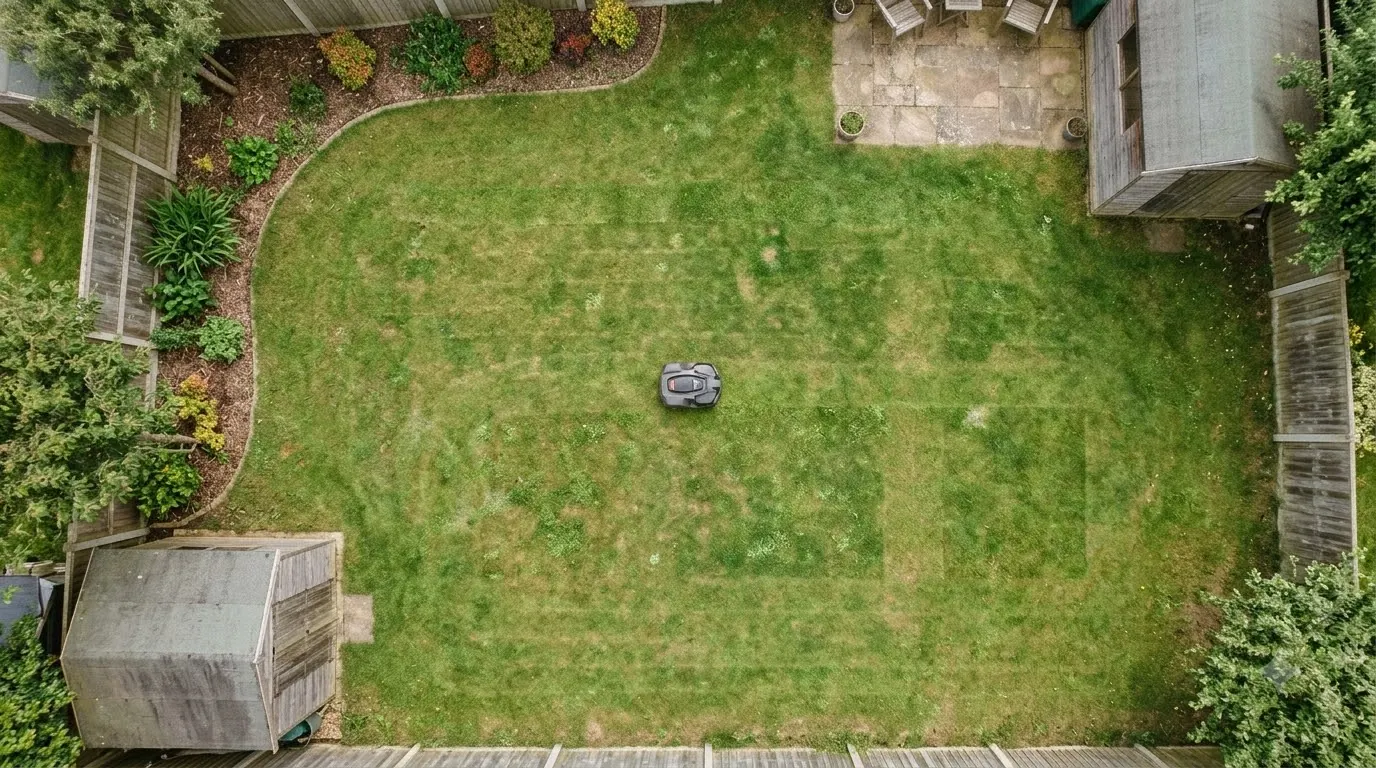

Which robot mower has the best navigation depends on your yard, and no single model wins everywhere. Manufacturer guides put RTK at about 1 to 3 cm in open areas, while LiDAR is less affected by tree cover, as of 2026-11-10. The right type follows your trees, open space, edges and slope.
Start with the hardest condition in your yard, then judge each candidate against it, because the robot mower with the best navigation is the one that handles your worst spot. A small, simple lawn with clear edges has very different needs from a wooded lot with beds along the fence.
The short answer
- Open lawn with a clear sky: RTK fits well when satellites can see the yard.
- Heavy tree cover or tall buildings: LiDAR is the safer comparison point because it does not rely on satellites.
- Beds and fences at the edge: check how close the mower cuts to obstacles, not only the positioning label.
- Boundary wire: predictable once installed, but it is not a navigation upgrade.
- Before you buy: check the slope rating, the mowing capacity and the positioning method on the manufacturer’s spec sheet.
How robot mower navigation is judged
To decide which robot mower has the best navigation, judge it on four things: positioning accuracy, behavior near trees and fences, how the mower cuts edges, and how it performs in rain or low light. Those four decide whether a model suits your yard, far more than a single label does.
- Positioning accuracy: how precisely the mower knows where it is on the lawn.
- Obstacles and tree cover: whether the signal or sensor still works under branches and near buildings.
- Edges: how close the mower gets to beds, paths and fences.
- Weather and light: how rain, fog, shadow and dim light change its behavior.
Most published accuracy figures come from the manufacturers themselves. The Sunseeker guide gives RTK at 1 to 3 cm in open areas, and a Resident article gives LiDAR an edge approach of about 3 cm from a fence. Neither source cites independent testing, so treat the numbers as starting points for comparison, not guarantees.
Heads up
Accuracy numbers on product pages describe ideal conditions. Your own trees, fences and sky view will change the result, so read the numbers alongside the conditions that limit them.
How each navigation type handles a yard
RTK reaches about 1 to 3 cm in open areas, but heavy tree cover, tall buildings and narrow passages can weaken its satellite signal. LiDAR scans the surroundings with lasers, so tree cover affects it less, according to the same manufacturer guide.
RTK depends on a clear view of the sky, so our reading is that a mower with the best navigation on an open lawn may struggle on a wooded one. The Sunseeker guide says performance may decline under dense tree cover, and that heavy rain or thick fog can weaken satellite signals. Base station placement is also critical, and a network RTK setup depends on strong cellular coverage in the yard.
LiDAR works from its own map instead of satellites. The Sunseeker guide says it is not affected by tree cover or nearby buildings, but it also notes that LiDAR accuracy can drop in heavy rain, fog or dust. In a large, open, featureless yard, a LiDAR mower may take longer to build its first map.
Our reading is that RTK suits open lawns with a clear sky, and LiDAR suits lots where trees and buildings block satellites. Neither is a universal winner, and our RTK, LiDAR and vision comparison goes deeper on each type. For the mechanics, see how an RTK robot mower works and how LiDAR mapping works.
Vision and edges
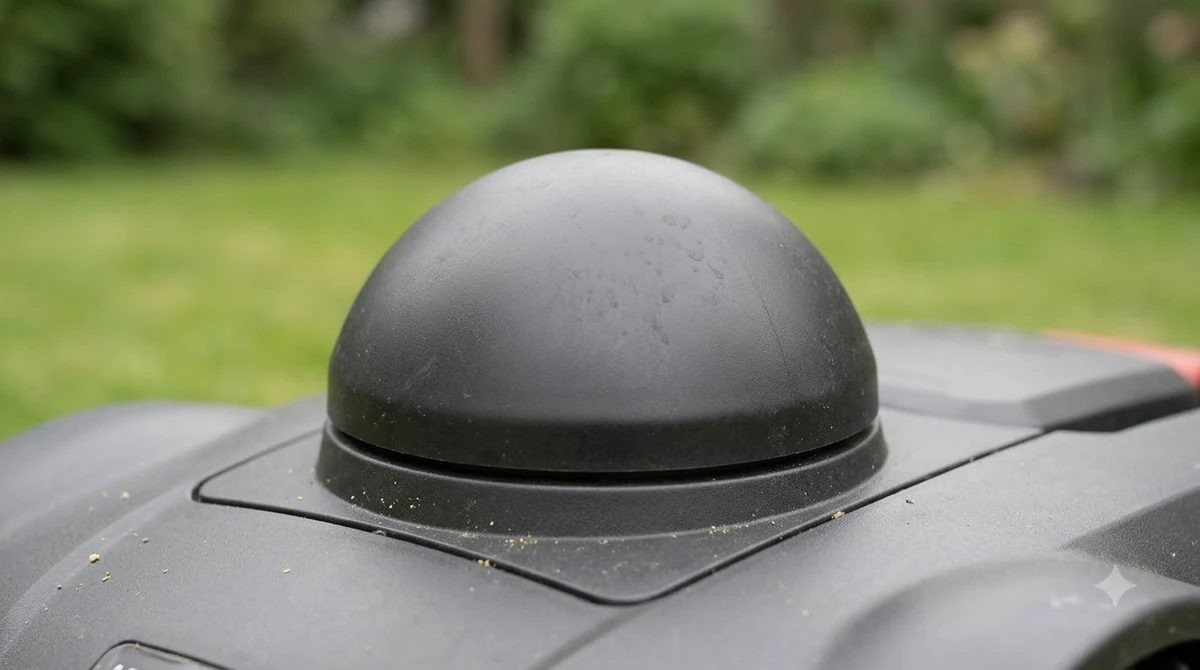
AI vision recognizes grass, paving and low obstacles without buried wire or a base station, but lighting, shadows and very overgrown grass can reduce its performance. The eufy guide also lists unclear lawn edges and unusual ground surfaces among the conditions that can affect it.
Camera-only systems keep a wide berth around obstacles, according to a Resident article on LiDAR, which contrasts that with LiDAR’s edge approach of about 3 cm from a fence without contact. Our reading is that edge behavior matters more on yards with many beds and fences than on open lawns.
Boundary wire is not a navigation upgrade
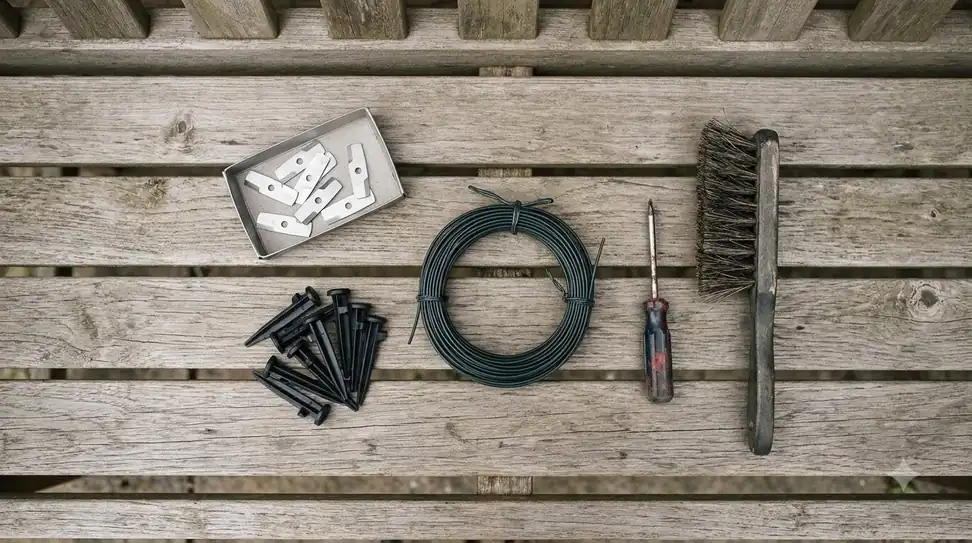
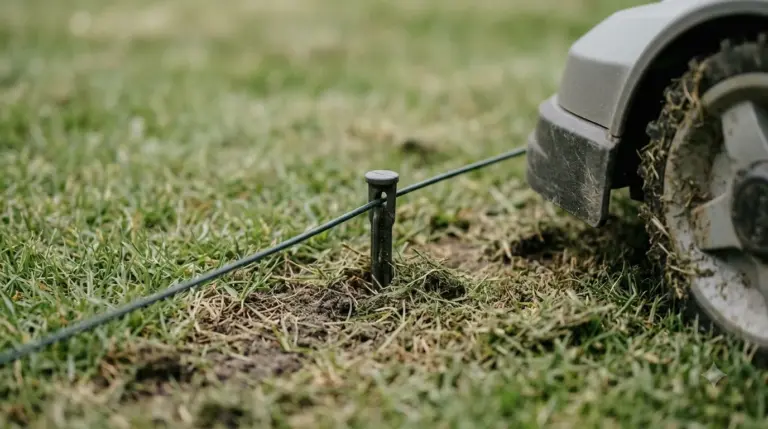
Boundary wire lets the mower know only when it crosses the signal, so it has no position on the lawn. That is why edge behavior can be less consistent than with mapped systems. Once installed correctly, the eufy guide describes wire as simple and predictable, and the mower stays inside the wired area.
Wire has its own trade-offs. Installation takes time around driveways, beds and trees, the wire may need moving when the yard changes, and a broken wire can stop the mower until it is repaired. A simple yard with few obstacles can still use wire happily, so it is a scope question, not a verdict. If you are weighing it, read whether a robot mower needs a boundary wire first.
What to check on a spec sheet before you buy
Before you decide which robot mower has the best navigation, check the slope rating, the mowing capacity and how the mower positions itself, and use our guide to reading robot mower specs if the sheet is unclear. Husqvarna lists slopes up to 70% for the Automower 435 iQ AWD, and its capacity figures carry a ±20% tolerance.
- Slope rating: the rating differs by model, so check the exact model on the manufacturer’s page.
- Mowing capacity: Husqvarna lists up to 0.5 acre for the 410 iQ and up to 1 acre for the 420 iQ.
- Positioning method: RTK needs a base station or strong cellular coverage, while LiDAR needs no base station, according to the Sunseeker guide.
- Weather behavior: ask how the mower handles rain, fog or dust, because the sensor can lose accuracy in those conditions.
- Published accuracy: Husqvarna’s US listing gives no positioning accuracy figure, so compare with the manual for your model.
Which robot mower has the best navigation for your yard
Open lawns with a clear sky suit RTK, tree-heavy lots suit LiDAR, and small, simple yards with clear edges can work with vision or wire. Our reading is to pick by yard condition, not by a single “best” label.
| Yard condition | Navigation that fits | Why (vendor or publisher claim) |
|---|---|---|
| Open lawn with a clear sky | RTK | About 1 to 3 cm accuracy in open areas, per the Sunseeker guide |
| Heavy tree cover or tall buildings | LiDAR | Not affected by tree cover or nearby buildings, per the Sunseeker guide |
| Large, open, featureless yard | RTK or LiDAR, after a test run | LiDAR may take longer to build its first map in this layout |
| Beds and fences along the edge | LiDAR | Edge approach of about 3 cm from a fence, per a Resident article |
| Small, simple lawn with clear edges | AI vision or boundary wire | Vision works without buried wire; wire is predictable once installed, per the eufy guide |
Weather is the one condition that cuts across the table. Heavy rain or thick fog can weaken RTK satellite signals, and LiDAR accuracy can drop in heavy rain, fog or dust, so ask about weather behavior before you decide which robot mower has the best navigation for your yard.

Frequently asked questions
Is RTK or LiDAR better under trees?
LiDAR is usually the better fit under heavy tree cover, according to the Sunseeker guide, which says LiDAR is not affected by tree cover while RTK is. That is a manufacturer claim, so check how the mower behaves on your own lawn before you rely on it.
Does a robot mower need boundary wire?
No. The guides read for this article describe RTK, LiDAR and AI vision mowers that map the lawn without buried wire. Boundary wire is predictable once installed, but it needs moving when the yard changes.
How accurate is RTK on a robot mower?
No one can say which robot mower has the best navigation on accuracy alone. The Sunseeker guide states 1 to 3 cm in open areas with a good sky view. Heavy tree cover, tall buildings, heavy rain and thick fog can weaken that accuracy, and base station placement matters for reliable results.
What slope can a robot mower climb?
Husqvarna lists slopes up to 70% for the Automower 435 iQ AWD on its US product listing. The rating differs by model, so check the exact model you plan to buy before assuming a slope will be safe.
Sources
- Husqvarna robotic lawn mowers, US (Husqvarna): slope rating for the 435 iQ AWD, mowing capacity by model, the ±20% tolerance.
- RTK vs LiDAR Robot Lawn Mowers (Sunseeker Elite, manufacturer guide): RTK accuracy in open areas, tree cover and weather limits, LiDAR behavior and setup.
- Robot lawn mower navigation types (eufy, manufacturer guide): boundary wire trade-offs, RTK and GPS limits, AI vision lighting and edge conditions.
- Why LiDAR matters for robot lawn mowers (Resident, publisher): LiDAR edge approach of about 3 cm and the camera-only wide berth.
 Up next8 min readBest Robot MowersRTK vs LiDAR vs Vision: Which Robot Mower Navigation Fits Your YardUpdated Nov 11, 2026
 8 min readBest Robot MowersMost Accurate Robot Lawn Mower Navigation for Your YardUpdated Nov 11, 2026
 9 min readBest Robot MowersWhat Is the Best Robot Lawn Mower for a Narrow Yard?Updated Nov 11, 2026
 9 min readBest Robot MowersWhich Robot Lawn Mower Is Best for Complex Yards?Updated Nov 11, 2026
 9 min readBest Robot MowersWhat Is the Best Robot Lawn Mower for a Large Yard?Updated Nov 11, 2026
 8 min readBest Robot MowersWire-Free vs Boundary Wire Robot Mowers: Which Setup Fits Your YardUpdated Nov 11, 2026