
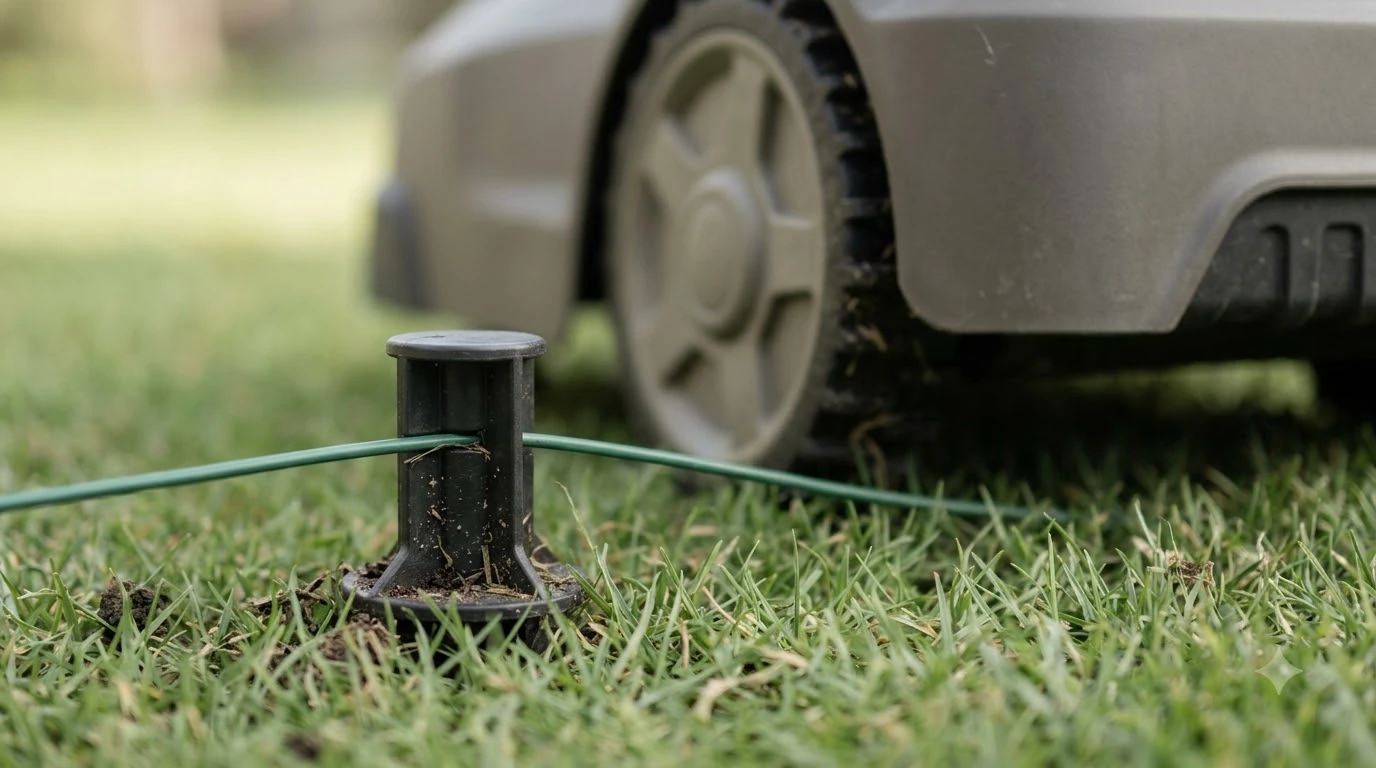

Choosing the best UV-resistant cable ties for robot mower perimeter wire starts with the material and the temperature range on the datasheet. A tie labeled UV-resistant should be UV-stabilized nylon, such as PA66UV, that is rated for outdoor use. The HellermannTyton 111-05478 datasheet we read lists those values, and it is a useful checklist even if you buy a different brand.
The short answer
- Material: look for PA66UV or another UV-stabilized nylon, and confirm it on the datasheet.
- Temperature: the datasheet we read rates PA66UV from -40°F to +185°F (-40°C to +85°C).
- Strength: the same datasheet lists a 50 lb (225 N) minimum tensile strength for that 15 in tie.
- Role: the manufacturer guides we read name stakes or pegs for holding the wire to the ground, so ties are a helper, not a substitute.
Best UV-resistant cable ties for robot mower perimeter wire: the spec to check
A UV-resistant tie is a nylon tie with an additive that slows sun damage. HellermannTyton’s datasheet for article 111-05478 says, “UV stabilized cable ties contain an inhibitor which prolongs the life of the tie in UV exposures.” The same sheet lists the material as polyamide 6.6 UV-resistant (PA66UV) and rates it for indoor and outdoor use.
| Spec on the datasheet | Value listed for the 111-05478 tie |
|---|---|
| Material | PA66UV (polyamide 6.6, UV-resistant) |
| Operating temperature | -40°F to +185°F (-40°C to +85°C) |
| Minimum tensile strength | 50 lb (225 N) |
| Length and width | 15.35 in (390 mm) long, 0.19 in (4.8 mm) wide |
| Bundle diameter | 0.06 in to 4.33 in (1.5 mm to 110 mm) |
| Flammability | UL 94 V-2 |
| Releasable | No |
The sheet also says the tie is halogen free and RoHS compliant, and that it is UL Recognized in the US and Canada. Those are listing details, not a promise about how long the tie will last outdoors. The datasheet does not give a service life, so do not treat any tie as lasting a set number of years. This guide does not rank individual products; it explains what to check on a datasheet so you can judge the best UV-resistant cable ties for robot mower perimeter wire yourself.
Ties do not replace pegs
A cable tie can bundle wire, but it does not hold the wire to the ground the way a peg does. Our guide to robot mower wire pegs covers the ground fixings. Husqvarna’s guide wire instructions say to secure the wire with stakes along the entire path to the boundary connection point, or to bury it. Anker’s UK boundary wire guide describes pegs or lawn hooks about every 1 m when the wire sits above ground.
This Old House gives a looser rule of thumb, with staples every 3 feet (about 0.9 m). Our reading is to use pegs or staples for the ground contact and keep the ties for bundling wire to a fixed object, such as a post or a bracket, where the wire needs to stay up off the turf.
Robomow’s blog says the cable only needs to be fastened at regular intervals with lawn hooks, and that grass grows quickly around the wire and hooks. Neither the Robomow page nor Anker’s guide mentions cable ties as a fixing method. The Worx WA0460 expansion kit lists 164 ft of 18 AWG wire, 3 connectors and 70 stakes, and no ties. If you are weighing burial against pegs, see bury or peg boundary wire.
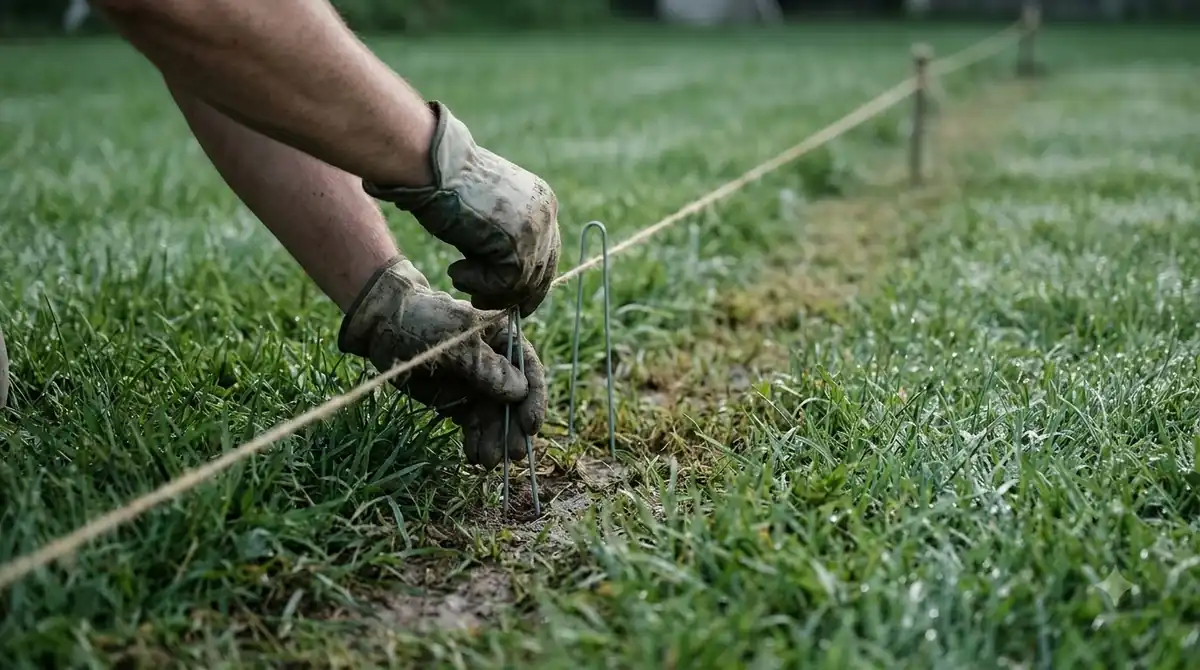
- Pegs or staples: hold the wire to the ground along the path.
- Cable ties: gather loose wire at a fixed point, such as a post or fence rail.
- Burial: the Robomow blog we read gives 4 to 5 cm burial depth, with the signal detectable up to 7 cm.
How tight a tie should be on boundary wire
A tie should hold the wire in place without pinching the insulation. The manufacturer pages we read do not give a tension figure for ties on boundary wire, so this is our reading and not a tested number. Pull the tie snug, then check that the wire can still lie flat and that the tie does not dig into the insulation. Trim the tail so no sharp end is left near the wire.
Anker’s guide advises avoiding sharp 90-degree angles in corners, so keep any bundle at a gentle curve rather than a tight bend. It also suggests checking the cable for damaged, worn or corroded sections during a spring inspection, which is a natural time to look at the ties as well. Robomow warns that an above-ground wire can be cut by a scarifier or edge trimmer, so keep those tools clear of any tied bundle.
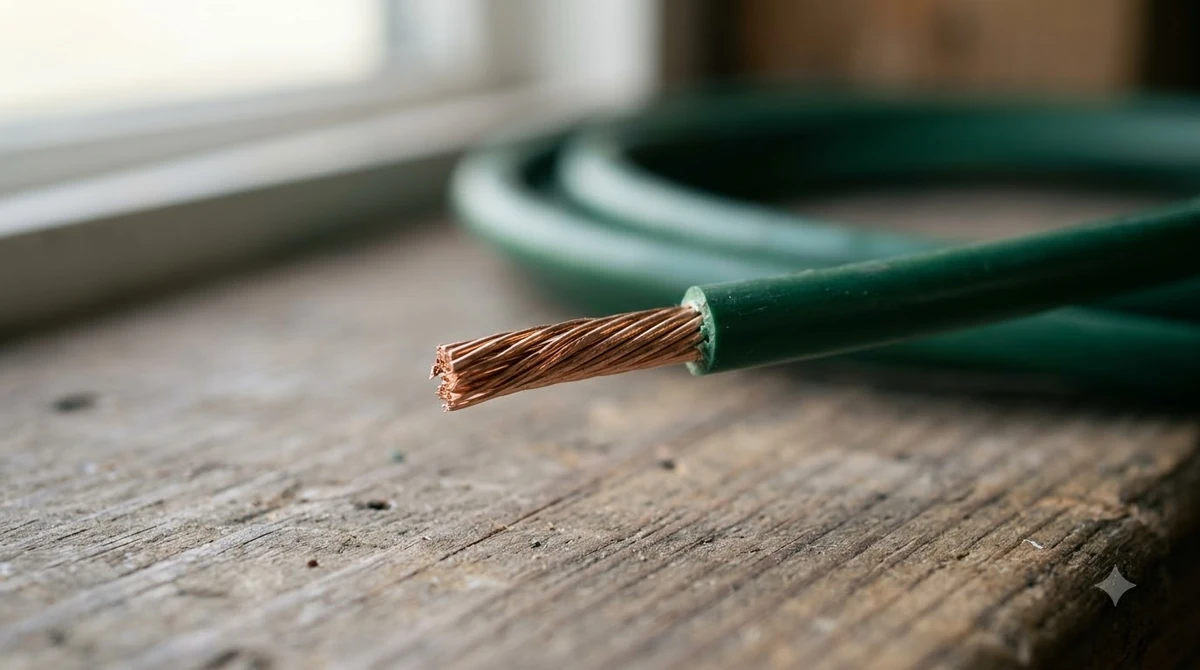
Scope boundary: this advice covers ties that bundle wire at a post or bracket, which is the main use for the best UV-resistant cable ties for robot mower perimeter wire. It does not cover buried wire, where a tie is not the fixing method, and it does not cover splicing, which is a separate job with its own connectors; Anker recommends a special waterproof cable connector for joins, and our guide to waterproof robot mower wire connectors goes into that. For the full wire layout, see how to install a robot mower boundary wire.
Frequently asked questions
Are all UV-resistant cable ties the same?
No. The HellermannTyton 111-05478 datasheet lists PA66UV with a -40°F to +185°F range and a 50 lb minimum tensile strength. Other products can carry different ratings, so read the datasheet for each option before you pick the best UV-resistant cable ties for robot mower perimeter wire in your yard.
Can cable ties replace pegs on robot mower wire?
Not according to the guides we read. Husqvarna describes stakes along the entire wire path, and Anker describes pegs or lawn hooks about every 1 m when the wire is above ground. Ties can bundle the wire at a fixed point.
Can a cable tie damage the wire?
A tie pulled too tight can pinch the insulation. We found no manufacturer test on tie damage, so check the wire and the tie after the first season.
Can you reuse a cable tie?
The HellermannTyton 111-05478 is listed as not releasable, which means it is not built to be undone and reused. Plan the tie position before you tighten it. Our reading is to trim the tail carefully so no sharp end is left near the wire or the lawn.
Sources
- HellermannTyton 111-05478 specification sheet (HellermannTyton): PA66UV material, UV inhibitor statement, temperature range, tensile strength, flammability and listings.
- Husqvarna guide wire installation, KA-01429 (Husqvarna): secure wire with stakes along the entire path, or bury it.
- Anker UK robot lawn mower boundary wire installation (Anker): pegs or lawn hooks about every 1 m when the wire is above ground, corner angles, waterproof connectors and spring inspection.
- This Old House, how to install a robotic lawnmower (This Old House): staples about every 3 feet.
- Robomow, laying the lawn boundary wire (Robomow): burial depth 4 to 5 cm, signal detectable up to 7 cm, lawn hooks, and damage from scarifiers or edge trimmers.
- Worx Landroid expansion kit WA0460 (Worx): kit contents of 164 ft of 18 AWG wire, 3 connectors and 70 stakes.
 Up next10 min readGearBest Perimeter Wire and Pegs for Husqvarna AutomowerUpdated Nov 13, 2026
 8 min readGearCable Cover for RTK Antenna Wire: 5 Checks Before You BuyUpdated Nov 19, 2026
 7 min readGearBest Cut Resistant Gloves for Changing Robot Mower Blades: What to CheckUpdated Nov 11, 2026
 7 min readGearRobot Mower Low Voltage Extension Cable: What to CheckUpdated Nov 14, 2026
 10 min readGearRTK Antenna Extension Cable for Robot Mower: 6 ChecksUpdated Nov 19, 2026
 8 min readGearBest Waterproof Cable Conduit for Robot Mower: What to CheckUpdated Nov 11, 2026