
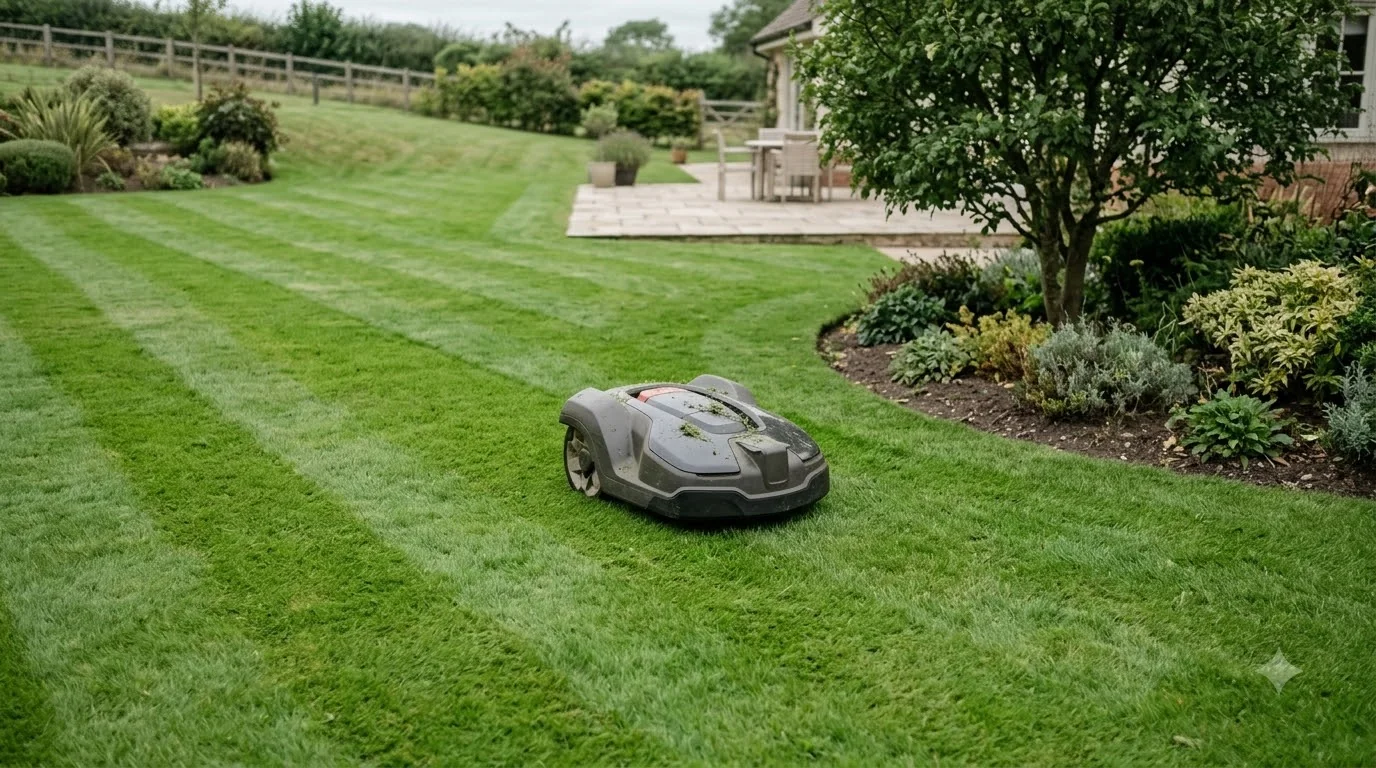

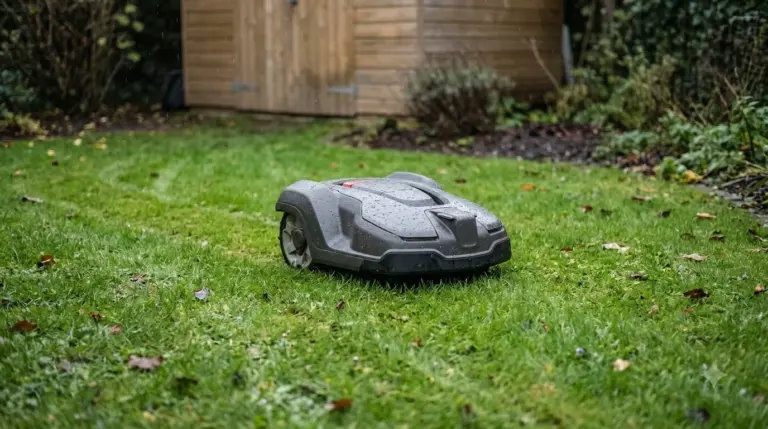
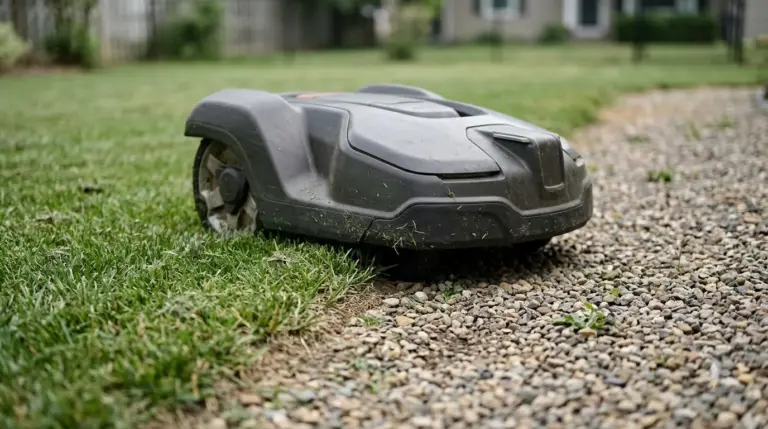
To answer what is a robot lawn mower in one line: it is a battery-powered machine that cuts grass on its own, without anyone pushing or steering it. It trims a little at a time inside a boundary, then returns to a dock to recharge.
Most models keep to the yard with a buried boundary wire or with satellite positioning. That choice decides how much setup your yard needs, so check it before you compare models.
The short answer
- Definition: an autonomous, battery-powered robot that cuts lawn grass without an operator.
- Boundary: a buried wire or satellite positioning (RTK GPS, LiDAR or vision), depending on the model.
- Charging: it returns to a charging station when its battery runs low.
- Safety: lift and tilt sensors stop the blades at once.
- Limits: standard Husqvarna models are rated for 20% to 40% slopes, and AWD models for up to 70%.
What is a robot lawn mower, and how does it cut?
A robot lawn mower cuts a little grass at a time, inside its boundary, instead of making one long pass over the whole lawn. Husqvarna describes its Automower as mowing a little every day, which keeps each cut short.
The mower moves in a random pattern rather than in stripes. According to Husqvarna’s how-it-works page, this covers every corner of the lawn over time without leaving track marks. Fine clippings are recycled into the turf as a natural fertilizer.
Our reading is that this suits lawns that grow fast, because the grass never gets long enough to need one large cut. The trade-off is that the mower runs most days rather than once a week.
The main parts: mower, charging station and blades
In parts, what is a robot lawn mower? It is a cutting unit with blades, a rechargeable battery and a charging station it returns to when charge runs low. Each part depends on the others to keep the lawn cut without help.
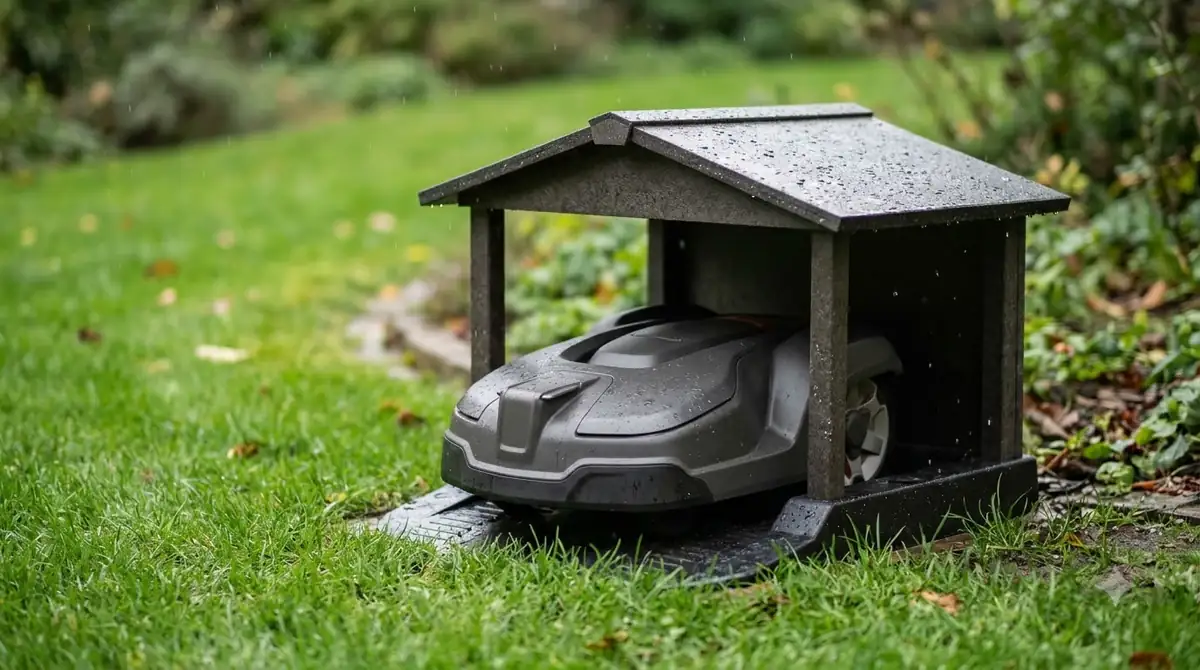
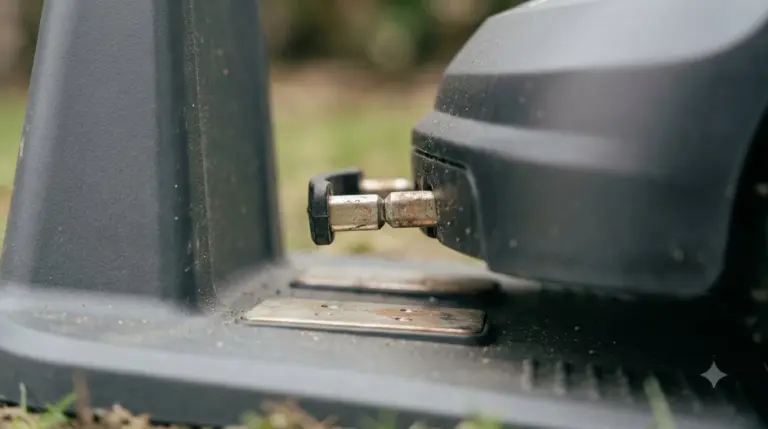
- The charging station. The Wikipedia entry on robotic lawn mowers says the mower can find its charging station through radio frequency emissions. Husqvarna says its mower navigates back automatically, either by signal or by following the wires.
- Guide wires. Husqvarna says guide wires help the mower find its way back from a remote corner. Its patented guide wires can route the mower through passages as narrow as 24 inches (60 cm).
- Blades. Blades cut a small amount at a time. Husqvarna recommends replacing them every 1 to 2 months, depending on lawn size and grass type.
Boundary wire or wire-free positioning
Traditional models use a buried boundary wire, while newer ones use satellite positioning, LiDAR or cameras to map the yard without one, which is the biggest difference when you ask what is a robot lawn mower and how does it stay in your yard. The method changes how much installation work you do and where the mower works best.
| Method | How it finds the edge | Limits from the sources |
|---|---|---|
| Boundary wire | A continuous signal that the mower’s sensors detect, so it slows, turns or stops at the wire. | Trenching is labor-intensive. Mammotion advises burying the wire 1 to 2 inches deep. |
| RTK GPS | Satellite positioning. Mammotion claims sub-inch accuracy. | Accuracy drops under heavy tree canopy and near tall buildings. |
| LiDAR or vision | Sensors detect obstacles and help map the lawn. | Wire-free systems can be affected by dense trees, tall buildings or inclement weather. |
| Hybrid | GPS navigation with short sections of boundary wire for tricky areas. | Still needs some wire to install. |
Mammotion’s guide to boundary wires says wire-free mowers depend on clear satellite visibility. Husqvarna’s EPOS technology uses satellite signals to create virtual boundaries in an app, and it falls back on a buried wire where satellite coverage is poor. These figures are manufacturer claims, so look for independent tests before you rely on them. A side-by-side view of the two approaches is in wire-free versus boundary wire robot mowers, and the satellite method is explained in how an RTK robot mower works.
How sensors keep the mower safe
Any plain answer to what is a robot lawn mower should mention safety, because robot mowers rely on sensors to stop before they cause harm. Husqvarna says the blades shut off immediately when the mower is lifted, and its FAQ says the same happens if the mower is tipped over.
- Lift and tilt sensors. When lifted, the blades automatically and immediately shut off.
- Obstacle sensors. If the mower meets an object, it stops, reverses and goes in another direction.
- Pets and children. Segway Navimow’s product page says its mower detects and avoids pets and children. That is a manufacturer claim, not an independent test.
Sensor types also differ between brands. Our reading is that a mower using several methods together gives a better picture of its surroundings than one sensor type alone, but sensors reduce risk and do not replace keeping children and pets away from a running mower. For more on that topic, see robot mower safety around kids and pets.
Slopes, lawn size and rain
Standard Husqvarna Automower models are rated for slopes of 20% to 40%, and its AWD models for up to 70%, about 35 degrees. The mower’s rating is the number to match against your yard, not the marketing around it, and how robot mower slope ratings work shows how to read it.
| Model | Slope rating (as read on 2026-11-10) |
|---|---|
| Husqvarna Automower, standard | 20% to 40% |
| Husqvarna Automower, AWD | Up to 70% (about 35 degrees) |
| Navimow i2 AWD | 45% (24 degrees) |
| Navimow i2 LiDAR Pro | 55% (29 degrees) |
| Navimow X4 | 84% (40 degrees) |
Lawn size is also a rating, not a guarantee. Wikipedia says robotic mowers can maintain up to 100,000 square meters, about 25 acres, of grass. Navimow’s page ties recommended lawn sizes to each model, from 500 to 1,000 square meters for the smaller AWD models up to 2,000 to 5,000 square meters for the largest X4 models.
Husqvarna says its Automower is designed to work in the rain. Its Weather Timer adjusts the mowing schedule based on grass growth rates, so the mower does not run on a fixed calendar alone. The details are in whether robot mowers work in rain.
Where the robot lawn mower came from
The first robot lawn mower was patented in 1969, but commercial models arrived decades later. The dates below come from the encyclopedia entry on the subject.
The MowBot was introduced and patented in 1969 by S Lawrence Bellinger. In 1992, André Collens patented the first fully solar-powered robotic mower. Husqvarna marketed a robotic mower in 1995. In 2019, the first commercially available robotic lawn mower to use visual perception for navigation appeared.
Frequently asked questions
Does a robot lawn mower need a boundary wire?
Not always. Mammotion’s guide says wire-free models contain the mower with positioning and sensing, although wired models still exist. Satellite-based models depend on clear sky, and Husqvarna says poor satellite coverage calls for a buried boundary wire.
Does a robot lawn mower work in the rain?
Husqvarna says its Automower is designed to work in the rain. Its Weather Timer adjusts the mowing schedule based on grass growth rates. Check your model’s manual for wet-weather guidance before running it on soaked turf.
How steep a slope can a robot lawn mower handle?
Husqvarna rates its standard Automower models for slopes of 20% to 40%, and its AWD models for up to 70%, about 35 degrees. Navimow lists 45% for one AWD model and 84% for its X4. Check the rating for the exact model you plan to buy.
How much lawn can a robot lawn mower cover?
Wikipedia says robotic mowers can maintain up to 100,000 square meters, about 25 acres. Individual models differ. Navimow lists recommended lawn sizes from 500 to 1,000 square meters up to 2,000 to 5,000 square meters, so match the figure to your model’s spec page.
Sources
- How do Automower robotic lawn mowers work? (Husqvarna): mowing pattern, clippings, blades, charging, guide wires, lift and tilt sensors, rain and slopes.
- Do robot lawn mowers need a boundary wire? (Mammotion, manufacturer guide): wire signal and depth, RTK accuracy and limits, hybrid systems.
- How do robotic lawnmowers work? (Segway Navimow): slope ratings and recommended lawn sizes, obstacle detection claim.
- Robotic lawn mower (Wikipedia): definition, history dates, radio charging and area limit.
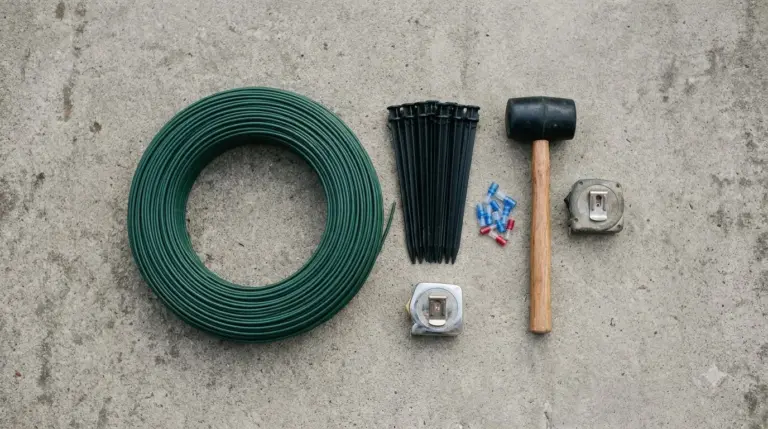 Up next9 min readLearnHow to Install a Robot Mower Boundary WireUpdated Nov 11, 2026
 8 min readLearnCan Robot Mowers Be Left Outside?Updated Nov 11, 2026
 7 min readLearnRobot Mower Not Charging? How to Fix It Step by StepUpdated Nov 11, 2026
 7 min readLearnWhat Does RTK Stand for on a Robot Mower?Updated Nov 11, 2026
 7 min readLearnHow to Reduce Robot Mower NoiseUpdated Nov 11, 2026
 8 min readLearnHow Do Robot Lawn Mowers Work Without a Wire?Updated Nov 11, 2026