
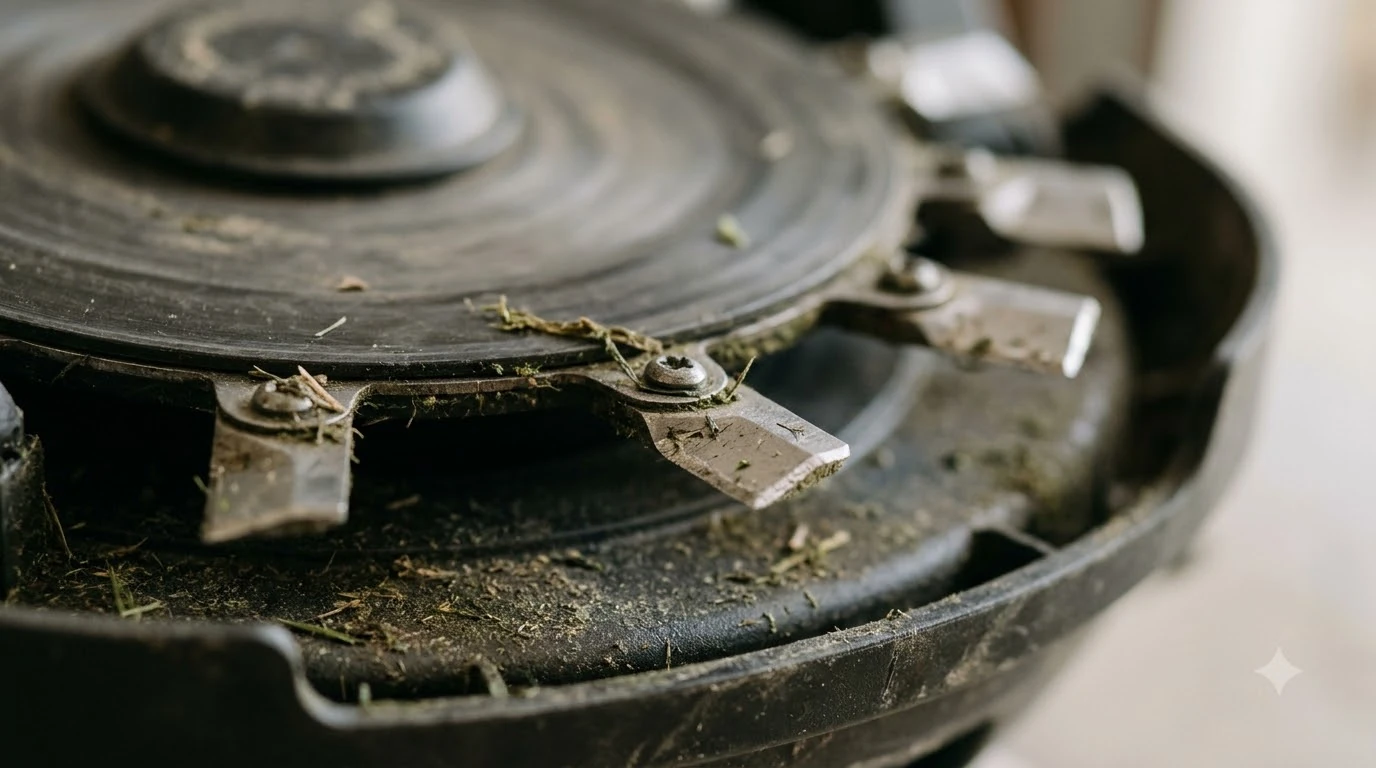

Why does my robot mower make a clicking noise? Clicks usually point to something loose, trapped, or worn in the blade area or the drive system, not to the battery. Because the sound can come from several places, the first job is to find where it starts. Stop the mower, let the blades stop, and check the easy causes before assuming a repair is needed. Some sounds are harmless, while grinding or repeated clicking that keeps coming back usually means a part needs professional attention.
The short answer
- Stop first: switch the mower off and let the blades stop before you look underneath.
- Find the source: decide whether the sound comes from the blade area or from a drive wheel.
- Check the easy causes: debris under the deck, a loose blade, or a stone or stick caught in the cutting area.
- Do not open drive parts yourself: gearbox and motor faults are usually a job for a repair service.
- Get help if it repeats: a grinding or clicking sound that keeps returning means a part is wearing out.
Stop the mower before you investigate
Safety comes first. The Euronics maintenance guide advises disconnecting or powering off the mower before you inspect or replace blades. Turn the mower off and wait until the blades have fully stopped before you put your hands near the cutting area. A blade that is still spinning can cut you even when the mower looks idle. Clicking is one symptom among many, and a summary of general robot mower faults can help you place it next to similar problems.
Once it is safe, look at the mower on a flat surface. Work with the underside facing you, and keep your hands clear of the blades at all times.
Work out where the noise starts
The sound usually comes from one of two areas. Running the mower briefly and listening can help you tell them apart. A clicking that follows the blade housing points to the cutting system. A click that rises and falls with the wheels, or that appears only when the mower turns, points to the drive side. This is a rough guide rather than a diagnosis, but it narrows the search before you open anything.
Note when the noise happens. A sound that starts only on slopes, in tall grass, or after a turn tells you more than a sound that is constant. Write down the pattern, because it will help a technician if you need one.
Check the blade area for debris and loose parts
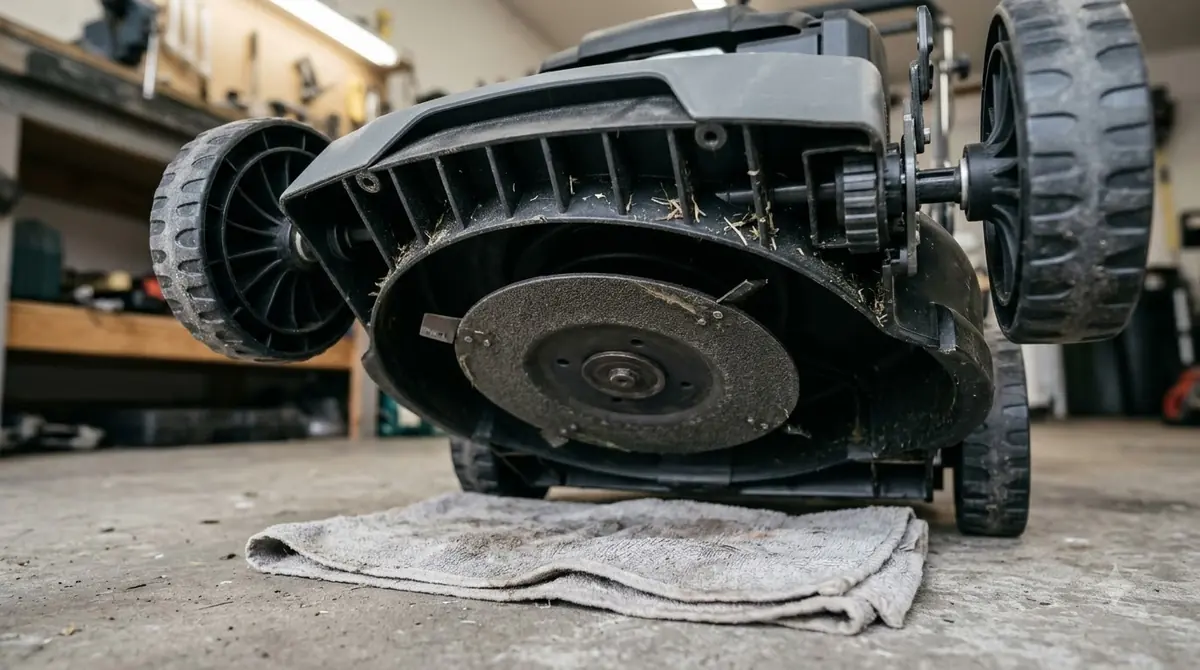
The blade area is the most common source of clicking that you can fix at home. Grass, twigs, stones, or wire can get caught under the blade carrier, and each pass can make a small click against the housing. Clear anything you find, and make sure the blades turn freely by hand once the mower is off. A sound from the cutting deck can come with a motor warning, and blade motor error symptoms explain how the two are connected.
Check that each blade is fitted correctly and secured. A loose blade can make an uneven sound and put strain on the motor. Replace worn or chipped blades, and tighten the fasteners as your manual describes.
Heads up
Do not run the mower with the housing open or with a blade removed. Reattach every guard and blade before you test it, and check the blades again after the first short run.
Check the drive wheels and gearbox
A clicking or grinding sound from one wheel can point to the drive system. Euronics says grinding from the drive system usually comes from motor or gearbox failure. Those parts are not meant for owners to repair, so the guide recommends professional service rather than a home fix. A struggling drive wheel can make rhythmic noises, so slipping wheels on wet grass is a useful comparison when the sound changes with moisture.
You can still check what you see. Look for stones or grass wrapped around a wheel, and make sure the wheel spins freely. If the sound follows one wheel, record which wheel it is, because that detail is useful when you book a repair.
When the clicking points to a worn part
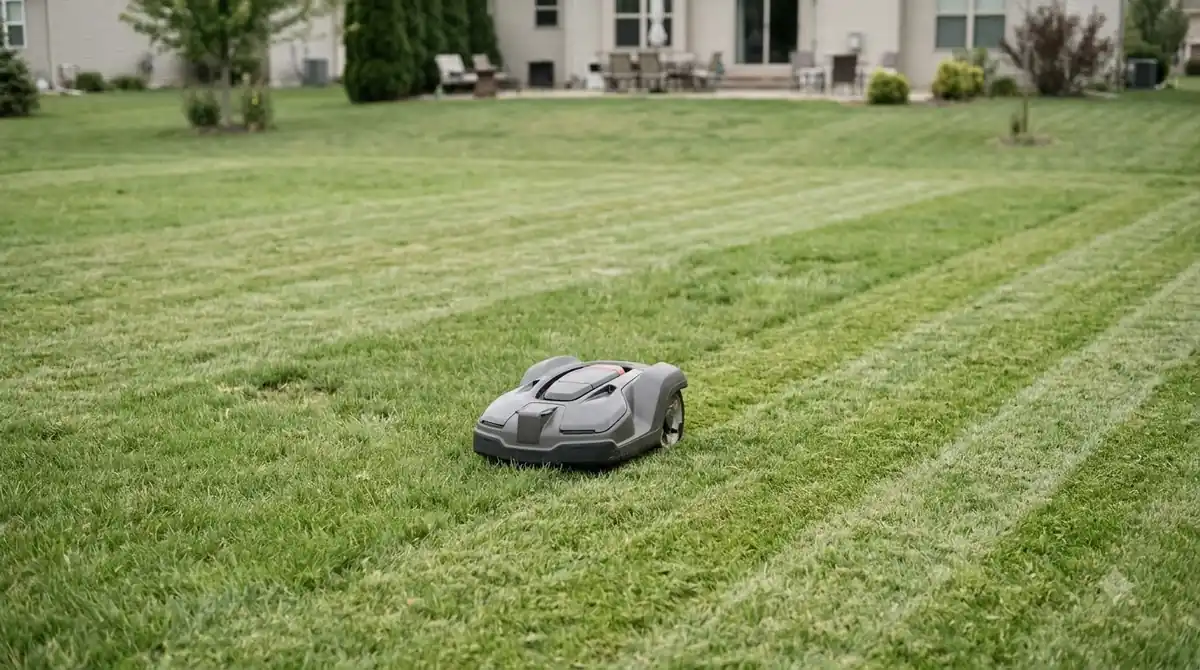
Some clicks come from parts that have worn over time, such as bearings or drive gears. Where the sound is new, grows louder, or keeps coming back after you clear debris and tighten the blades, the part is likely wearing. Our reading is that continuing to run a mower with a worn drive part can make the damage worse, so it is better to stop and have it looked at. If the clicking comes with heat, burning smell warning signs describe why you should stop the mower and let it cool. If a wheel or its gearbox has worn out, replacement wheels for Mammotion Luba show what the part looks like on one popular model. Worn parts are often replaceable, and spare parts for the Landroid illustrate which components owners swap most often.
A repair can cost more than you expect, and the answer depends on the model and the warranty. Check the warranty terms before you open the housing, because opening it can affect coverage on some models.
What to check, in order
- Power off and wait. Stop the mower and let the blades come to a complete stop.
- Clear the deck. Remove grass, twigs, and stones from under the blade carrier.
- Check the blades. Make sure each blade is secure, undamaged, and turns freely.
- Spin each wheel by hand. Look for debris around the wheel and note any grinding.
- Run a short test. Listen for whether the sound comes from the blade area or one wheel.
- Book a repair if it returns. A grinding or clicking sound that comes back after these steps needs professional diagnosis.
Related reads: Note any code shown during the noise, since decoding mower error messages can confirm whether a mechanical fault has been logged.
Frequently asked questions
Is a clicking noise from a robot mower dangerous?
It can be a warning sign. A click from debris may be harmless once cleared, but grinding or repeated clicking can mean a drive or blade part is wearing. Stop the mower, let the blades stop, and get it checked if the sound continues.
Can I fix the clicking noise myself?
You can clear debris and check the blades yourself. Gearbox and motor faults are not user-serviceable according to the Euronics guide, so those should go to a professional repair service.
Why does the noise only happen on slopes or when turning?
Slopes and turns put more load on the drive wheels and gearbox, so a part that is slightly worn may click only under those conditions. Note the pattern and mention it to the repair technician, because it narrows the cause.
Should I keep mowing while the mower clicks?
It is better to stop. Continued use with a loose blade or a worn drive part can cause more damage. Stop the mower, let the blades stop, and inspect before the next scheduled run.
Sources
- Robot lawnmower troubleshooting and maintenance guide (Euronics): disconnect or power off before inspecting blades, and grinding from the drive system pointing to motor or gearbox failure that needs professional repair.
 Up next7 min readLearnWhy Does My Robot Mower Drive Into the Flower Bed?Updated Nov 13, 2026
 7 min readLearnWhy Does My Robot Mower Smell Like Burning?Updated Nov 13, 2026
 7 min readLearnWhy Does My Robot Mower Keep Stopping at the Boundary Wire?Updated Nov 13, 2026
 7 min readLearnWhy Does My Robot Mower Get Stuck Under Bushes?Updated Nov 13, 2026
 7 min readLearnWhy Does My Robot Mower Start Mowing at the Wrong Time?Updated Nov 13, 2026
 6 min readLearnWhy Does My Robot Mower Leave Tire Marks on the Dock Area?Updated Nov 13, 2026