
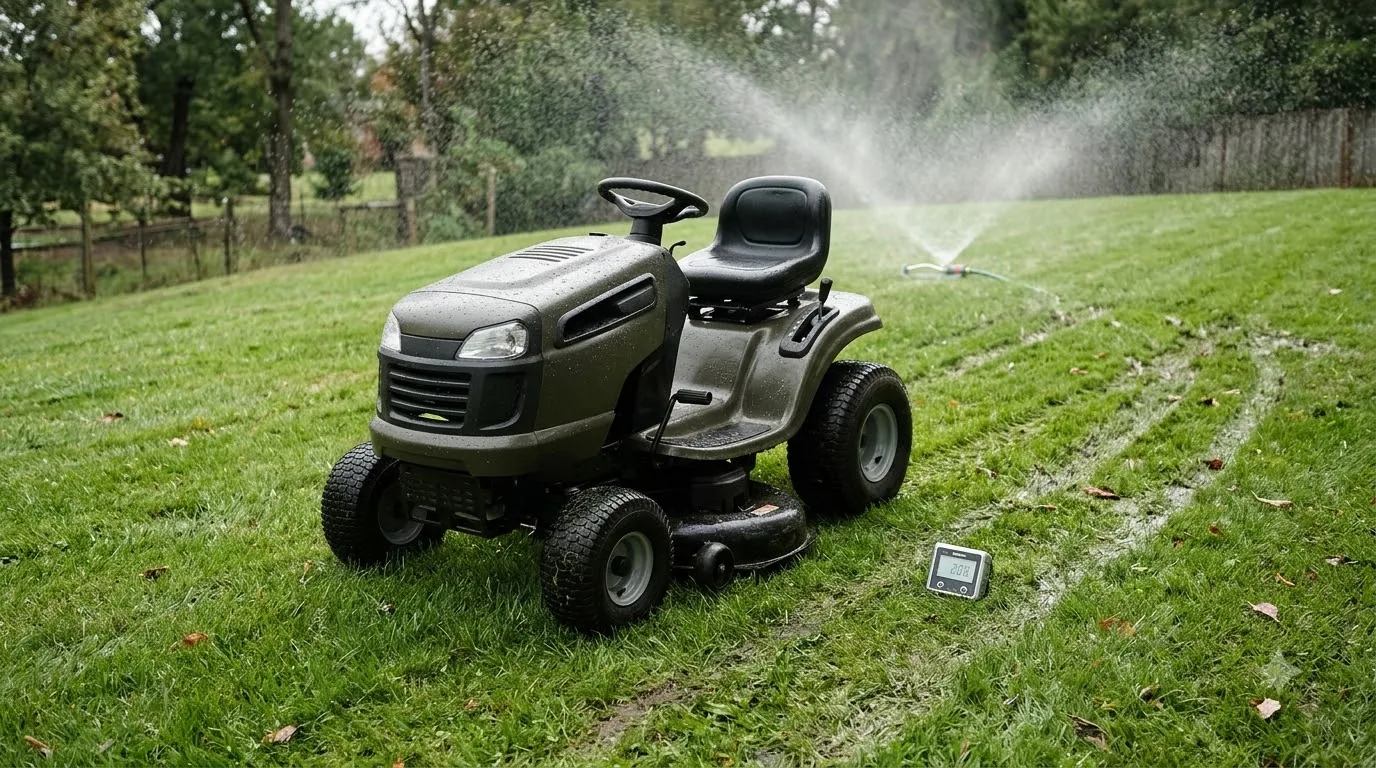

The best robot mower for a yard with a rain garden is one that handles wet, soft soil and keeps a clear boundary around the basin. A rain garden is a shallow planted depression that holds runoff for a day or two after rain. That means the soil is often wet, the sides of the basin slope, and the grass around it is not the same as the lawn elsewhere. Those conditions test traction, boundary setup, and cutting height more than the mower’s headline features.
The short answer
- Check wet-ground traction, since a mower that slips on soaked grass may struggle on the rain garden’s edges after storms.
- Keep the basin outside the mowing area with a boundary or a no-go zone, so the mower does not run into plants or soft soil.
- Measure the slopes around the basin because the banks are often steeper than the rest of the yard.
- Plan the cutting height for the edges so the grass stays dense enough to hold the bank together.
Why a rain garden changes the mowing plan
Most rain gardens are planted with native perennials, grasses, or sedges rather than turf, so the mower should not be running over them at all. The area around the basin is different: it is usually lawn, and it often slopes gently toward the depression. Extension mowing guidance generally advises against cutting saturated turf, since wet grass can clump clippings and stress the lawn, and a robot mower that runs often may face wet ground more frequently than a push mower used once a week. A rain garden adds a keep-out area, so complex-yard robot mower guidance helps you plan the rest of the layout.
Soil moisture is the main issue. After heavy rain, the soil at the bottom of a rain garden can stay saturated for a while. A mower that goes into soft ground can leave ruts, slip on the bank, or sink, which is why the boundary has to keep it out of the basin entirely.
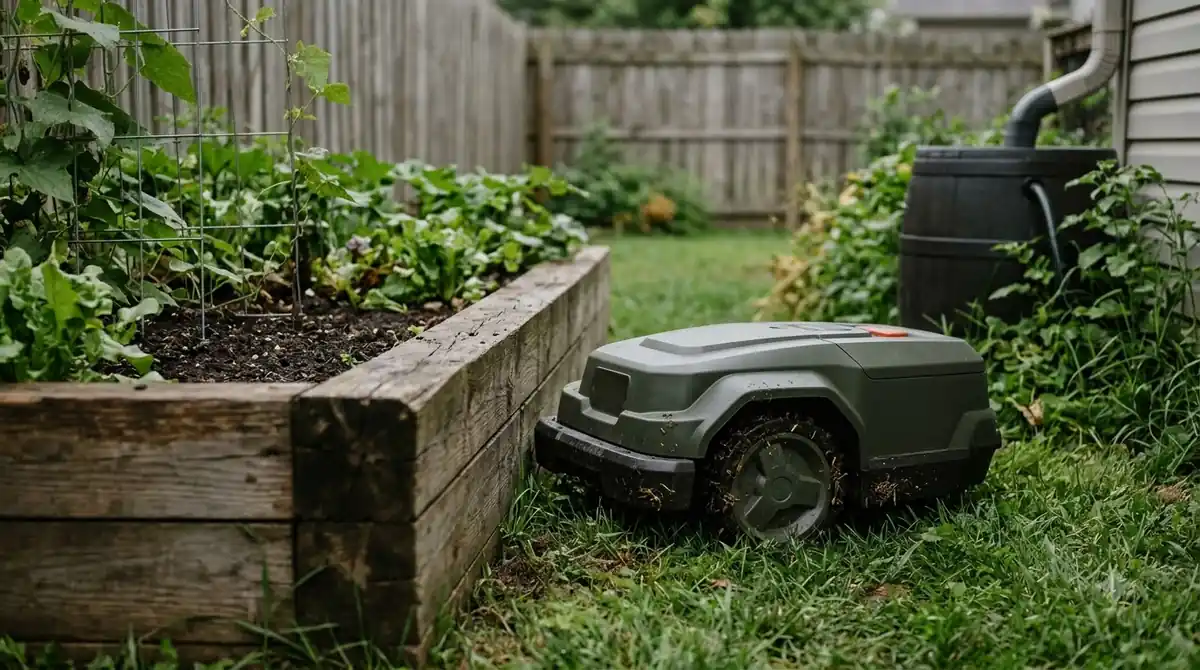
Best robot mower for a yard with a rain garden: what to check
Start with traction on wet grass, since the banks are where slipping is most likely. Look for models that describe their performance on wet and slope conditions, and ask how the drive wheels handle soaked turf. Our reading is that an all-wheel-drive design or a model with clear slope ratings is a safer starting point for a yard that includes a sloped basin edge, but the specifics vary, so check the spec sheet for the model you are considering.
Next, check how the boundary can be placed around the basin. A wire or virtual boundary should run at a safe distance from the edge of the depression so the mower stays on flat lawn. If you use a no-go zone, confirm that the mower can be told to avoid the basin without relying on a single sensor to detect it.
Set the boundary and the no-go zone
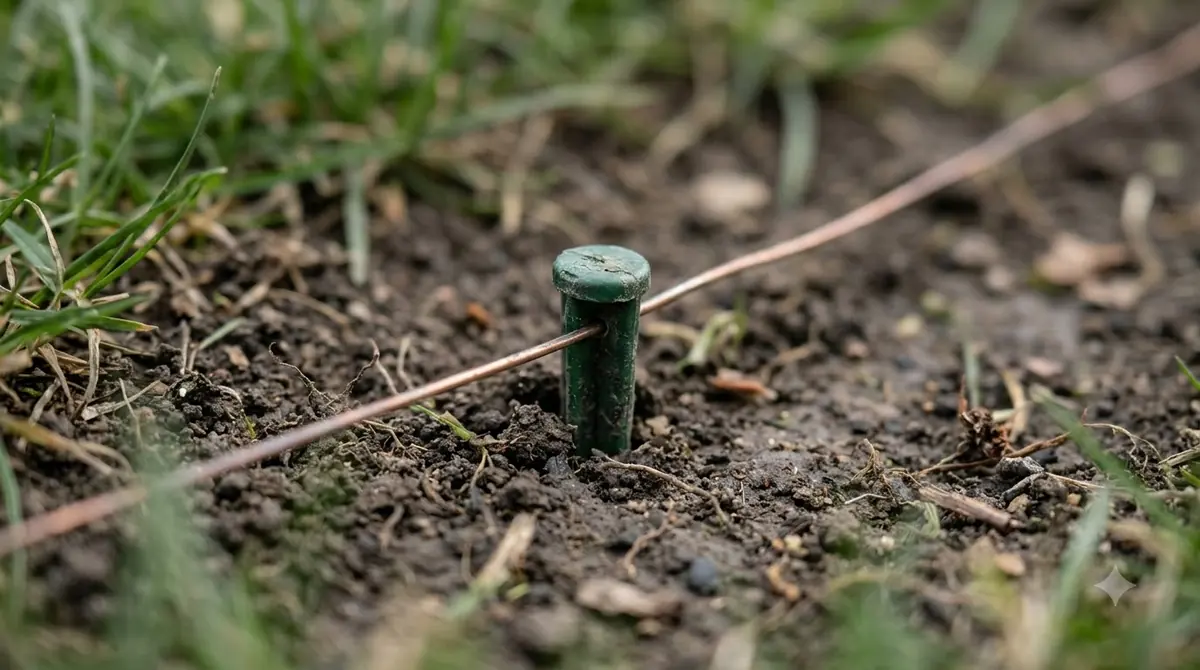
Place the boundary wire a short distance back from the top of the bank rather than along the very edge. That gap gives the mower room to turn and reduces the chance of wheels dropping over the lip. Where the rain garden sits in the middle of the lawn, the mower may need a route around it; plan that route before you lay wire, since a narrow corridor between the basin and a fence can be hard for the mower to pass through. Another protected area is covered in robot mowers for septic mound lawns. Another obstacle-heavy lawn that needs careful boundary planning is covered in the pergola lawn robot mower picks. Setting the boundary and no-go zones is simpler when power is close, so see how a robot mower for no-outlet lots handles the dock.
Husqvarna’s support guidance on boundary wire installation explains how wire spacing and passages affect the path a mower can take. Use the same logic here: a corridor that is too narrow will leave part of the lawn uncut, and a corridor that is too wide lets the mower drift toward the basin.
Cutting height and grass on the banks
Keep the grass on the banks a little taller than the flat lawn. Taller grass holds soil better and reduces the chance of bare patches that erode after rain. University of California IPM guidance on mowing turf notes that taller grass shades the soil and conserves moisture, which helps on exposed slopes. Set the mower higher in the bank zone if your model allows zoned heights, and avoid cutting more than about a third of the blade height in one pass. Sloped banks around a rain garden are uneven, so see the uneven-ground robot mower picks for models that cope with them. Banks and edges raise similar width and grass-height questions, and a robot mower for a narrow fence-line strip is covered in a companion guide.
Questions to ask before you buy
Ask the seller how the mower behaves on wet grass, whether it stops automatically when the ground is saturated, and what the rain delay setting does. Ask how it recovers if a wheel sinks, and whether it can be locked out of a specific area without a full boundary rebuild. These answers matter more for a rain garden yard than a model’s coverage rating.
If the seller cannot explain how the mower handles wet ground, consider that a warning sign for this type of yard. The rain garden is only one part of the picture; the rest of the lawn will still be wet after storms, and the mower has to work through that too.
Frequently asked questions
Can a robot mower run near a rain garden?
Yes, as long as the boundary keeps it on the lawn and off the basin. Set the boundary back from the bank and confirm the mower cannot enter the planted area.
Will a robot mower mow the rain garden plants?
It should not. Plants in a rain garden are usually not turf, so they belong outside the mowing area. Use a boundary or no-go zone to keep the mower away from them.
Does a robot mower work on wet grass after storms?
Many models can run on damp grass, but saturated soil is a problem for traction and for wheel ruts. Check the rain delay setting and the model’s wet-ground guidance before you rely on it after heavy rain.
What cutting height should I use near the basin?
A slightly taller height on the banks helps hold the soil. Keep the cut consistent so the edges do not thin out and wash away after rain.
Sources
- Clemson Home and Garden Information Center (university extension): mowing practices and wet-grass cutting.
- UC IPM, University of California (university extension): mowing height and soil moisture.
- Husqvarna support (manufacturer): passage and boundary wire layout.
- Husqvarna (manufacturer): guidance on mowing wet grass.
 Up next7 min readBest Robot MowersBest Robot Mower With Rain Sensor: What to Check Before You BuyUpdated Nov 10, 2026
 8 min readBest Robot MowersBest Robot Mower That Works in the Rain: What to Check Before You BuyUpdated Nov 11, 2026
 8 min readBest Robot MowersBest Robot Lawn Mower for a Yard With Pine Needles: What to CheckUpdated Nov 14, 2026
 8 min readBest Robot MowersBest RTK Robot Lawn Mower for Suburban Yards: What to Check Before You BuyUpdated Nov 11, 2026
 7 min readBest Robot MowersBest Robot Mower for Florida Summers: Rain, Heat and ScheduleUpdated Nov 17, 2026
 9 min readBest Robot MowersHow to Choose the Best Robot Lawn Mower With Automatic Rain-Forecast SchedulingUpdated Nov 19, 2026