
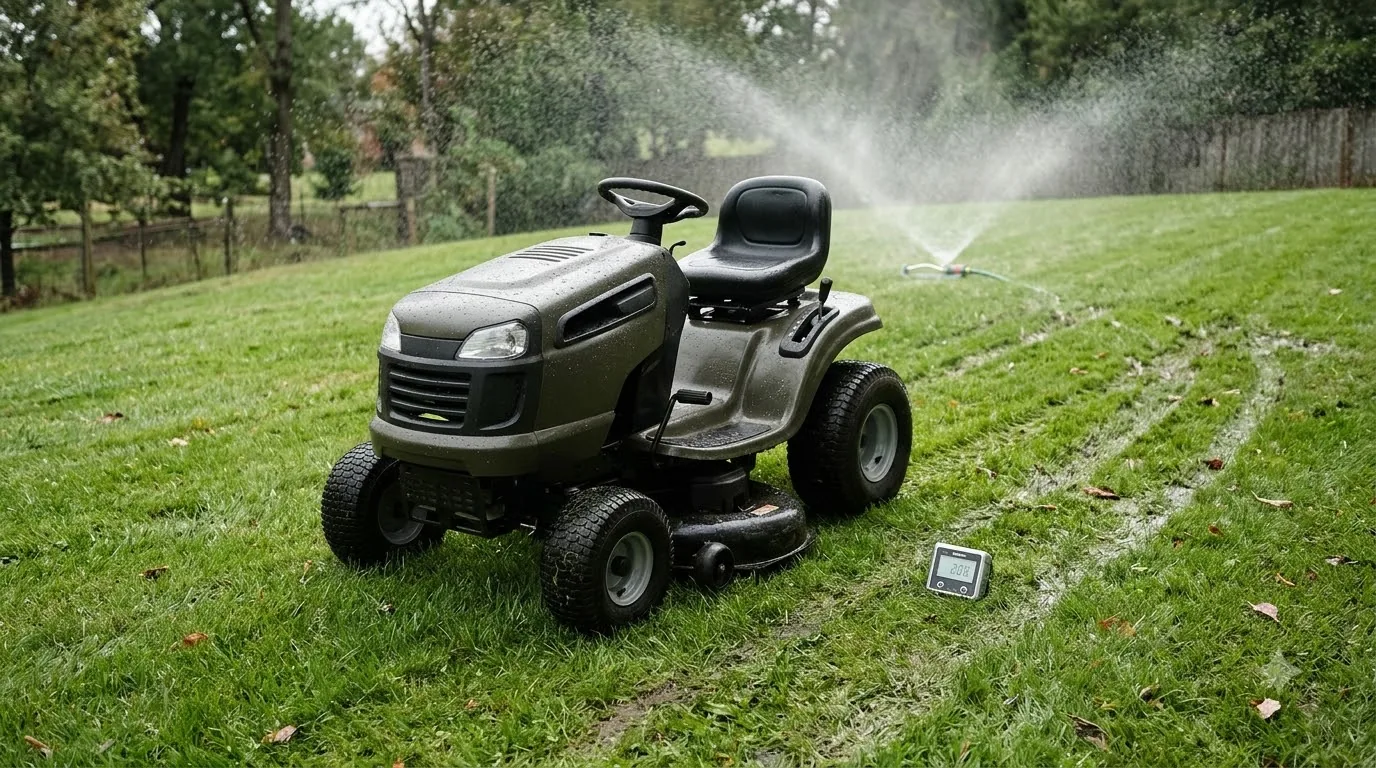

The best robot mower for a lawn with clay soil is one with good wheel grip, a stable cutting deck, and the ability to run often without tearing up soft ground. Clay soil holds water, drains slowly, and compacts easily, so wheel slip and ruts are the main concerns rather than cutting power alone. This guide explains which features matter on heavy clay, what the sources say about the lawn itself, and how to choose a mower without relying on a single brand ranking.
The short answer
- Traction matters most: clay gets slick when wet, so look for larger wheels, deeper tread, or all-wheel drive.
- Check the slope rating: wet clay makes slopes harder, so choose a model rated well above your steepest section.
- Adjustable height helps: a higher setting reduces scalping on uneven, compacted ground.
- Run it often and light: short, frequent runs remove less grass each time and put less load on soft soil.
Why clay soil changes the mower choice
Clay soil behaves differently from loam or sand. University guidance says heavy clay soils, or soils with heavy foot or equipment traffic, often become compacted over time. Compaction squeezes soil particles together, which limits the air, water, and nutrients that roots need. In practice, a clay lawn often has ruts, low spots, and areas where the grass is thin, and those conditions are what a robot mower has to handle. Dense turf and heavy ground often go together, and mowing thick grass on heavy soil covers the general case.
Drainage is the other issue. Illinois Extension describes soils that drain less than one inch per hour as having poor drainage. Water sitting on the surface makes the ground soft, and a robot mower that runs over soft ground can spin its wheels, leave tracks, or get stuck. Those are the problems to design around when you choose a model.
What to look for in the mower itself
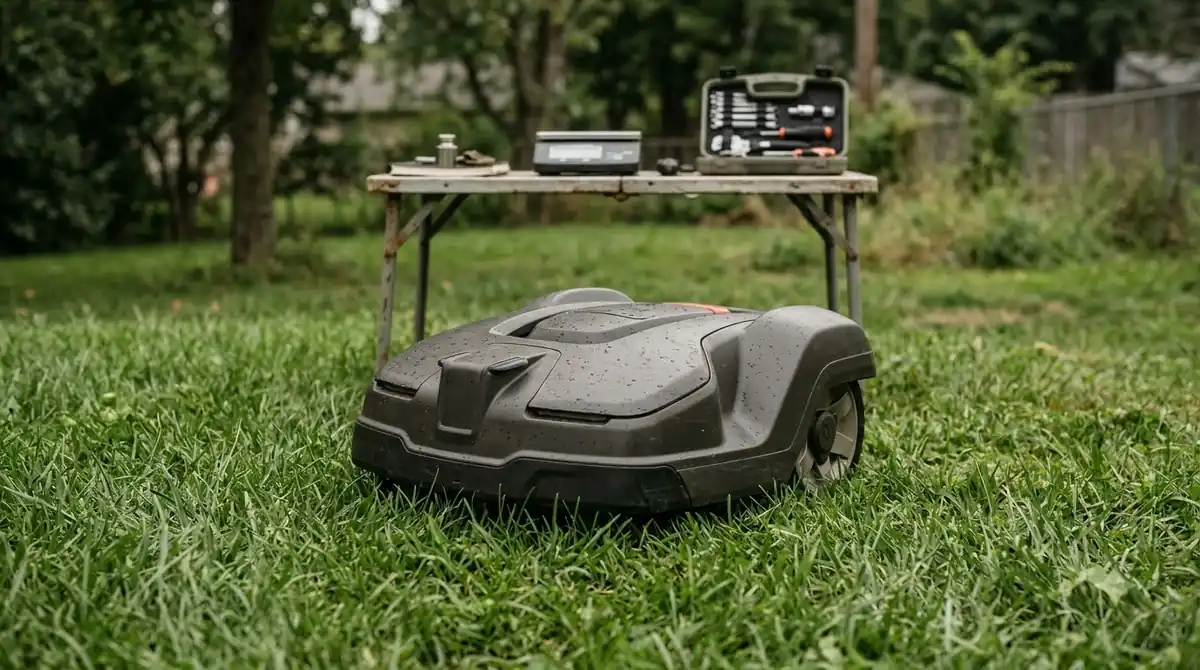
Wheel grip is the first feature to check. Anker’s vendor guide notes that rough or wet ground can make a mower lose traction and spin its wheels in muddy spots, and that larger wheels, deeper tread, and all-wheel drive help with grip. For a clay yard, those features are more useful than a high cutting speed. A mower that can climb steadily through soft patches protects the lawn from repeated spinning. Newly laid lawns share the soft-ground problem, as new build lawns with sod explains. Drive type affects grip, as AWD traction on soft ground shows for readers who want more detail on the subject.
The second feature is slope rating. The same guide lists typical slope ratings of about 15 to 25 percent for basic models, 30 to 35 percent for mid-range models, and 40 to 70 percent for premium all-terrain models. Wet clay slopes are harder than dry ones, so give yourself a margin above the steepest part of your lawn rather than matching the number exactly.
- Wheel size and tread: wider, deeper tread spreads weight and grips better in soft ground.
- Drive system: all-wheel drive is useful on slopes and damp areas, though it usually costs more.
- Cutting height range: a wide range lets you start high on compacted patches and lower the setting over time.
- No-go zones: the ability to block off a wet corner in the app is valuable on a clay lawn.
Heads up
Do not judge a mower only by its spec sheet. Ask whether the model has a good record on wet ground in your climate, and check user reviews that mention soft soil, not just dry lawns.
How to run a robot mower on clay without damaging the lawn
Schedule the mower to run when the lawn is dry rather than after heavy rain, and keep the charging station on firm, level ground so the mower does not spin when it returns to dock. If the mower leaves tracks, slow the schedule or set a no-go zone until the area dries out. Our reading is that frequent short runs work better on clay than one long run in wet conditions, because each pass removes less grass and puts less load on the soil. Soft, damp areas need extra care, as fresh seed and hydroseeded lawns describes. Wet clay is slippery, so read about mowers that cope with rain.
Keep the cutting height high enough for the lawn’s condition. A compacted, stressed lawn does better at a higher setting, and you can lower it over several weeks once the grass is growing well. Keep the blades sharp so the cut stays clean over bumps.
Fixing the soil helps the mower too
A mower cannot fix compaction, but better soil makes its job easier. UC IPM notes that aeration pulls small soil cores out of the lawn, which opens channels for air, water, and nutrients. Illinois Extension recommends organic matter such as compost to improve how soil holds water and air, and to help soil particles bind together. Anker’s guide lists aerating compacted soil and improving drainage in wet areas as practical steps. Soil and thatch often interact, which lawns with thatch buildup explains to round out the picture for this topic. Loosened ground needs time to settle, as running a mower after dethatching explains.
Do not expect one fix to solve everything. Aeration, compost, and reducing traffic on wet soil work together. A lawn that drains better and is less compacted gives a robot mower firmer footing, fewer ruts, and more even cutting.
Frequently asked questions
What robot mower is best for clay soil?
No single model is the best for every clay lawn. Look for good wheel grip, a slope rating above your steepest area, and an adjustable cutting height. The sources we read focus on traction and compaction rather than naming one brand.
Will a robot mower make clay soil worse?
It can leave tracks or ruts if it runs on wet, soft ground repeatedly. Schedule runs for dry periods, use no-go zones for wet corners, and keep the grass at a height that protects the soil.
Should I add sand to clay soil before mowing?
Sources differ. Clemson HGIC says sand can help fill aeration holes in clay soils and may improve drainage over time, but it also warns that heavy, repeated topdressing can create layers that reduce permeability. Compost and aeration are the approaches named in the Illinois and UC IPM material, so test a small area first.
How do I know if my soil drains poorly?
Illinois Extension describes a test that involves digging a hole, filling it with water, and measuring the drop over time. Soils that drain less than one inch per hour are considered to have poor drainage.
Sources
- Aerating lawns (UC IPM): heavy clay compaction and what aeration does.
- Improving soil drainage (Illinois Extension, May 2022): the one-inch-per-hour threshold, the drainage test, and organic matter.
- Do robot mowers work on uneven lawns? (Anker, vendor guide): traction on wet ground, slope ratings, and drainage fixes.
- Turfgrass cultivation (Clemson HGIC): compaction on clay and sand, aeration, and sand topdressing in clay.
 Up next7 min readBest Robot MowersBest Robot Mower for a Lot with No Outlet Nearby: Power PlanUpdated Nov 14, 2026
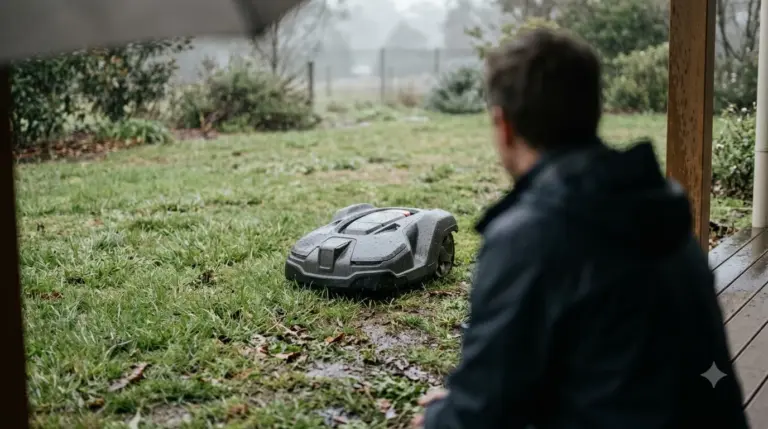 7 min readBest Robot MowersBest Robot Mower for Florida Summers: Rain, Heat and ScheduleUpdated Nov 17, 2026
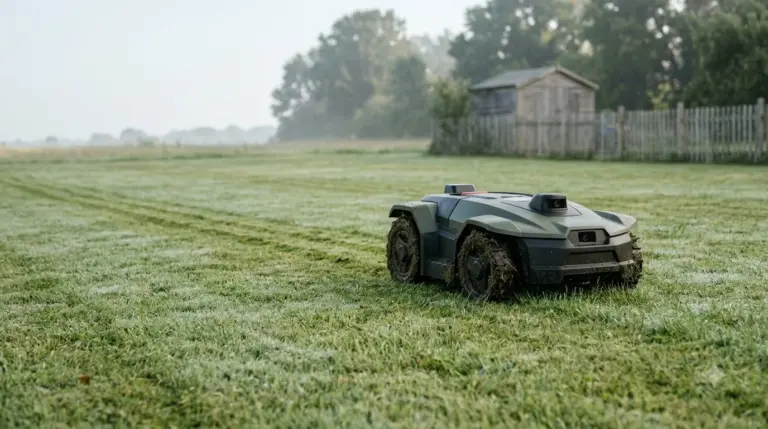 6 min readBest Robot MowersBest Robot Mower for the Carolinas: Match the GrassUpdated Nov 14, 2026
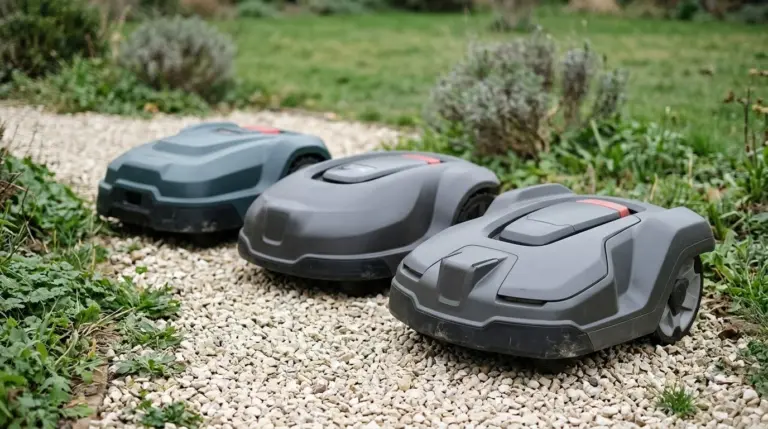 8 min readBest Robot MowersBest Robot Mower for Arizona Desert Lawns: Heat, Dock and HeightUpdated Nov 14, 2026
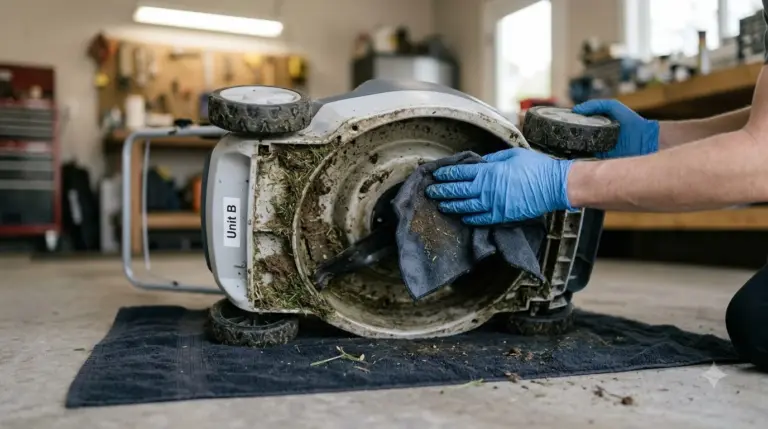 6 min readBest Robot MowersBest Robot Mower for a Lawn With Heavy Leaf FallUpdated Nov 17, 2026
 7 min readBest Robot MowersBest Robot Mower for a Lawn With a Patio: Sensors and EdgeUpdated Nov 14, 2026