
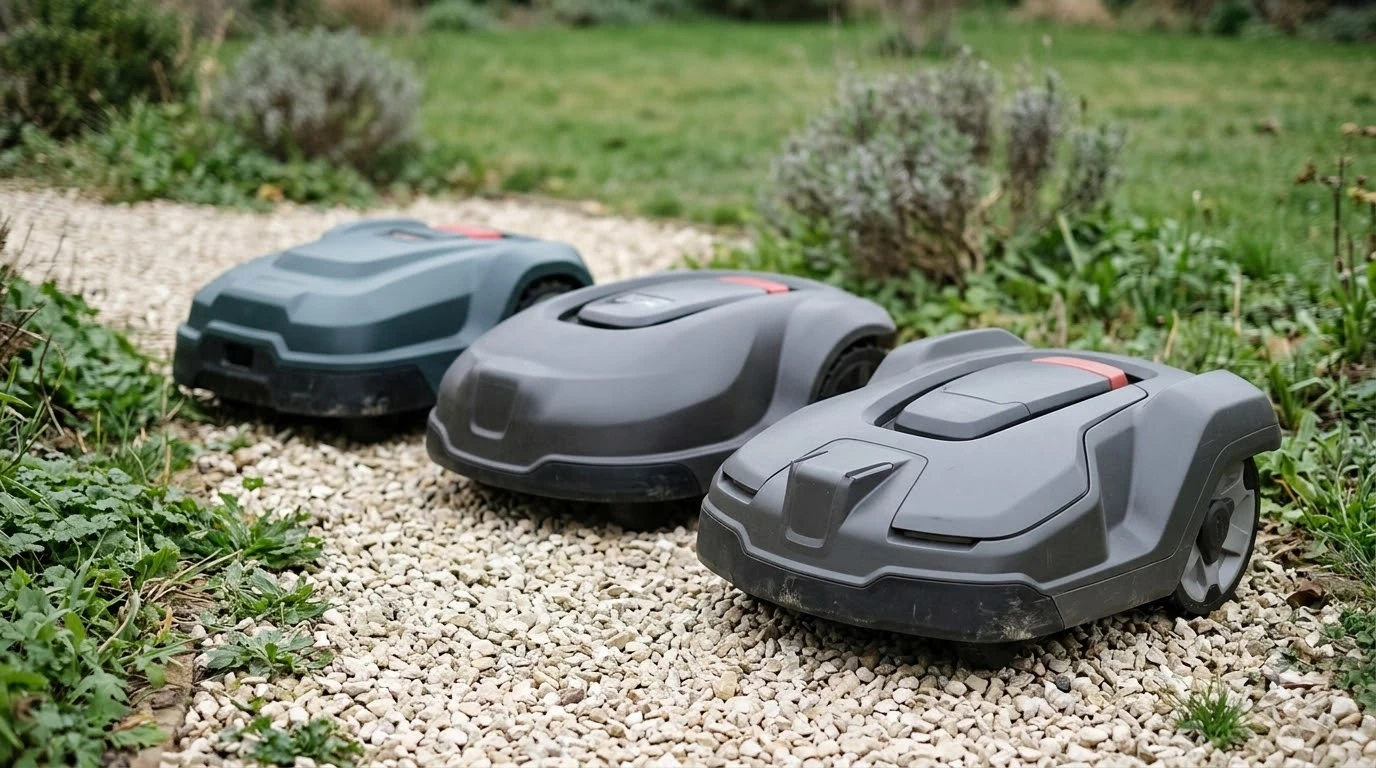

A robot mower for a lawn with a gravel driveway can work, but the driveway itself should stay outside the mowing area. Loose gravel can be thrown at the blades, lodge in the drive system, and wear the cutting deck, while a car crossing the mowing area can push stones into the lawn. The safe setup keeps the mower on the grass, sets the boundary a clear distance back from the gravel, and uses a short crossing only when the surface is firm.
The short answer
- Keep the driveway out: put the boundary wire or no-go zone on the lawn side of the gravel, not on the drive.
- Set a clear margin: Worx uses about 26 cm between the wire and an edge with a step or gravel.
- Expect loose stones: Robomow notes that stones can damage the housing and bounce off the blades.
- Avoid gravel crossings: Robomow says gravel crossings are possible but not always advisable.
- Check the lawn edge: stones that migrate onto the grass are the most common cause of trouble.
Why a gravel driveway is harder than a gravel edge
A gravel edge is a strip of stone along the lawn. A gravel driveway adds traffic, tire spray, and a larger area where stones move around. Cars push loose material toward the lawn, and the stones settle into the turf over time. For a robot mower, that means the boundary is not fixed. The margin that worked in spring may be too close by autumn. The wider question of hard surfaces is covered in robot mower crossing a driveway, including traction and wire limits. Enclosed lawns share many of the same edge issues, and boundary planning for fenced backyards covers how to set limits along hard surfaces.
The mower’s position matters too. A driveway is often flat and hard, so the robot may treat it as a safe path and try to cross it. If the crossing is not intended, the mower can pick up stones on the way back to the grass and carry them into the lawn.
Robot mower for a lawn with a gravel driveway: set the boundary first
The boundary is the main tool. Worx’s setup guidance for its Landroid Classic model puts the wire about 26 cm from an edge where there is a step or gravel, and about 10 cm where there is no step. A driveway edge with a step or loose gravel should use the wider distance. That gap keeps the wheels off the stones and gives the mower room to turn before it reaches the drive. Corner properties often combine paved edges with open boundaries, which corner lot lawns bordered by sidewalks address in detail. Open edges at the driveway are the same kind of boundary problem as in mowing an unfenced front yard.
Run the wire along the lawn side of the gravel, not through it. Wire buried under gravel is hard to repair and can shift as the stones move. If your model supports wire-free mapping, draw the driveway as a no-go zone and leave a small buffer on the lawn side.
Heads up
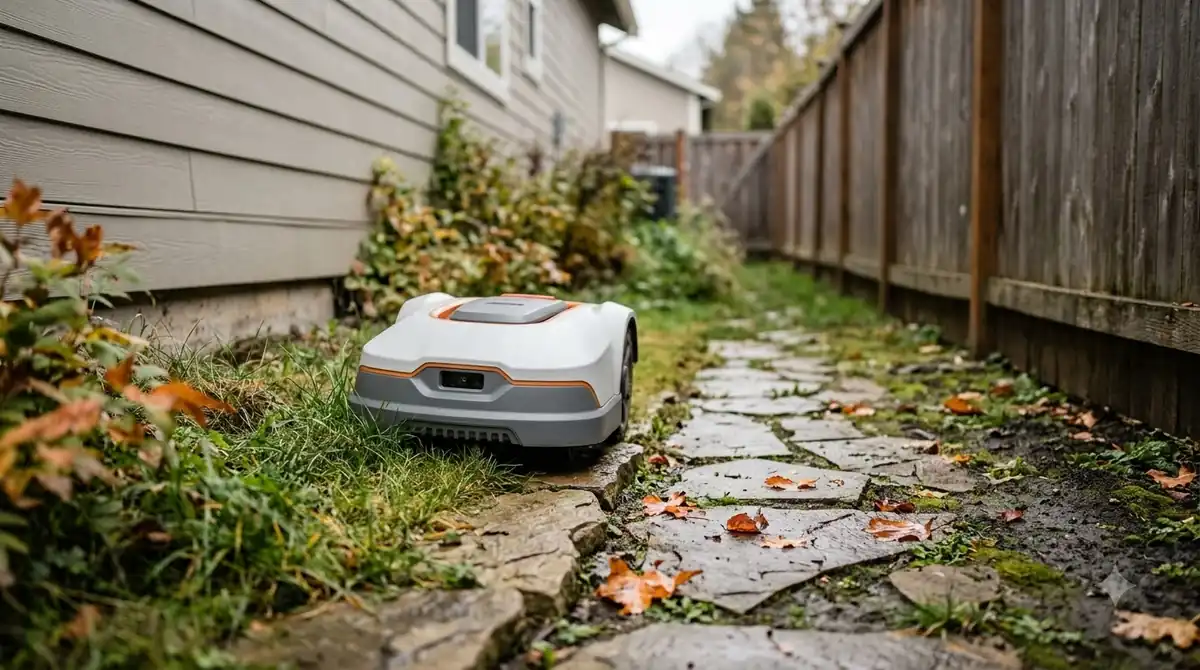
Do not let the mower cross a loose gravel driveway just to reach the far lawn. Robomow advises that gravel crossings are not always advisable, and a stone caught in the blades can cause damage.
When a short gravel crossing can work
Some lawns need a route across a gravel strip, such as a garden access path. Robomow says a passage should be at least one meter wide, and the crossing should be firm and level. Fine, firm gravel is more forgiving than loose, rounded stone, but it still needs a supervised test. Watch the mower in both directions and stop it if the wheels spin, the stones scatter, or the mower stops in the middle. Hard paving behaves differently from loose stone, and robot mower crossing a concrete sidewalk covers the wire and height limits.
If the crossing is firm but still loose, a solid strip for the wheels is a better choice than the open gravel. Pavers or a bonded gravel strip give the mower a surface it can cross without pulling stones onto the lawn. This is the same logic used for a lawn with gravel edges, applied to the driveway side.
Keep the lawn edge clear of stones
Stones on the grass are the main hazard. A mower that runs over a stone can throw it back toward the deck, and a stone trapped under the housing can chip the cutting edge. Sweep the first few centimeters of lawn beside the driveway on a regular schedule, and check the edge after car washing or heavy rain. Loose stone at the edge can trap a wheel, and getting stuck at gravel lawn edges lists the usual failure points.
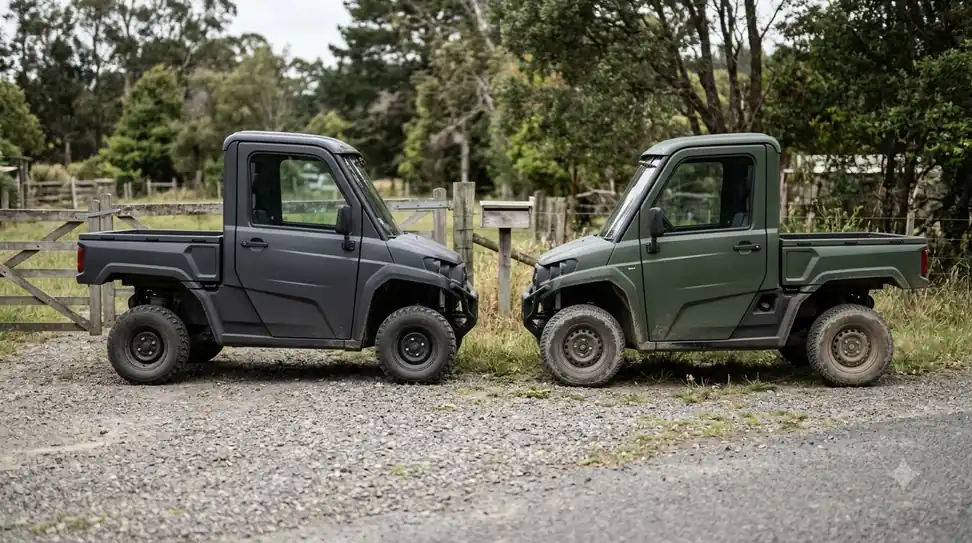
Edging also matters. A lawn edge that is cut too low, or that has a dip where the gravel meets the grass, invites stones to roll in. Keep the grass at a steady height near the drive, and fill any dip before you run the mower unattended.
A quick check before you run the mower
- Map the driveway. Note where the gravel starts and where cars park, since traffic changes the edge over time.
- Set the margin. Keep the boundary on the lawn side, with the distance from your model’s manual or the 26 cm figure as a starting point.
- Clear the edge. Remove loose stones from the first strip of lawn before the first run.
- Test the edge by hand. Walk the boundary and check for places where the wire is too close to the stones.
- Watch the first runs. Stop the mower if it approaches the drive, picks up a stone, or stops in the gravel.
After setup, schedule a short check every month or two. Gravel moves, and the boundary that was right in the first week may need a small adjustment. Lawns that open directly onto traffic need extra precautions, as described in mowing near a busy street edge.
Related reads: Boundary distance is easy to get wrong, and mower distance from the property line gives the clearances the sources recommend.
Frequently asked questions
Can a robot mower drive on a gravel driveway?
It should be kept off it. Loose gravel can damage the blades and housing, and stones can be thrown or carried back onto the lawn. A firm, solid surface is a different case, but a loose driveway belongs outside the mowing area.
How far should the wire be from a gravel driveway?
Worx’s guidance for its Landroid Classic uses about 26 cm where there is a step or gravel, and about 10 cm where there is no step. Use the figure in your model’s manual, and choose the wider setback if the edge is loose or uneven.
Will stones from the driveway damage a robot mower?
They can. Robomow notes that stones can damage the housing and bounce off the blades. Clearing the first strip of lawn and keeping the boundary back from the gravel reduces the risk.
Can I use a no-go zone instead of wire at the driveway?
Yes, if your model supports one. A no-go zone on a map or a physical barrier can keep the mower off the drive. Test the boundary by hand, and check it after seasonal changes to the edge.
Sources
- Installation boundary wire (Worx wiki): wire distance of 26 cm where there is a step or gravel, and 10 cm without a step.
- Can a robotic lawnmower cross paths? (Robomow): gravel crossings possible but not always advisable, loose stones and blade damage, one-meter passage width.
- Can a robotic lawnmower get stuck? (Robomow): stones can damage the housing and ricochet off the blades.
 Up next6 min readBy YardRobot Mower and Wood Chips Under a Swing Set: Keep It Off the ChipsUpdated Nov 14, 2026
 6 min readBy YardRobot Mower for a Lawn with a Putting Green: Fence It OffUpdated Nov 13, 2026
 9 min readBy YardCan a Robot Mower Work in a Yard Split by a Driveway?Updated Nov 10, 2026
 8 min readBy YardCan a Robot Mower Cross a Driveway?Updated Nov 11, 2026
 7 min readBy YardRobot Mower for a Lawn with a Sandbox: Keep Sand OutUpdated Nov 13, 2026
 9 min readBy YardSetting Up a Robot Mower for a Yard with a Gravel Parking Pad TransitionUpdated Nov 19, 2026