
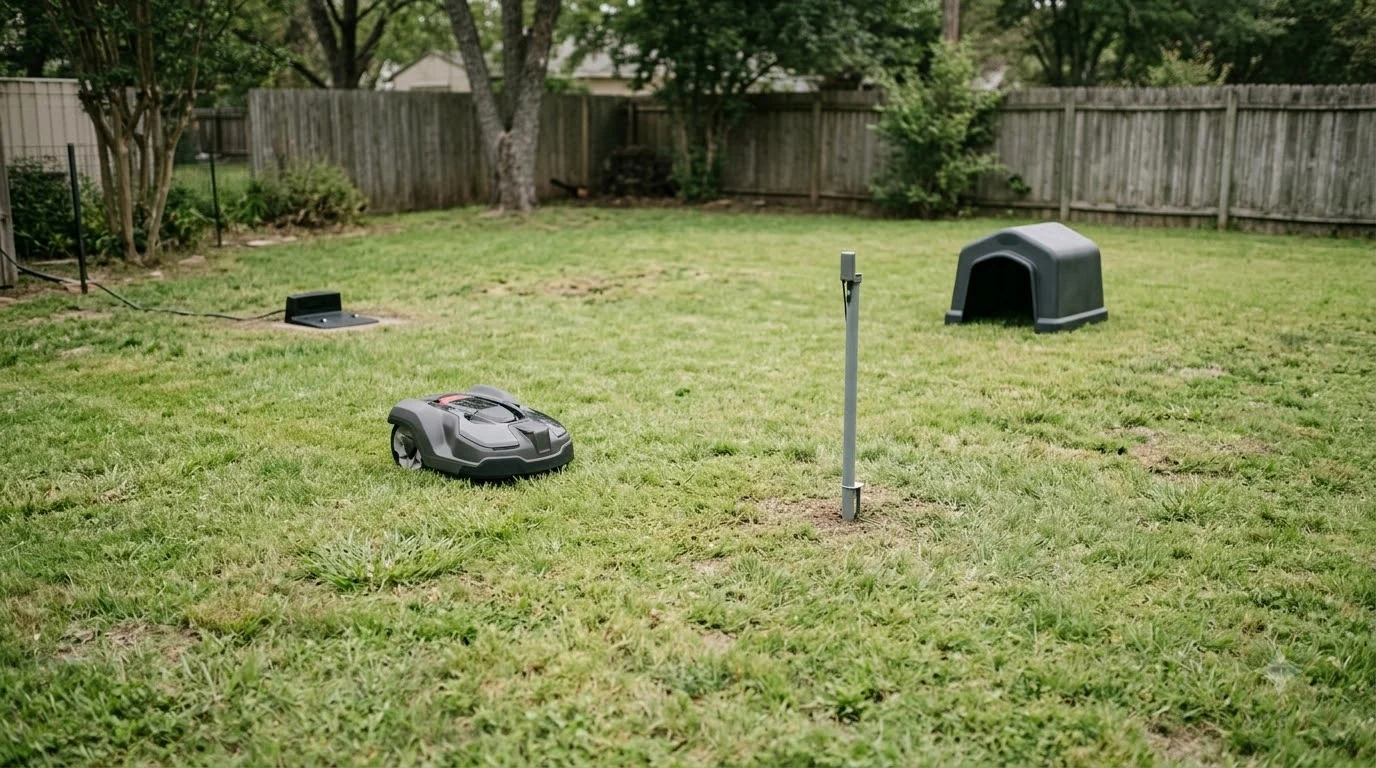

A robot mower outdoor outlet cover should stay sealed even when a plug is inserted, so a weatherproof in-use cover is the piece most homeowners add. The general extension guidance says a permanent outdoor receptacle is safer than a cord run through a door or window. The cover is what keeps rain, dew, and debris out of that receptacle while the charger stays connected.
The short answer
- Use a robot mower outdoor outlet cover that is extra-duty and in-use when the outlet faces direct weather and a plug stays in place.
- Look for NEMA 3R and a cULus or similar listing on the cover, not just a label that says “weatherproof.”
- Keep the outlet GFCI-protected and check that the cover does not block the reset or test button.
- Mount the cover in the right orientation so the hinge and the gasket sit where the manufacturer designed them.
What a robot mower asks of an outdoor outlet
A robot mower charging dock is usually plugged in outdoors for the whole season. Unlike a string trimmer or a pressure washer, it does not get unplugged after each job. That means the receptacle is exposed to rain, dew, and wet grass clippings for months at a time, and the cord stays under the same conditions. Before choosing a cover it helps to know the power requirements for the charging station and what the transformer expects from the outlet.
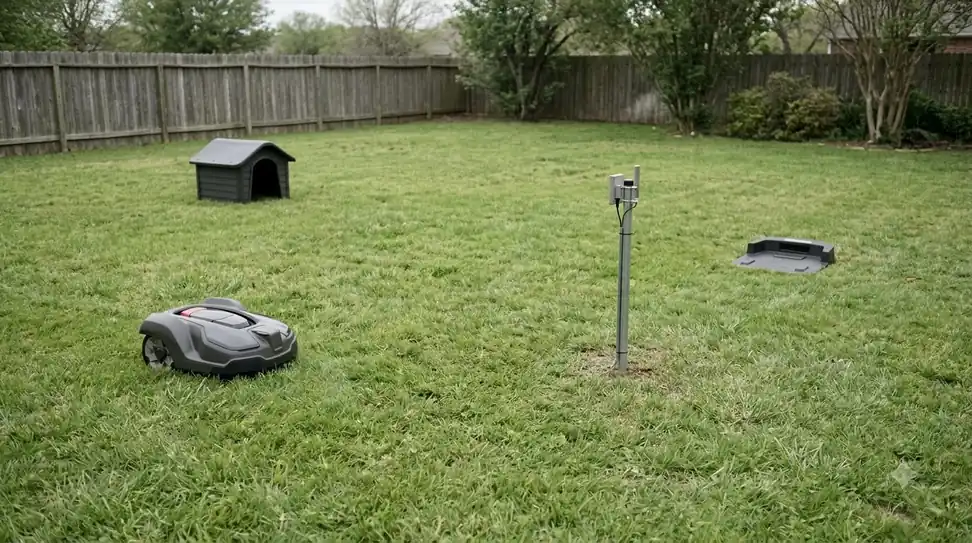
Extension guidance favors a permanent outdoor receptacle over a long cord run, because a cord routed through a gap in a door or window is harder to keep dry and easier to damage. A dock that sits on a dedicated outdoor circuit gives you a stable connection, but only if the box and cover around it are rated for outdoor use.
Robot mower outdoor outlet cover types
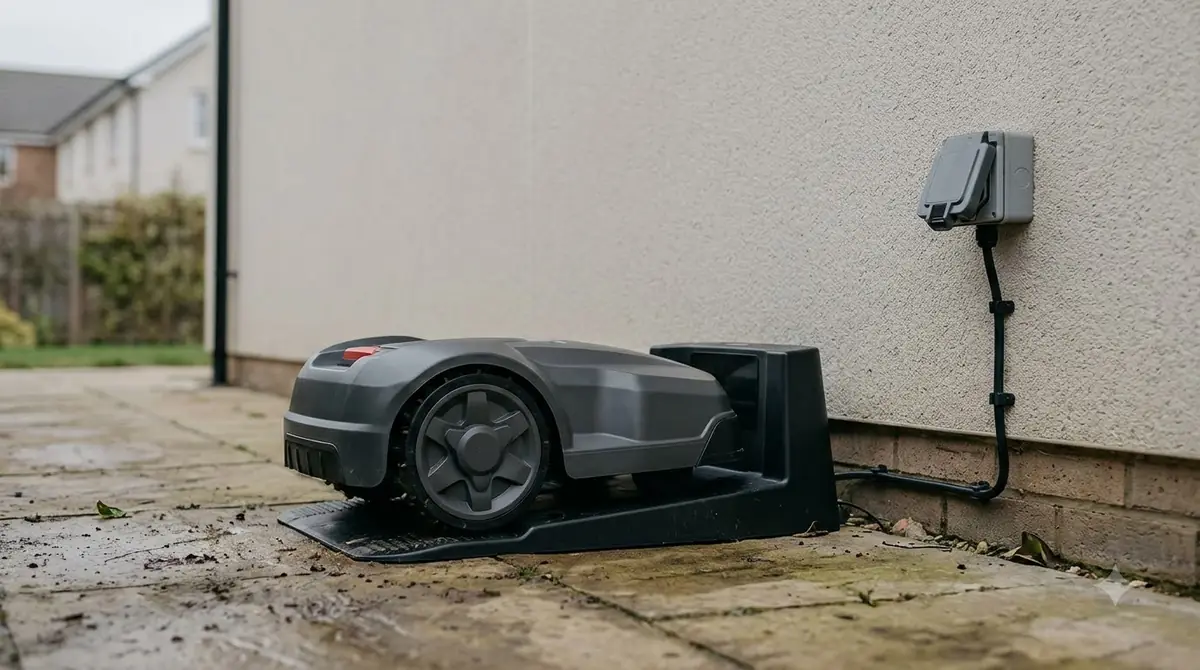
There are two different protection jobs here. A standard weatherproof cover keeps water out when the receptacle is empty. An in-use cover is designed to close and seal with a plug still inserted, which is the case for a charging dock. Leviton describes its clear 2-gang extra-duty cover this way, saying it keeps outdoor outlets protected even when devices are plugged in. Beyond the cover itself, a cable protector for outdoor runs shields the cord where it crosses paths or beds.
The product we checked is NEMA 3R rated, made of UV-resistant polycarbonate, and includes a gasket and two inserts that close the cord openings when no cord is in use. Its page cites NEC 2017 Section 406.9(B)(1) for extra-duty applications. Read the specific listing for the cover you buy, because covers differ in size, gasket design, and which devices they fit.
Heads up
An in-use cover fits a specific wallbox and device. A standard 2-gang box is needed for the Leviton cover, and it is sold separately. Measure the box and the device before you order.
Mounting: surface boxes and flush boxes
Fine Homebuilding’s outdoor outlet guide describes two common setups. A surface-mounted installation needs a listed weatherproof box, often marked for wet locations, plus a weatherproof cover. A flush-mounted box can sit in a dry spot, but its cover still has to seal against the finished wall so water cannot get behind it. Surface boxes often pair with a waterproof conduit for outdoor cable that carries the low voltage line away from the wall. Outdoor boxes and GFCI protection are covered here, and accessories for Sunseeker robot mowers pairs well with this advice on safe outdoor power.
The same article notes that purpose-built exterior flush boxes often include an integral in-use cover, so you do not need a separate one. Interior boxes are often a poor choice outdoors because they leak air and are harder to flash into an exterior wall. Our reading is that a dock outlet is a good place to spend on an outdoor-rated box from the start, rather than fixing a leak later.
GFCI protection and cord safety
Outdoor receptacles should be GFCI-protected, and the cover has to leave the reset and test buttons usable. Check that the cover opens or fits around the device without pressing on the buttons. A cover that jams the test button can hide a fault until the next power problem. GFCI protection is one layer, and some owners also fit a smart plug on the charger circuit to cut power remotely. Another option is an outdoor timer for charger power, though this should never interrupt the mower while it is docked.
Keep the cord itself short and out of standing water. If the mower’s charging cable runs to the dock across a wet patch, the cover protects the receptacle but not the cable. Route the cord so it does not pool water or rub on sharp edges.
Hinge and orientation
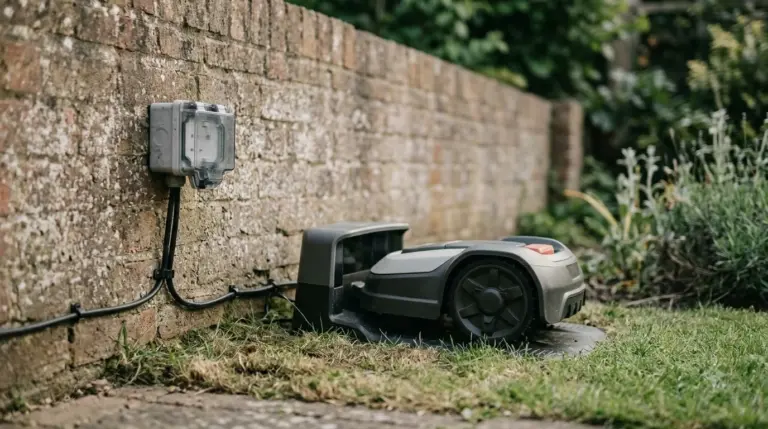
An in-use cover usually has a hinged flap. Code requires hinged covers to open far enough to reach the receptacle, and the Fine Homebuilding example shows what goes wrong when a cover is installed in the wrong orientation. Mount the cover the way the manufacturer’s instructions show, so the gasket faces the wall and the flap opens downward or to the side as designed. Orientation matters because the cord leaves the outlet side, and the low voltage cable between charger and outlet has its own length limit.
Once it is installed, open and close the cover with a plug in place. It should close fully and latch without forcing the cord. If it does not, the cover is the wrong size for your plug or the box is not square.
What to check before you buy
Start with the charging dock’s cord and plug type, then pick a robot mower outdoor outlet cover that fits that plug and the device behind it. Confirm the listing and rating on the box, not only the product photo. Plan the mounting: a surface box, a flush box with an integral cover, or a retrofit of the existing outlet. If the outlet is fine but the station stays dark, replacing the charger power adapter is a common next check.
When you compare a robot mower outdoor outlet cover with other options, use the same checklist for each one. Finally, check local rules. Electrical code and the NEC edition adopted by your area decide what is required, and an outdoor circuit change usually needs a permit. If you are not sure, ask a licensed electrician to confirm the setup before you plug in the dock.
Frequently asked questions
Do I need an in-use cover for a robot mower dock?
Usually yes, if the outlet is outdoors and the dock stays plugged in. An in-use cover is designed to seal with a plug inserted, which a standard cover cannot do.
What rating should the cover have?
Look for NEMA 3R and a listing such as cULus. Our reading is that a cover marked only as weather-resistant may not hold up to direct rain on a charging outlet.
Can I use an extension cord instead of an outlet cover?
A cord is a weaker option. Fine Homebuilding notes that a permanent outdoor receptacle is safer than running a cord into a house or garage, and a cord still needs protection from water at the connection.
Does the cover protect against GFCI faults?
No. The cover protects the connection from weather. The GFCI device behind it is what trips on a ground fault, so keep it working and reachable.
Sources
- Leviton 5982-UCL product page (manufacturer): cited the NEMA 3R rating, the in-use design, and the NEC 406.9(B)(1) reference for extra-duty covers.
- Fine Homebuilding, Protect your outdoor electrical outlets (trade publication): used for the surface versus flush box guidance, the integral in-use cover point, and the extension cord comparison.
 Up next8 min readGearBest GFCI Outlet Cover for Robot Mower: What to Check Before You BuyUpdated Nov 11, 2026
 8 min readGearRobot Mower RTK Antenna Mount: What to Check Before You BuyUpdated Nov 20, 2026
 9 min readGearBest Roof Mount for RTK Antenna: What to Check Before You BuyUpdated Nov 14, 2026
 9 min readGearRTK Antenna Wall Mount Bracket: What to Check Before You BuyUpdated Nov 19, 2026
 7 min readGearBest Outdoor Surge Protector for Robot Mower: What to Check Before You BuyUpdated Nov 11, 2026
 8 min readGearRobot Mower Spare Bumper Cover: When to Buy OneUpdated Nov 20, 2026