
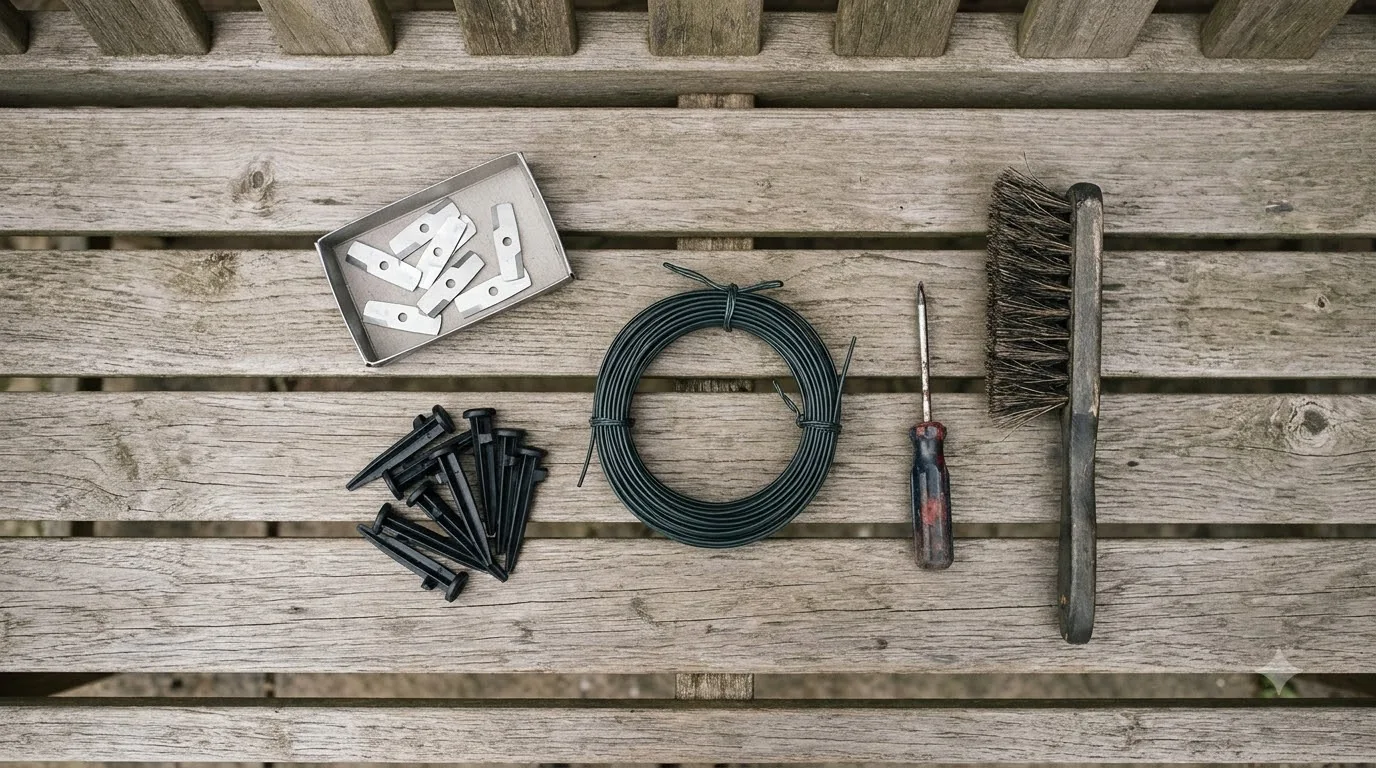

What is the best cheap robot lawn mower? There is no single answer, because the right low-cost model depends on your lawn size, slope and navigation type. A budget model works well on a small, flat, open yard. On a larger or sloped lawn, the cheapest option can fail on slope limits or satellite reception, so check those specs before you compare prices. Robot mowers usually cost more than standard mowers, so the goal is the lowest price that still fits your yard.
The short answer
- Measure first: confirm your lawn area, slope and number of mowing zones.
- Check slope limits: the boundary wire often has a lower slope limit than the mower’s drive system.
- Pick navigation by yard: boundary wire suits small lawns with poor satellite reception, while GPS or RTK suits open lawns.
- Compare basics: cutting height, rain protection and anti-theft features matter more than brand names.
What is the best cheap robot lawn mower for your yard?
In practice, the answer to what is the best cheap robot lawn mower is the lowest price that still matches your yard. Consumer NZ, which tested a range of robot mowers, notes that robot mowers usually cost more than a standard lawn mower, and its guide does not list fixed price ranges (see budget robot mowers under 500 for how low-end models differ). That means a low sticker price only helps if the model covers your lawn area, handles your slope and has the navigation your yard needs.
In practice, a budget model is a good fit when the lawn is small, mostly flat and has few obstacles. A low-cost model that struggles with slopes or loses its position under trees will cost more in time, repairs and frustration than a slightly more expensive model that matches your yard. Our reading is that the cheapest mower is the one that does the job without workarounds.

Match the mower to your lawn size and mowing zones
Start with the area you need the mower to cover. Consumer NZ tested robot mowers on lawns of up to 2,000 square meters (about 21,500 square feet), and the models it covered varied widely in how much ground they could handle. Mowing zones are a separate limit: some models handle a single zone, while others can manage up to 20 zones. A front and back yard joined by a narrow passage may need a model that can switch between zones.
| Yard layout | What to look for | Budget fit |
|---|---|---|
| Small, one open lawn | Single zone, boundary wire or simple GPS | Usually good |
| Medium, one zone with a few obstacles | Adjustable cutting height and a rated area above your lawn | Check the rated area in the manual |
| Large or split into zones | Multi-zone support and a drive rated for your slope | Confirm the zone count in the spec sheet |
When you ask what is the best cheap robot lawn mower for a given area, compare the rated area with your measured lawn, not the lot size, as picking a robot mower by lawn size explains. Leave headroom above your measurement, because obstacles and zone edges reduce the area a mower covers in practice.
Check slope limits before anything else
Slope is the spec that most often rules out a cheap model. Husqvarna rates its standard Automower models at 25 to 50 percent slope (14 to 26 degrees), depending on the model, and its AWD model, the 435X AWD, at up to 70 percent (35 degrees). These are drive limits, and they are not the same as the boundary limit, which is the slope the wire can safely cross.
Husqvarna’s table shows boundary limits that range from 10 percent on one model to 50 percent on the 435X AWD, with most models at 15 or 20 percent. A mower that climbs a 25 percent slope may still fail if the boundary wire runs across a 15 percent slope. Read the boundary limit in the manual before buying.
To measure a slope, use Husqvarna’s formula: slope (%) = vertical height divided by horizontal distance, multiplied by 100. For example, a 15 cm rise over a 100 cm run is a 15 percent slope. Measure with a level and a tape at the steepest spot on the lawn.
- Measure the steepest part. Use the rise-over-run formula and write the number down.
- Compare with the boundary limit. Find the boundary slope figure in the manual, not only the marketing claim.
- Plan the wire. Husqvarna advises laying the guide wire diagonally across the slope, and keeping at least 50 cm of level ground between flat areas and steep sections on its AWD models.
- Protect road edges. Where a slope borders a public road, Husqvarna recommends a barrier of at least 15 cm along the outer edge.
For a steep yard, the answer to what is the best cheap robot lawn mower is whichever model still clears the slope test. Consumer NZ’s slope tests went up to 19 degrees (35 percent). Some manufacturers claim up to 39 degrees (80 percent), but several manuals say steep slopes should only be mowed briefly rather than across the whole lawn. A claimed figure is a ceiling, not a guarantee for daily mowing; see robot mower hill limits for more context.
Boundary wire or wire-free navigation
Navigation type is the second major cost-related choice. Boundary wire mowers follow a buried or staked wire, and they do not need satellite signal. Wire-free mowers use GPS, RTK or camera-based vision to find their way, which makes setup faster and zone changes easier.
| Option | Works well when | Trade-off |
|---|---|---|
| Boundary wire | Smaller lawns, poor satellite reception, fixed zones | Wire can be damaged and must be moved to change zones |
| GPS | Open sky, no tall trees or buildings nearby | Needs a clear view of the sky |
| RTK | Large or complex lawns with a clear line of sight to satellites | Needs an antenna, usually on a roof or shed, with a clear line of sight |
| Vision and AI | Changing environments and common garden objects | Relies on cameras and AI recognition |
Consumer NZ notes that GPS needs a clear sky view, and that RTK gives centimeter-level accuracy but needs an antenna with a clear line of sight to the satellites. Tall trees, buildings or valleys can disrupt the signal and reduce accuracy. Our reading is that a budget wire-free model is a poor value if your yard is shaded, while a budget wire model is a good value for a small lawn with few changes.
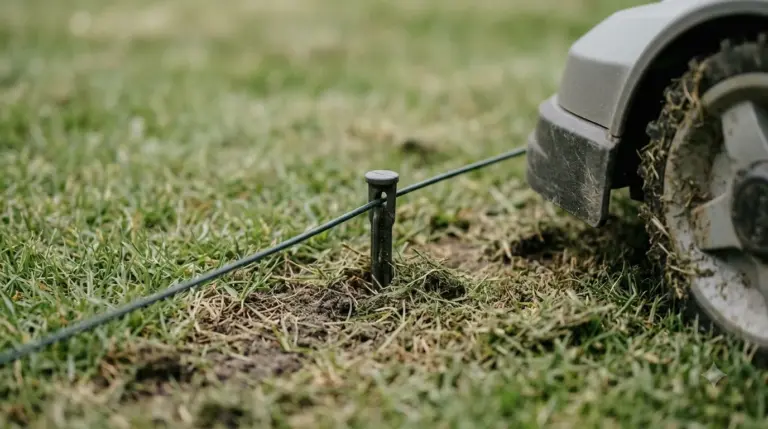
If you pick a boundary wire model, plan for the wire (robot mowers and boundary wire covers when you can skip it). Consumer NZ notes that wire can be damaged and must be moved when you change zones, so factor in time for a later reconfiguration.
Cutting height, rain and security features
Cheap models vary most on cutting height, weather handling and theft protection. Consumer NZ found that most tested mowers can cut as low as 20 mm, while the best-performing models offered a 40 to 45 mm range with nine or more height settings. A wide range matters if you want a tidy lawn in summer and a taller cut in shade or drought.

- Cutting height range: look for a wide range with several settings, not just a single low cut.
- Rain protection: fewer than half of the tested models had a rain sensor. Check the IP rating, where a higher second number means better water resistance.
- Anti-theft: look for a PIN, an alarm, geofence alerts or GPS tracking, and read protecting a robot mower from theft for more options.
- Battery: a user-replaceable battery that is available locally at a reasonable cost saves money over the life of the mower.
Heads up
Our reading is that some budget brands may have limited local support for parts and batteries. Check whether replacement parts are sold in your country before you buy, since a cheap mower with no local parts can be costly to keep running.
What to check before you buy
Use the same checklist for any model you compare, so the price is the last thing you weigh rather than the first. Each step below uses a fact you can check in the manufacturer’s manual or a published test.
- Confirm the lawn area in square feet or square meters, and compare it with the mower’s rated area with headroom.
- Measure the steepest slope and check the boundary limit in the manual.
- Choose navigation based on sky view and how often you will change zones.
- Check cutting height and whether the range covers your grass type and season.
- Look for rain and theft features such as the IP rating, PIN, alarm and GPS tracking.
- Confirm local parts and battery supply before you commit to a brand.
If the best cheap robot lawn mower you find passes every step, it is a reasonable choice. If it fails on slope or navigation, a higher price is usually the better value. For fuller guidance, read the Consumer NZ robot lawn mower guide, and check the slope rules in the Husqvarna steep-slope guide before you choose.
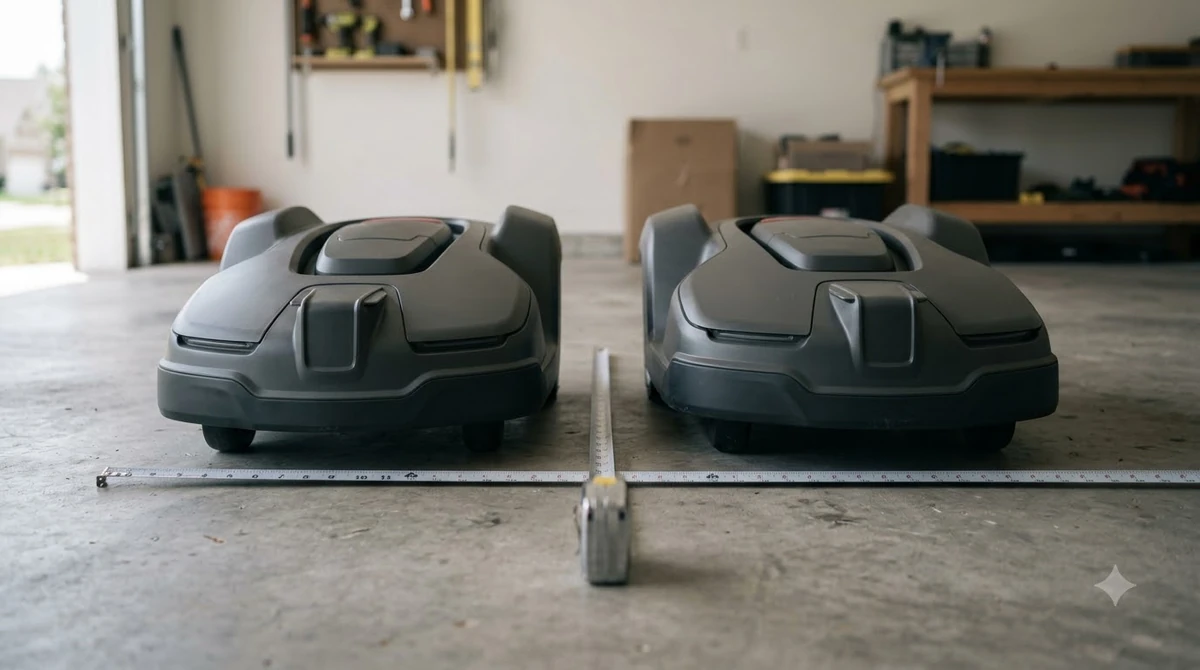
Frequently asked questions
What is the best cheap robot lawn mower for a small yard?
No single model fits every lawn. The best cheap robot lawn mower for you is the one whose rated area, slope limit and navigation type match your yard. Start with those three specs before comparing prices.
Can a cheap robot mower handle a steep lawn?
Some can, but check the boundary wire slope limit in the manual, not only the drive limit. Husqvarna’s own table shows boundary limits from 10 to 50 percent depending on the model, so a steep lawn needs a model whose boundary limit fits your slope.
Is wire-free navigation worth it on a budget?
It depends on your yard. GPS and RTK need a clear view of the sky, and tall trees or buildings can reduce accuracy. A shaded yard usually suits a boundary wire model better, even at a similar price.
Do robot mowers need a rain sensor?
A rain sensor is useful but not essential. Consumer NZ found fewer than half of the tested models had one, so check the IP rating as well, where a higher second number means better water resistance.
Sources
- Husqvarna support: optimising an Automower installation for steep slopes (manufacturer): slope limits, boundary limits by model, slope formula, wire layout and road barrier.
- Consumer NZ: robot lawn mowers buying guide (consumer organization): test lawn size, slope tests, cutting heights, mowing zones, navigation types, rain sensors and security features.
 Up next10 min readBest Robot MowersBest Robot Mower With Auto Return to Dock: How to Choose One That Docks ReliablyUpdated Nov 11, 2026
 7 min readBest Robot MowersBest Mid-Range Robot Lawn Mower: How to Choose OneUpdated Nov 11, 2026
 8 min readBest Robot MowersRTK vs LiDAR vs Vision: Which Robot Mower Navigation Fits Your YardUpdated Nov 11, 2026
 8 min readBest Robot MowersRobot Mower vs Push Mower: Which Fits Your Lawn?Updated Nov 11, 2026
 7 min readBest Robot MowersRobot Mower vs Riding Mower: Which Fits Your LawnUpdated Nov 11, 2026
 8 min readBest Robot MowersWire-Free vs Boundary Wire Robot Mowers: Which Setup Fits Your YardUpdated Nov 11, 2026