
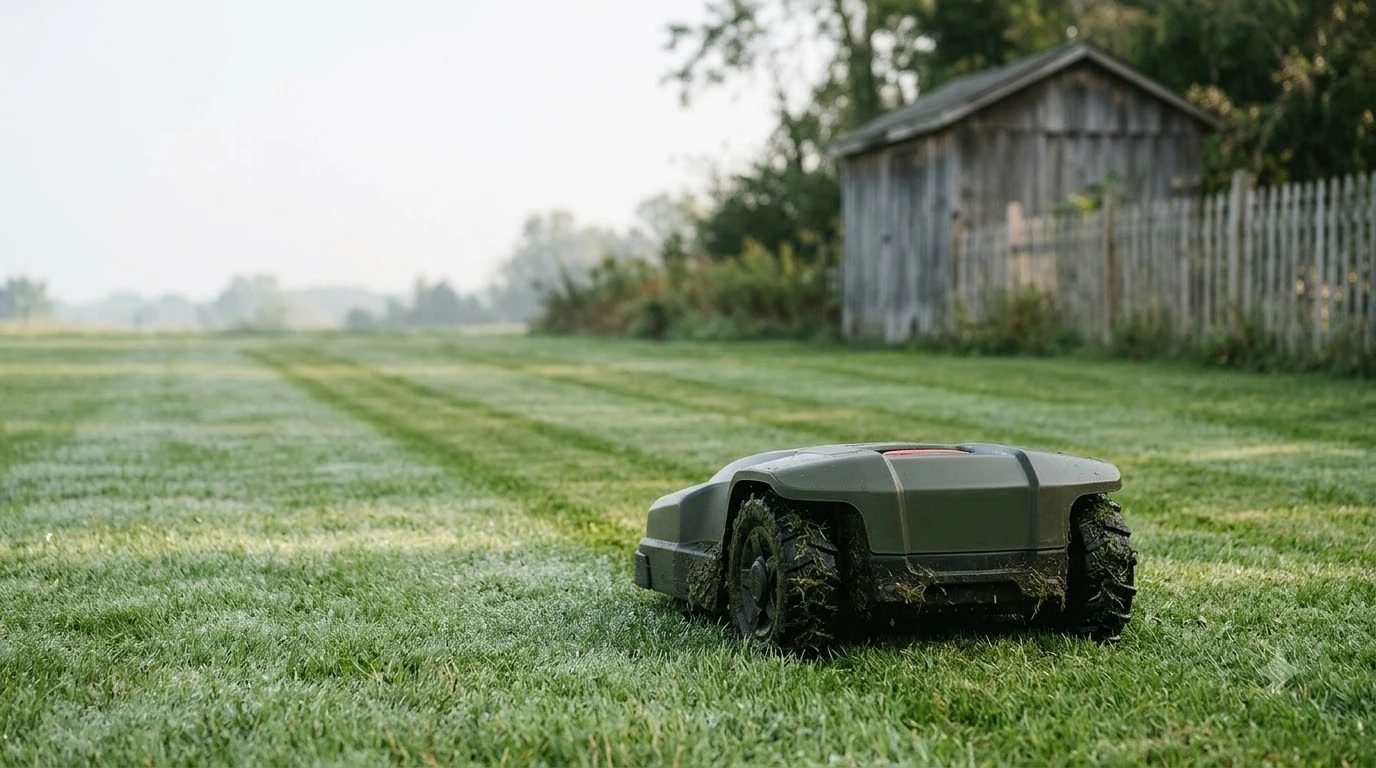

The best robot lawn mower without perimeter wire depends on how it finds its position, how big and steep your lawn is, and whether trees or buildings block the sky. Wire-free models use satellite RTK, LiDAR, cameras, or grass sensors instead of a buried loop, and each method has conditions where it weakens. The specs below are vendor-published and dated, so check them against the exact model before you buy.
The short answer
- No wire needed: a best robot lawn mower without perimeter wire navigates with RTK satellite positioning, LiDAR, vision cameras, or grass sensors.
- Size and slope: vendor tables list maximum lawns from 0.3 to 1.25 acres and slope ratings from 30% to 80%.
- Satellite models: they need a clear sky view and either a base station or Network RTK where it is offered.
- Weak spots: dense tree canopy reduces RTK precision, and vision struggles in low light or heavy shadow.
How the best robot lawn mower without perimeter wire finds its way
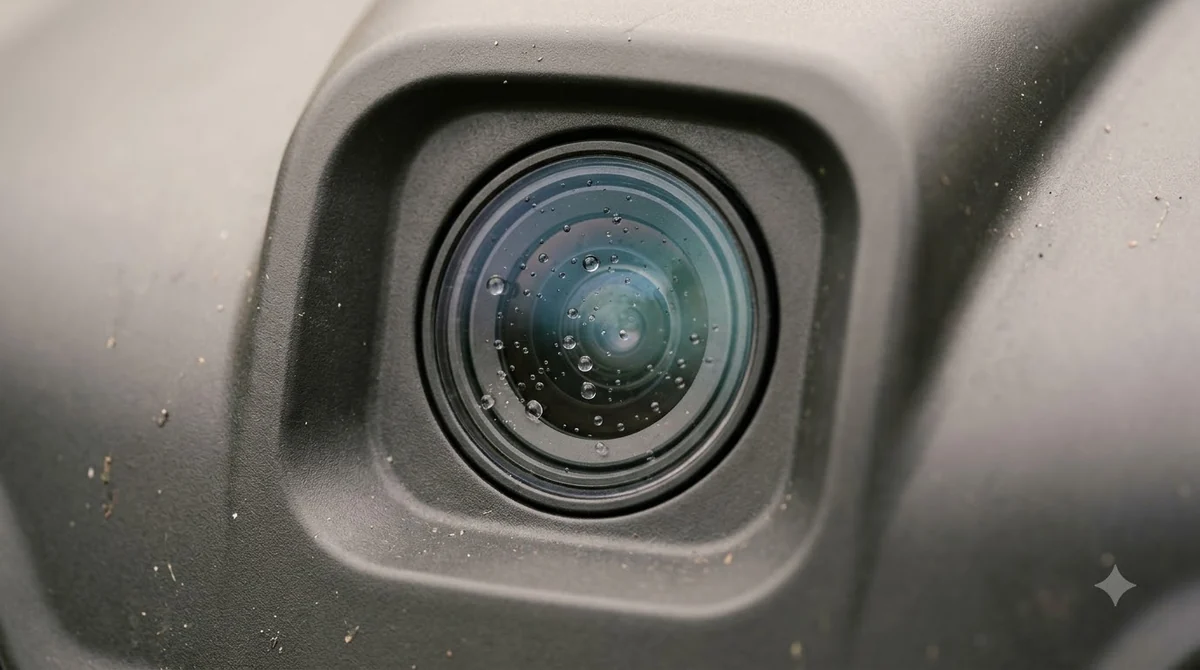
A best robot lawn mower without perimeter wire can locate itself with RTK satellite positioning, LiDAR, cameras, grass sensors, or a combination, and each method maps the lawn differently. Husqvarna says its EPOS system uses high-precision satellite signals (RTK-GNSS) to create virtual boundaries through the Automower Connect app, and that a physical wire can be buried where satellite coverage is poor. Mammotion describes Tri-Fusion Navigation on the LUBA 3 AWD 5000 as combining RTK GPS, 360-degree LiDAR, and AI vision, with a claimed precision of plus or minus 1 cm. That figure is a vendor claim and has not been independently tested.
| Method | How it finds the lawn | Limit stated in the sources |
|---|---|---|
| RTK-GNSS | Satellite signal with a base station or Network RTK | Needs a clear sky view; tree canopy can reduce precision |
| LiDAR | 360-degree scanning of the surroundings | The sources read for this guide name no sky-view limit for it |
| Vision cameras | AI separates grass from pavement, beds, and obstacles | May struggle in low light or heavy shadows |
| Hybrid (RTK plus vision) | Pairs satellite positioning with cameras | Sunseeker says hybrid systems handle GPS-weak areas better than pure GPS mowers |
| Grass sensor | Underside sensor detects grass, with no area map | Needs physical barriers and cannot reach separate zones |
Choosing between RTK, LiDAR, and vision
Pick the best robot lawn mower without perimeter wire that uses RTK when the sky above the yard is mostly open, and compare LiDAR or vision models when trees or shade are common. Each method has its own limit, as our RTK vs LiDAR vs vision comparison explains, so the right choice follows the condition your yard hits first. Our reading is that a buyer should decide on the yard before choosing the best robot lawn mower without perimeter wire by brand.
- Open yard: RTK fits best when the sky view is clear, which the manual guidance quoted by Sunseeker treats as a requirement.
- Tree-heavy yard: Mammotion says dense trees, buildings, or irregular lawns may temporarily reduce precision.
- Mixed yard: a hybrid design pairs satellite positioning with cameras, which Sunseeker presents as the answer to GPS-weak spots.
- Shaded lawn: check how the best robot lawn mower without perimeter wire handles low light, since the vendor sources say cameras can struggle in heavy shadow.
Lawn size, slope, and passage limits
Vendor tables list maximum lawn sizes from 0.3 to 1.25 acres and slope ratings from 30% to 80%, so the figure that matters is the one for the model on your shortlist of the best robot lawn mower without perimeter wire. The table below uses data from Mammotion’s comparison dated March 31, 2026, and from Sunseeker Elite’s table as of November 24, 2025. Both sources publish their own competitors, so treat the rows as vendor-stated figures.
| Model | Maximum lawn | Slope rating | Source and date |
|---|---|---|---|
| LUBA 3 AWD 5000 | 1.25 acres | 80% | Mammotion, Mar 31, 2026 |
| Dreame A3 AWD Pro 3500 | 0.87 acre | 80% | Mammotion, Mar 31, 2026 |
| MOVA LIDAX Ultra 2000 | 0.5 acre | 45% | Mammotion, Mar 31, 2026 |
| LUBA mini 2 AWD 1500 | 0.37 acre | 80% | Mammotion, Mar 31, 2026 |
| Navimow i215 LiDAR | 0.37 acre | 45% | Mammotion, Mar 31, 2026 |
| Sunseeker X5 | Up to 0.4 acre | 60% | Sunseeker Elite, as of Nov 24, 2025 |
| Navimow H1500N | Up to 0.3 acre | 45% | Sunseeker Elite, as of Nov 24, 2025 |
| WORX Landroid Vision WR220 | Up to 0.4 acre | 30% | Sunseeker Elite, as of Nov 24, 2025 |
Sunseeker’s guideline is a slope of at least 35% (about 19 degrees), with higher-end models at 45% (about 24 degrees) and above. Husqvarna lists standard models for slopes of 20% to 40% and AWD models for up to 70%. Sunseeker also says narrow passages between zones should be at least 1 meter wide. Our reading is that you should measure your steepest slope, as our guide on how steep a hill a robot mower can handle explains, and your narrowest gate first, because a maximum lawn size is a ceiling rather than a target.
What setup involves without a wire
Setup for the best robot lawn mower without perimeter wire means mapping the lawn edge in an app or placing a reference station, not burying cable around the garden. Robomow notes that grass-sensor models need no mapping and are ready after purchase, but they depend on physical barriers at flower beds and next to neighboring lawns.
- Place the reference station. For RTK models, Sunseeker quotes the manual as requiring a level surface with a clear sky view. Our explainer on what an RTK base station is covers the hardware.
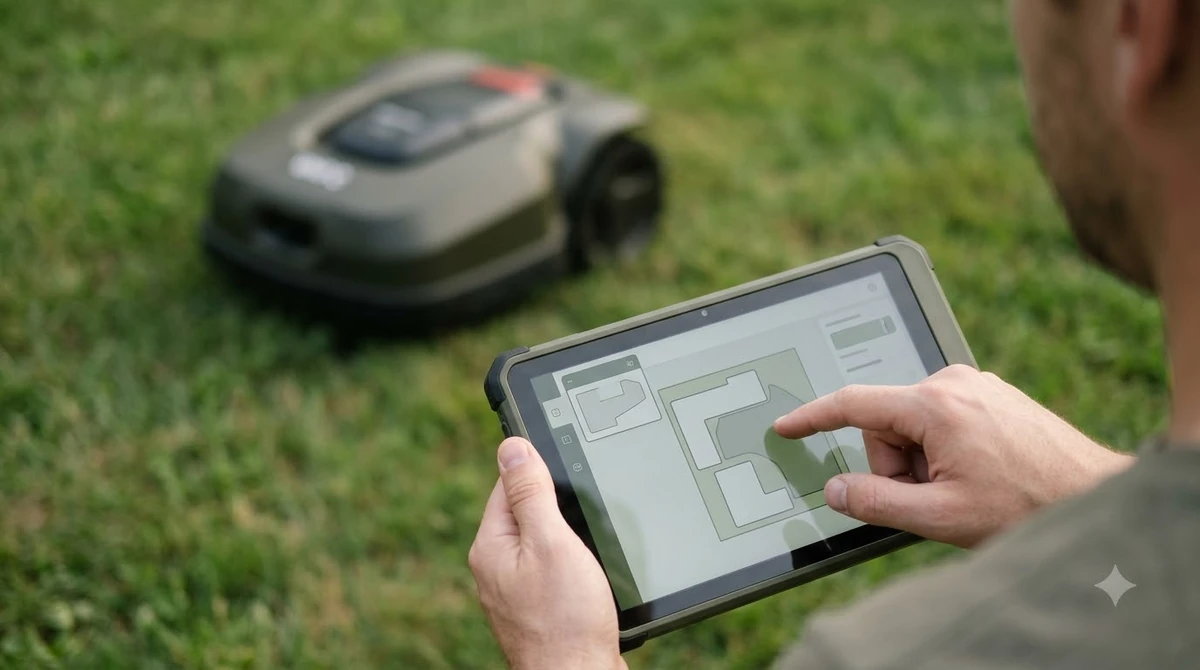
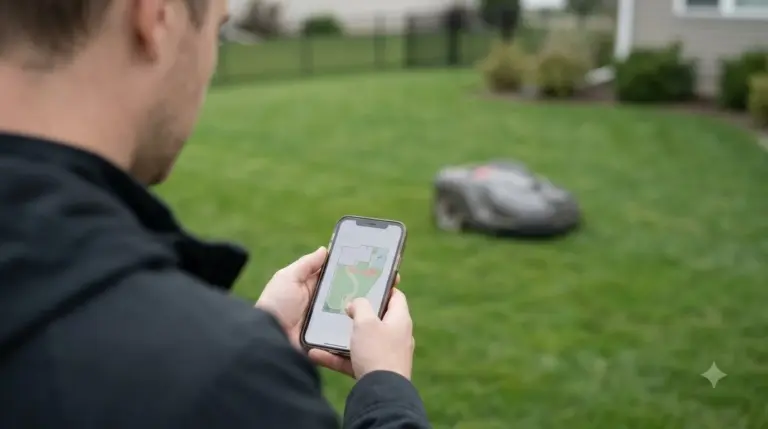
- Map the boundary. Mammotion describes driving the mower along the lawn edge with the app to build a digital map.
- Check Network RTK where it is offered. Segway Navimow says Network RTK needs no local antenna, but availability is checked by postcode.
Mammotion says many manufacturers now use NetRTK, which means base stations are no longer required. That is a vendor claim, so confirm coverage at your address before you assume you can skip the base station.
Where wire-free mowers struggle
Dense tree canopy, tall buildings, low light, and separated zones are the common weak points for wire-free navigation. Each one changes which best robot lawn mower without perimeter wire suits a yard, and none of them is solved by a higher price alone.
- Tree canopy: Sunseeker says RTK models can lose precision under dense tree canopies, which is why robot mowers that work under trees without RTK are a separate shortlist.
- Tall buildings: Mammotion says signal accuracy may be affected by tall trees, buildings, or other obstructions.
- Low light and heavy shadow: vision systems may struggle, according to Sunseeker.
- Separate zones: Robomow says grass-sensor mowers cannot reach separate zones and cannot return to the station on their own.
- Fallen leaves: Robomow notes that leaves can be mistaken for lawn by a grass sensor.
A wire can still be the safer choice in some yards. Husqvarna says a physical wire can be buried where satellite coverage is poor, and our guide to installing a robot mower boundary wire covers that fallback. Robomow also notes that a break in a buried wire can be hard to locate, so the trade-off runs both ways.
What to check before buying the best robot lawn mower without perimeter wire
Check your lawn size with headroom, the slope rating, base station or Network RTK availability at your address, and how the mower handles trees and shade. These five checks catch most mismatches for any best robot lawn mower without perimeter wire.
- Measure the lawn. Choose the best robot lawn mower without perimeter wire whose maximum coverage is above your measured area.
- Compare slope. Match the slope rating against the steepest slope you have.
- Check Network RTK by postcode if you want to avoid a base station.
- Look at the sky view and canopy over the charging area and the main lawn.
- Budget for blades. Husqvarna says to replace blades every 1 to 2 months, depending on lawn size and grass type.
Husqvarna’s US page does not state an installation duration, and this guide to the best robot lawn mower without perimeter wire found no independent test data for the accuracy figures quoted by vendors. Treat those numbers as vendor claims until a third-party test confirms them.

Frequently asked questions
Do robot lawn mowers need a perimeter wire?
No. Wire-free models use RTK satellite positioning, LiDAR, cameras, or grass sensors instead of a buried loop. Husqvarna notes that a physical wire can still be buried where satellite coverage is poor.
Does RTK work under trees?
Not reliably under dense canopy, so a best robot lawn mower without perimeter wire in a shaded yard needs a close look. Sunseeker says RTK models can lose precision under dense tree canopies, and Mammotion says dense trees may temporarily reduce precision. Models that add LiDAR or vision are worth comparing, though vision can struggle in low light or heavy shadow.
Is a base station always needed?
Not always. Mammotion says many manufacturers now use NetRTK, so base stations are no longer required, and Segway Navimow says Network RTK needs no local antenna. Both are vendor claims, and Network RTK availability depends on your postcode.
How big a lawn can the best robot lawn mower without perimeter wire cover?
It depends on the model. In the vendor tables read for this guide, maximum coverage runs from 0.3 acre to 1.25 acres, with the LUBA 3 AWD 5000 at the top of that range. Check the spec for the exact model before you pick a best robot lawn mower without perimeter wire.
Sources
- How the Automower works (Husqvarna US): used for EPOS RTK-GNSS virtual boundaries, the wire fallback, slope ratings, and blade replacement timing.
- Boundary wire vs grass sensors for robotic mowers (Robomow): used for grass-sensor limits, barriers, and wire repair.
- Everything explained: how robotic lawnmowers without boundary wires work (Segway Navimow): used for the Network RTK claim and postcode availability.
- Best robot lawn mower without perimeter wire 2026 (Mammotion, dated Mar 31, 2026): used for Tri-Fusion navigation, coverage and slope comparisons. Vendor page.
- Best robot lawn mowers without perimeter wire (Sunseeker Elite, data as of Nov 24, 2025): used for RTK sky-view, canopy and low-light limits, slope guideline and passage width. Vendor page.
- Boundary wires vs no-wire robot mowers (Mammotion): used for wire fault behaviour and RTK map setup.
 Up next8 min readBest Robot MowersBest Robot Lawn Mower Without Perimeter Wire: How to Choose in 2026Updated Nov 16, 2026
 8 min readBest Robot MowersWhat Is the Best Robot Mower Without a Boundary Wire?Updated Nov 11, 2026
 7 min readBest Robot MowersBest Wire-Free Robot Mower Under $2500: How to Choose in 2026Updated Nov 14, 2026
 10 min readBest Robot MowersRobot Mower No RTK Antenna: How Navigation Works Without OneUpdated Nov 16, 2026
 7 min readBest Robot MowersBest Wire-Free Robot Mower Under $1200: What to Check Before You BuyUpdated Nov 16, 2026
 8 min readBest Robot MowersBest Wire-Free Robot Mower Under $5000: What to CheckUpdated Nov 17, 2026