
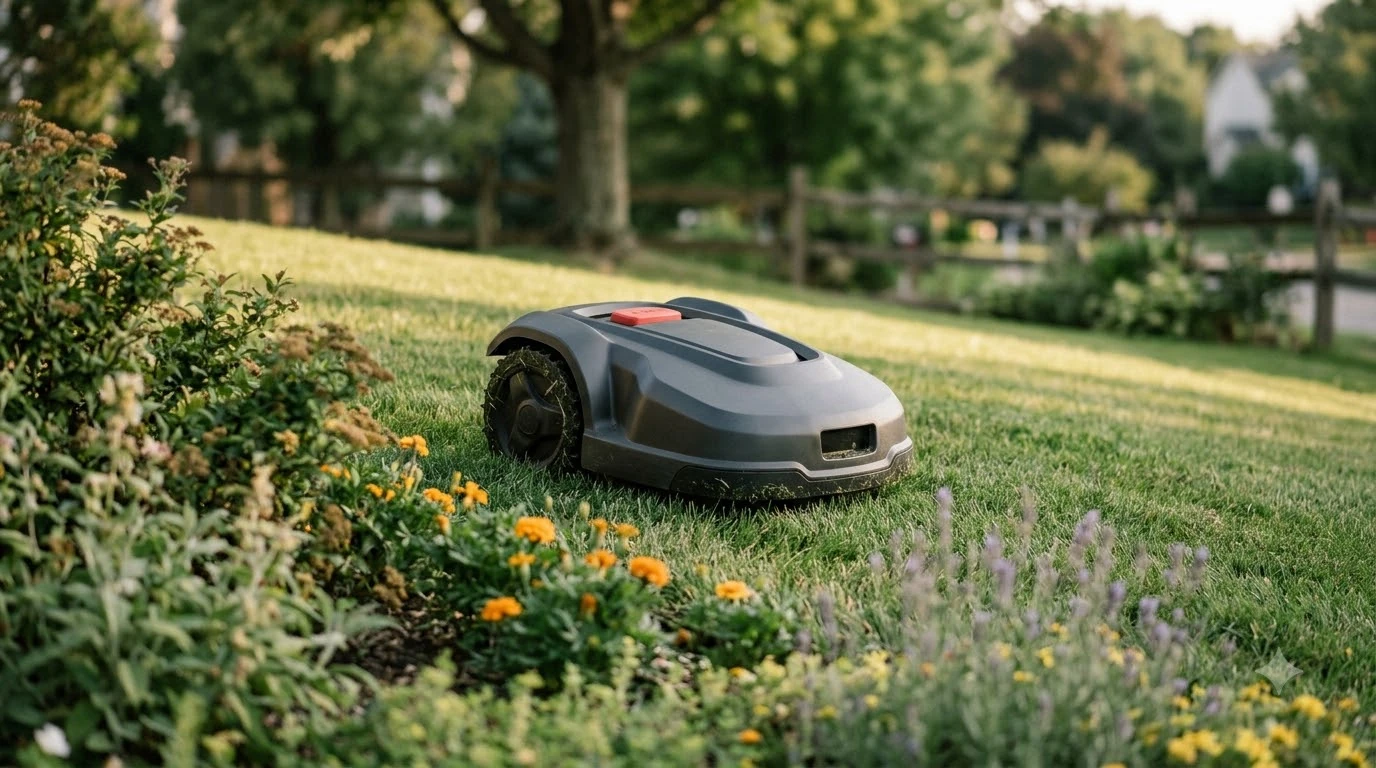

The best robot mower for Minnesota lawns is one that can hold a cut of about 3 inches on cool-season grass, handle slopes, and sit out a long, snowy winter. Most Minnesota lawns are made of Kentucky bluegrass, perennial ryegrass, and fescues, and University of Minnesota Extension advises keeping most of them at 3 inches or taller. This guide explains what to check before you buy, how the state’s climate changes the job, and which features matter most in a cold-winter yard.
The short answer
- Cutting height: look for a mower whose lowest setting reaches about 3 inches, with room to go higher in midsummer.
- Grass types: Kentucky bluegrass, perennial ryegrass, and fescues are the common mixes, and fine fescues are kept a bit higher still.
- Slopes and rough ground: many Minnesota yards have uneven or sloped terrain, so check the stated slope rating and wheel grip.
- Winter storage: a shelter or a dry, frost-free spot keeps the mower and its battery in good shape.
Why the cutting height matters more in Minnesota
Minnesota’s cool-season grasses grow fastest in spring and fall, then slow down during the hot, dry stretches of July and August. Extension specialists say a typical residential lawn in the Midwest should stay at 3 inches or higher, and they recommend raising the mower by about an inch in midsummer to help the grass handle heat and drying winds. Minnesota shares many conditions with its neighbors, so the regional page on robot mowers across the Midwest offers broader context. Because grass is often left taller in cool climates, check how mowers for dense, tall grass cope with the extra thickness.
This matters for a robot mower because many models have a lower limit that sits below 3 inches. A mower that can only cut at 2 inches will push the lawn into stress, and extension specialists say short mowing reduces lawn density in spring, which gives crabgrass room to take hold. Before you buy, compare the lowest setting in the spec sheet with the 3-inch target.
Heads up
Fine fescue lawns are a special case. UMN’s fine fescue guidance says to mow above 2 inches, preferably between 2.5 and 4 inches, so a mower with a wide height range is useful if you have a mixed lawn.
Matching the mower to your grass
Most Minnesota yards are not a single grass. Kentucky bluegrass is the most important species for the state’s lawns, and many seed mixes add perennial ryegrass or fescues. The mix decides how high you can safely cut, which is why the grass type should guide the height setting on your robot mower. To compare grass types in another cool climate, read the robot mower picks for the Northeast.
| Grass in your lawn | Height range from extension sources | What it means for a robot mower |
|---|---|---|
| Kentucky bluegrass | About 3 inches or higher for most lawns | Choose a mower that cuts up to at least 3.5 inches |
| Perennial ryegrass | Kept at the general 3-inch lawn guidance | A mid-range setting works well |
| Fine fescues | 2.5 to 4 inches, above 2 inches at minimum | Set a higher cut and avoid the lowest blade setting |
The ranges above come from UMN Extension. Other summaries online give lower numbers for bluegrass-type mixes, so use the extension figures when you set the mower for the first time.
Slopes, shade, and uneven ground
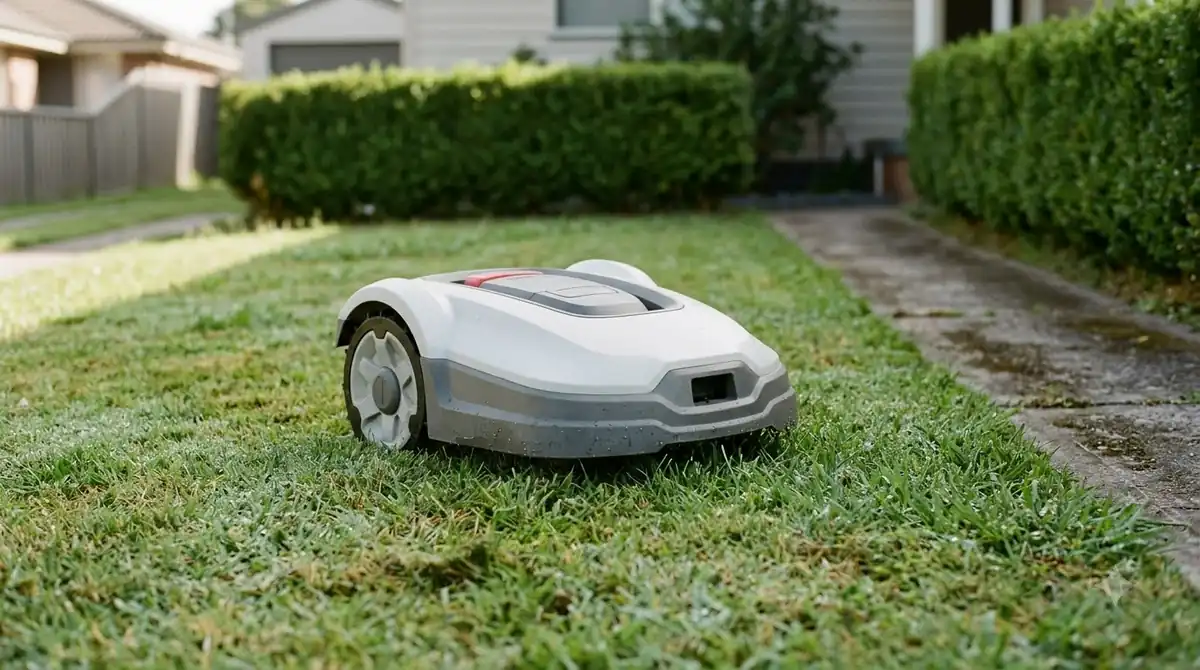
Minnesota yards often have rolling ground, shady corners under mature trees, and low spots that hold water after spring rain. A robot mower has to climb and stay on course across all of it. Check the maximum slope rating, the drive wheels, and whether the cutting deck can rise over bumps without scalping. Shade also changes the job: shaded grass grows more slowly and tolerates a higher cut, so you will want the mower to be able to set a different height in those areas. Shady, uneven ground is hard on small wheels, and the guide to mowers that cope with bumpy ground explains the trade-offs.
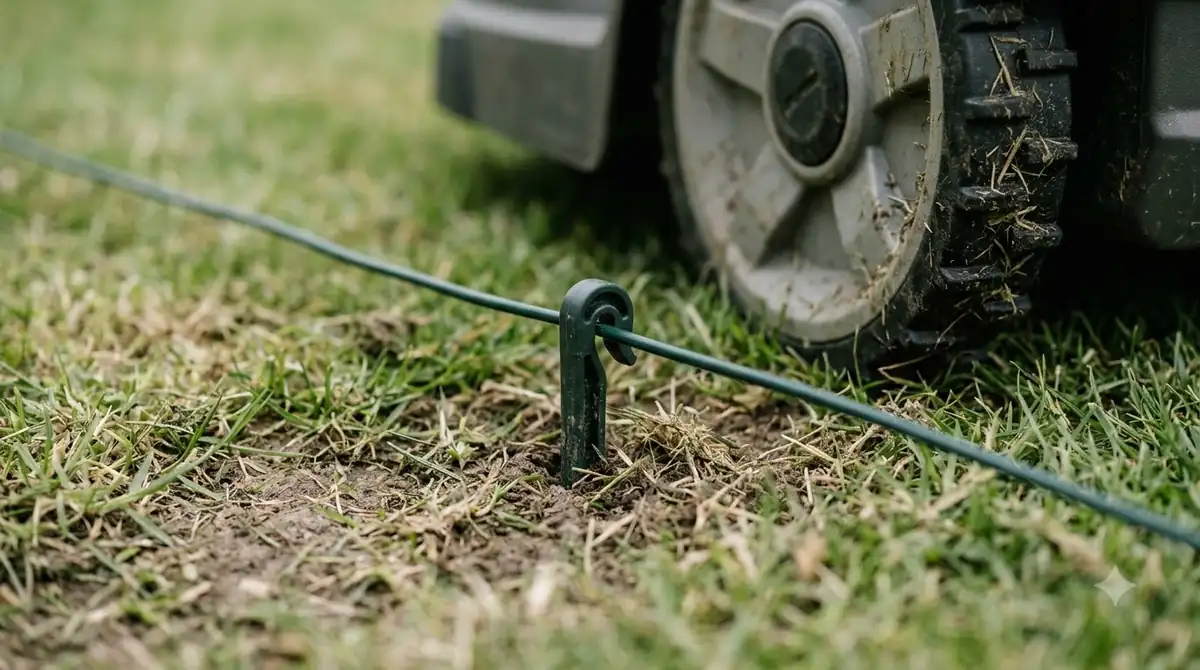
Boundary wire and guide markers help in yards with a border of trees or garden beds. Plan the wire route before you buy so you can judge how much of the lot the mower will cover. Our reading is that a model with a wide cutting range and a steady climb on slopes will suit most Minnesota lots better than a compact model built for flat city yards.
Winter and the shoulder seasons
Minnesota’s growing season is short. Grass stops growing once the ground freezes, and a robot mower should not run on frozen or snow-covered turf. The practical plan is to run the mower through the spring flush, keep it running through the fall, and park it indoors or in a shelter once the lawn goes dormant.
Temperature matters for the battery as well. Lithium batteries prefer to be stored in a frost-free place, so a heated garage or shed is the safest home for the mower during winter. Bring the charging dock indoors too, because a dock buried in snow or ice is hard to reach in spring.
Mowing schedule for a Minnesota season
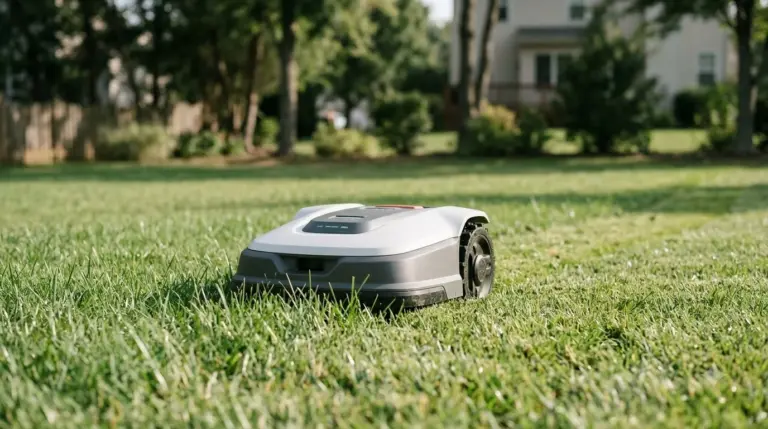
A robot mower works best with short, frequent runs. Extension guidance on the one-third rule says never to remove more than one-third of the blade height in a single mowing. A robot mower that runs most days removes only a little grass each time, which keeps you close to that rule without any measuring. Northern states with a short season often follow similar schedules, so New England lawn recommendations are a good point of comparison. Northern lawns follow a similar seasonal rhythm, so a guide to a robot mower for New Jersey lawns is a useful reference for schedule planning.
- Spring start. Begin running the mower when the lawn is green and growing. Start higher, around 3.5 inches, so the first cuts don’t stress the grass.
- Peak growth in May and June. Run the mower most days, and never let the grass grow past about 4.5 inches before a cut.
- Midsummer. Raise the cutting height by about an inch to protect the lawn from heat and drying wind.
- Fall. Keep the same height and schedule until growth slows, then stop when the lawn goes dormant for the winter.
Best robot mower for Minnesota lawns: what to check before you buy
Before you choose a model for a Minnesota yard, check five things: the lowest and highest cutting height, the slope rating and drive system, the size of the lawn the model is rated for, the boundary wire or guide system, and the weather and storage needs. Compare these against your own lot rather than against the marketing claims on the box. If this is your first robot mower, the page on robot mowers for first-time owners explains the basics before you compare models.
Also look at what happens after a rain. Wet grass can clog a mower’s path or leave ruts, so a model that can pause and wait for the lawn to dry is more practical than one that runs in all conditions. A good rule is to pick the model whose height range and slope rating both cover the worst part of your yard, because that is where the mower will struggle first.
Related reads: Where winters are long, a look at garage options for outdoor mowers helps you plan where the mower and dock spend the off-season.

Frequently asked questions
What height should a robot mower cut at in Minnesota?
University of Minnesota Extension recommends keeping most residential lawns at 3 inches or taller. Fine fescues are kept higher, usually between 2.5 and 4 inches. Raise the height by about an inch during midsummer heat.
Can a robot mower run in winter in Minnesota?
No. Cool-season grass goes dormant when the ground freezes, so there is little to cut. Store the mower and its battery in a frost-free place, and bring the charging dock in before snow arrives.
Does a robot mower work on the hilly lots common in Minnesota?
It depends on the model. Check the stated slope rating and the drive wheels. Our reading is that a model built for steady climbs suits rolling Minnesota yards better than a compact model made for flat lots.
Is a robot mower better than a push mower for a Minnesota lawn?
A robot mower cuts often in small amounts, which fits the one-third rule and helps keep the lawn healthy. It needs a boundary and a level of setup that a push mower does not. The right choice depends on your lot size and how much setup you want to do.
Sources
- University of Minnesota Extension (university): mowing height guidance of 3 inches or higher for typical Midwest lawns, and the mid-summer raise, as shown in its search summary.
- UMN Extension, fine fescue lawns (university): the 2.5 to 4 inch range for fine fescues, as shown in its search summary.
- UMN Turf Program (university): the common Minnesota grass species, Kentucky bluegrass, perennial ryegrass, and fescues.
 Up next7 min readBest Robot MowersBest Robot Mower for Utah Lawns: What to Check Before You BuyUpdated Nov 13, 2026
 6 min readBest Robot MowersRobot Lawn Mower Sale: 4 Checks Before You Buy in 2026Updated Nov 18, 2026
 7 min readBest Robot MowersBest Robot Lawn Mower for 1.5 Acres: What to Check Before You BuyUpdated Nov 16, 2026
 7 min readBest Robot MowersBest Wire-Free Robot Mower Under $1200: What to Check Before You BuyUpdated Nov 16, 2026
 7 min readBest Robot MowersBest Robot Lawn Mower 2027: What to Check Before You BuyUpdated Nov 16, 2026
 9 min readBest Robot MowersRobot Mower Emergency Stop Button: What to Check Before You BuyUpdated Nov 12, 2026